REQ-uired Reading

Setting Info DR NY Setting Info DR NY

War Games - The OODA Loop

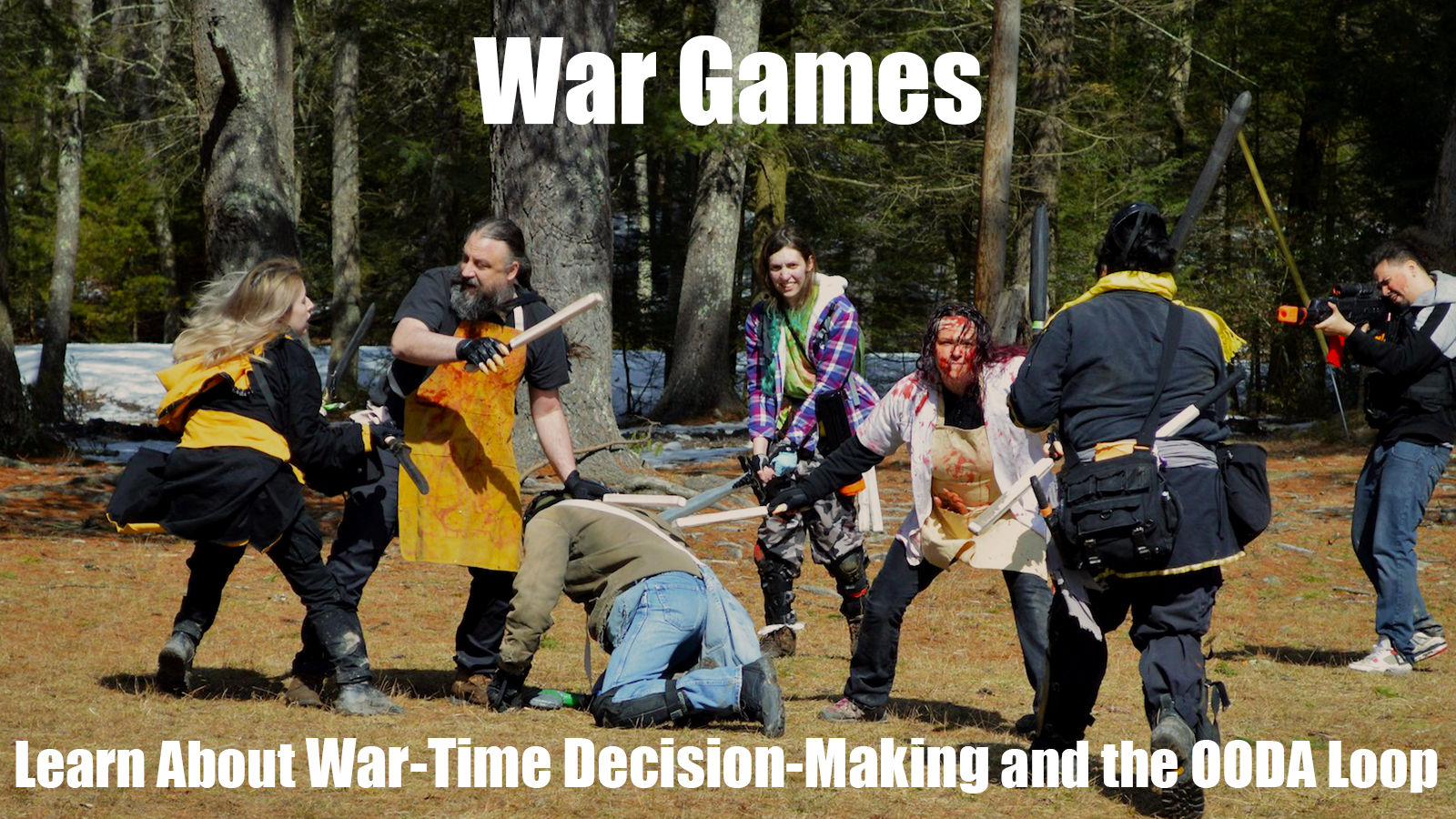
Larp is about making meaningful decisions: your character is presented with a challenge and you have to decide how to act. During a war game like our June Premiere event, Dogs of War, you’ll be given the chance to make choices that will decide the Battle of Requiem.
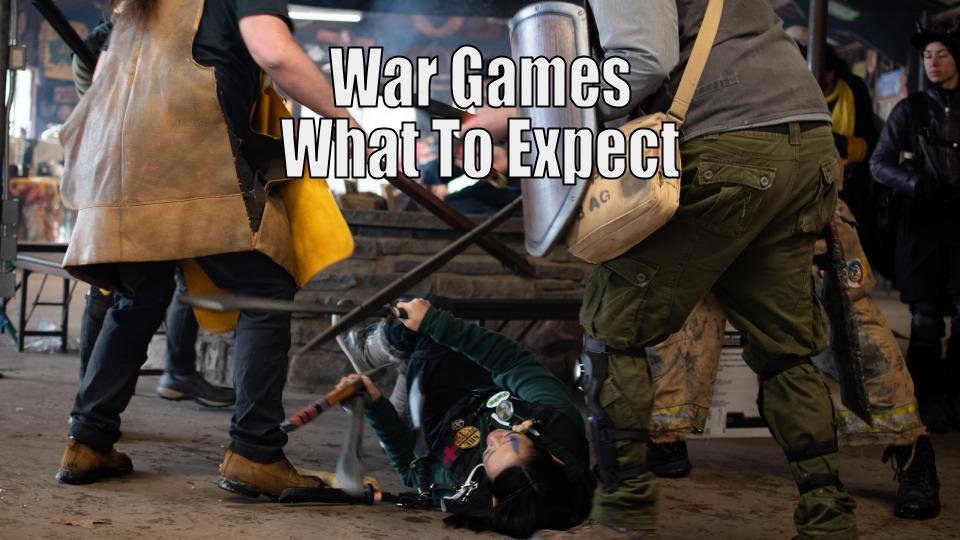
Photo by Allana Marie

Larp is about making meaningful decisions: your character is presented with a challenge and you have to decide how to act. During a war game like our June Premiere event, Dogs of War, you’ll be given the chance to make choices that will decide the Battle of Requiem. However, most of us are not experienced military tacticians, and even those who consider themselves adept at strategy games might not know what to expect from a game like Dogs of War. So how are you supposed to make a meaningful decision in a war game?

The Problem: Don’t Take Too Long

Gen. George Patton said, “A good plan, executed violently now, is better than a perfect plan next week.” He was addressing a common problem, not only in warfare, but anytime a person might need to make a choice: decision paralysis. When in a high-stress situation, people usually don’t have all the information they need to make a perfect decision, and the risk of them making a wrong decision leads to them taking too long and not making a decision at all. In modern military forces, this is why we have a professional officer corp: while anyone with military experience knows a 22 year-old Lieutenant is probably ignorant to the point of being dangerous, they still get to give the orders. Why does this work? Because the young officer has been trained (and will continue to be trained by their troops) to be the one who makes a decision in a crisis. Early on, they’re given simple situations to command, and as they progress, they learn to be decisive in more complex ones. 

However, this is a larp, and our players don’t typically have years of experience or training in these situations. So what tool can they use to make sure they make quick and effective decisions?

The OODA Loop

The OODA Loop is a relatively modern doctrine that can be used easily in larp to make effective decisions in a crisis situation (like you can expect to encounter during Dogs of War). It was developed in the 1970s by a fighter pilot who used the acronym OODA (Observe - Orient - Decide - Act) as a model for military decision-making. It’s extremely effective in any sort of competition that’s not completely turn-based (and as such, is often applied in competitive situations such as business or politics). The basic idea is that instead of making the most optimal decision in a given situation, you want to make a quick but effective decision and get “inside” your opponent’s loop. As you make decisions and execute them, you change the situation, so your opponent’s “optimal” decision is now based on outdated information.

The OODA Loop consists of four steps, repeated endlessly in a cycle:

  • Observe - Take in new information. In terms of larp, this might be a piece of intelligence, the appearance of new NPC enemies, or just noticing something new.

  • Orient - It’s one thing to have new information, it’s another thing to understand it. This step places the new information in the context of everything you already know about the situation.

  • Decide - Once you have an understanding, make a decision. It doesn’t have to be perfect, but if you’ve oriented yourself properly, you already know the options and risks involved. Don’t dwell on them, make a choice.

  • Act - Once you make a decision, execute it. Acting upon your choice changes the situation, and generates new information that both you and your opponent will have to address… by observing the new situation, and starting the OODA loop over. 

Using the OODA Loop In Larp

Once you stop trying to make the perfect decision, and instead focus on quick, effective decisions, you’ll realize this is a good path toward success. Throughout Dogs of War, we’re going to be offering you the chance to gather intelligence… through spying, research, and role-play. You might want to gather as much information as you can before you make a decision, but that’s how you’ll fall behind: we’ll keep coming at you with new information that will change your understanding, and if you don’t make a decision and act, then you’ll fall behind. Conversely, if you come up with a decent plan right away - and execute it - you’ll probably be successful.

For example, at 0100 on Saturday morning, a research team might decode a message that reads, “The commanders will be meeting at the tent near the latrine tonight” (an observation). However, there are at least six latrines in the play area, all spread out amongst the different campsites. You know you want to capture an enemy commander (an orientation), but how do you do it? As you take 20 minutes to figure out what to do, the research team decodes a second message, “The meeting will occur at the campsite closest to the morgue at 0130.” However, that campsite is nearly a mile from the A-Frame… there’s almost no chance for you to get a team there anymore. 

Compare this to a group focused on agile decision-making: once they realized that there were six latrines, they quickly got a dozen people together and started sending people in pairs to each one (a decision). Now, when the team decodes the message, they have a dozen people closer to the objective: a single runner can probably alert them all with time to spare (an action). 

So What Does This Mean For Dogs of War

We want you to experience what it means to be making decisions during the stress of a wartime situation. You should be doing a lot, even if it doesn’t seem to do much, because it’s constantly putting you in a better position for when it does pay off. As we get closer to the event, we’ll make sure you have a design document that helps set the context for your decision-making: what the stakes are, what happens if specific things go wrong, and what you can accomplish if you achieve certain objectives. As you get a piece of information, use the OODA Loop to quickly make a decision. Not only will you likely be more successful, but you and those around you will have a fun time winning this war.

Read More
Setting Info DR NY Setting Info DR NY

War Games - What To Expect

We’ve just released a Save-The-Date for our June Premiere Event, The Dogs of War, where we’ll spend the entire event telling the story of the Battle of Requiem. While this is far from the first time a Dystopia Rising chapter has simulated a battle, we want to approach this event differently. Often, larps about war focus on big battle scenes… that’s not what we’re going for. We want to bring you the tension and intensity of a wartime scenario, punctuated with brief and brutal episodes of violence.

Photo by Shawn Smith

We’ve just released a Save-The-Date for our June Premiere Event, The Dogs of War, where we’ll spend the entire event telling the story of the Battle of Requiem. While this is far from the first time a Dystopia Rising chapter has simulated a battle, we want to approach this event differently. Often, larps about war focus on big battle scenes… that’s not what we’re going for. We want to bring you the tension and intensity of a wartime scenario, punctuated with brief and brutal episodes of violence.

So what does this mean when DRNY runs a war game?

The Base Mechanic: Hurry Up & Wait

“Hurry up & wait” is a common complaint in a war zone. You don’t know when the enemy will attack or reveal themselves, but you have to be prepared when they do. So there’s a lot of work to do, and you have to get it done fast to be ready… and then you wait. And while you wait, the work piles up again: the act of waiting expends resources. This creates tension where you always have something to do, but you’re also always waiting for something else to happen. 

This is our focus during Dogs of War. Some people want to be out in the dark, stalking their enemies, or on the front lines fighting all the time (and we’ll have plenty for those people to do). But we also have a lot of crafters and cooks, researchers and spies, and those people will be the focus of the story most of the time. This game will demand a tremendous amount of supplies… and those supply needs will be time-critical, forcing you all to work together and prioritize. Further, you’ll have the chance to gather intelligence and dictate the course of the war by the information you collect and the decisions you make with it. In fact, these decisions will be central to the event. 

The Focus: Decision-Making In War

We’re not going to line up your enemies in a shield wall all weekend and send wave after wave crashing down on you (although you can expect at least one pitched battle). This is a guerrilla-style war, where you have to put up patrols and test your enemy's defenses. This means that you’ll need scouts willing to sit out in the dark, waiting for an enemy to show themselves. When they do, you’ll need runners willing to bring the information back to your base, alerting the rest of your forces. And most importantly, you’ll have to decide what to do with that information. 

We’re going to develop scenarios that force you to make interesting choices. They won’t be terribly complex, but they will be time-critical and important. When do you attack? Which resources do you conserve? We’ll give you some of the information you need to make a call, as well as an idea of the consequences of your decisions. And those decisions will have lasting effects during Honor’s Fall and the future of Requiem and the Fold.

The Fighting: Nasty, Brutal, and Short

We’re expecting well over 100 players for this event… even for our stronger NPCs, we know you can overwhelm your enemy with sheer numbers. So we’re going to spread you out, and make you watch different areas of the camp. And when we attack, it’s going to be sudden and hard, making targeted strikes that end quickly. If you’re mobile, and run to the sound of combat, you’ll probably get there on time. If you don’t, you better hope your comrades are ready for a nasty fight. This will make scouts, stealth, and reinforcements more important than just getting all the fighters together and charging.

That said, you can expect some big fights as well. Without giving away our plans, we have some ideas to challenge you and give you some of the most memorable combats you’ve had in Dystopia Rising. And of course, we’re planning on the biggest fight Requiem has ever seen to cap off the weekend. 

Our Secret Weapon - The Return of the Trained Survivors

We’re going to be offering some special incentives to get you to take some extra NPCs shifts over the weekend, but we have one we’re really excited about. Old Timers might remember way back in 2015, when Dystopia Rising recruited military veterans at a national event to run special mods against their friends. These were called the “Trained Survivors,” and we’re bringing them back for our June Premiere.

The Trained Survivors will be asked to do two additional NPC shifts, one Friday night and one Saturday during the day. In return, we’ll comp their tickets and offer full Build, along with a very special “thank you” gift.  Your characters will also get special plot consideration, operating “far behind enemy lines” to bring back special intel. We will prioritize people with military experience and similar training for this crew, and you’ll be assigned your Guide to travel with you for your shifts. 

We’ll be posting more about The Dogs of War with our War Games blog posts in the months leading up to the event. Also look for information on our AMA events, where you can bring your questions and concerns directly to the staff. 

Read More

Search Posts