REQ-uired Reading
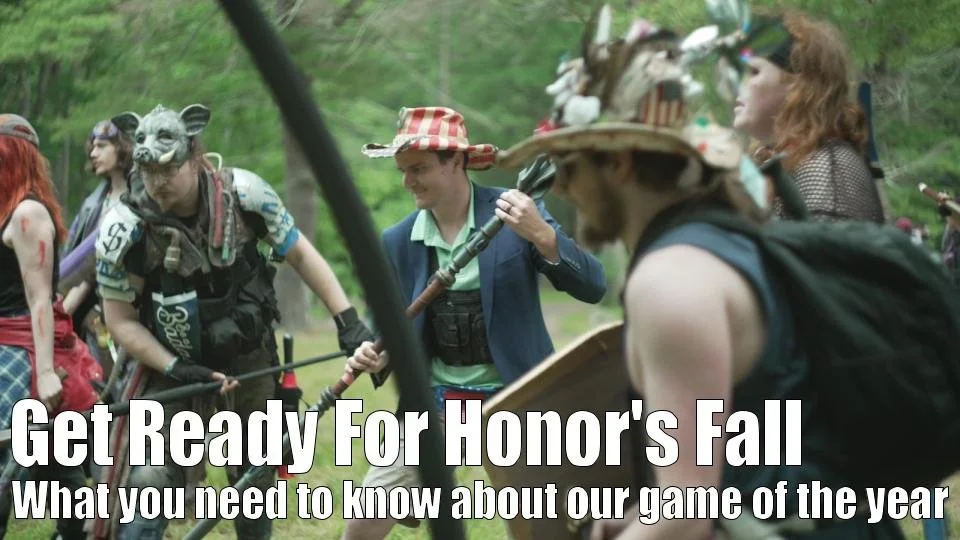
Get Ready For Honor's Fall
It’s time for our game of the year. Tickets go on sale tomorrow for Honor’s Fall. We have a couple of things we want you to know… so read on for more information about August’s game.
What Is Honor’s Fall?
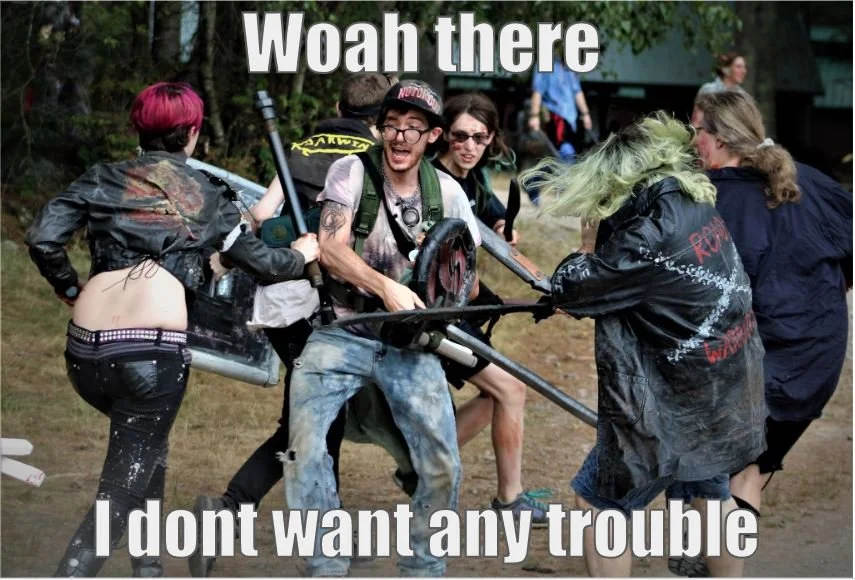
Honor’s Fall is the annual event that defines Requiem. For one night, from sunset to sunrise, all laws are suspended, and this town of outcasts, criminals, and killers has a chance to settle all the scores from the previous year. What’s more important, it’s a chance for political change, as Families can rise and fall, and even the authority of the High Lord Executioner can change. We’ll announce more details as we approach the event, but the bottom line is this: all night long, killers will roam the streets, and violence will determine the future of Requiem.
But it’s not just a night of violence… this is the most important weekend of the year. So it starts with a party, and on Friday night, we invite you to the Bacchanal. From game on until after midnight, we’ll host you in the Great Hall with music, food, and vendors. We’ll be putting out an all-call for people who want to sell food and wares next week and are working on the night’s entertainment. However, we would like to invite all players to host an After Party… pre-planned events of drinking and debauchery as those about to die the next night celebrate. The High Lord Executioner purposely goes to bed early, so that faiths (particularly the Light of Hedon) can organize parties as long as they’re indoors and not in the Great Hall. So if you want to have a faith-themed party early Saturday morning, this is your chance.
The Festering Crystal Lottery
This year, we find ourselves with some leftover Festering Crystals and national currency from our premiere event. We also find ourselves in need of player support for this event, so we’ve decided to hold a lottery for these items (and more) on Sunday. This is an out-of-character lottery to thank you for your support and encourage you to get engaged in Honor’s Fall. We’ll give out details on the prizes and logistics closer to the event, but here are some ways you can get tickets:
Volunteering for extra NPC shifts Saturday night beyond what’s in the database (we’ll do a sign-up after the Early Bird) - one ticket per two hours (plus the normal CAPs).
Being a food or item vendor for the Bacchanal.
Organizing a room party.
Getting tickets will require coordination with staff prior to the event… watch our announcements to learn more.
Consequences
You all did an amazing job of taking care of business at Dogs of War and focused on eliminating immediate hazards through intelligence and crafting. However, everything’s a trade-off, and there will be some consequences of focusing on the battle at hand, and not long-term political consequences. Here are some of the “special effects” you can look forward to at Honor’s Fall, and perhaps throughout the Fall…
The Zodiac diverted resources they’d normally use to keep their experiments in check. In the coming months, the Gravemind will be “clogged” again. As a result, our “No Room In Hell” mechanic will return at Honor’s Fall and last through the Feast of Flesh.
The Boone-Helm took heavy casualties and now can’t keep the local Raider population under control during Thrill Kill season. As a result, all Warpath and Thrill Kill raiders gain the Raider Rush ability through October. This ability does not affect Warband Tainted in any way.
The Tarrarians built many tunnels for this war and can’t keep tabs on them all. Undead have a tendency to come out of the tunnels. As a result, through October, room augments and gizmos that lock doors will not keep out undead that come through the tunnels.
A LARP Conundrum: Skill Calls and You
Hello Readers! We are back with another blog post, and this one serves a couple of purposes; transparency and bringing attention to collaborative play.
The Ground Work
At DR:NY, we have been lucky enough to enjoy some bigger games over the past few months but as we push into the colder seasons we expect to see some of our warm weather friends take a bit of a break which leads to some more intimate games. As you might imagine, as a game runner, large and small games present their own types of challenges. One of the biggest challenges is smaller NPC groups, because we love to push you to that ‘oh shit’ moment, and that is a lot harder to do when we have 3 people rather than 10.
Here’s the Scene
So, I want you to imagine for a moment - you’re out playing your character. Things have been pretty quiet… and then HARK! Are these the harmonious groans of zed? Or perhaps the grunting rumblings of some raiders!? You can feel your adrenaline start to rush as you reach for your weapons. You can see them now - only 4 of them. They engage with a group of people who had advanced to intercept them. “Mangle, mangle, break weapon, mangle, break weapon, mangle, break weapon…” One by one, the raiders are quickly dispatched. You didn’t get a chance to swing on them. Maybe they’ll respawn? There! From the treeline- more raiders! “Break weapon, breakmanglebreakweapon mangle…” dead again. They don’t respawn. There weren’t enough of them, you never even got close enough to swing. You watch the NPCs march away into the night, because after all, there are other players that also haven’t seen any action for a while and they need to be entertained as well.
The Dilemma
There are two major points to this blog. The first is really to point out that we (your game runners, your Ops guides) want to send you that threat, we want you to have fun engaging it, it’s literally what we are here for. We all have these skills, all this mind, brews, meals, all this build and time we have spent acquiring the aforementioned skills/items but when it comes to some of those smaller NPC groups, some of those lower threat baddies, the player may want to think about how using those skills could negatively impact the scene. We’re not saying don’t use your stuff - that’s kinda the whole point of playing. That being said, skill spamming can really suck from both sides of the aisle for a multitude of reasons. You’ve all been on the NPC side of things and heard the whole ‘don’t skill spam - it’s no fun for the players who have waited for something to fight and want to get in there and feel cool. You aren’t the hero, they are.’ We don’t think about how it is for the people on NPC shift and the guides when we try to bring a low to moderate threat out and it gets steamrolled in thirty seconds. It unfortunately ends up being not that much fun for most parties involved - the NPCs don’t enjoy being immediately potatoed and not being able to engage their friends, the guide has to try to figure out if there is something they can do that would be fair but more engaging for the players that are there, and the players that are not the ones who immediately engage in the fight don’t get in on any of the action.
What We Don’t Want
“Okay, well, why don’t you just up the stats of the NPCs?” Good question. A lot of the time we do. Being able to adapt on the fly is an important tool out in the field. If I know I am hitting a bunch of veteran players, you better believe those NPCs will be above threshold. But there are also variables ( weather, temperature, how much combat that group of NPCs has already done etc.) that impact us being able to respawn for long periods of time, and just making a threat immune to skills or having ‘yes’ body is something we avoid, or don’t do at all at DR:NY. There are also the cases where the groups of players we see are mixed build levels. If we want to send something out the low to mid build characters can engage with and they happen to be hanging out with a couple players that have high build, it is very difficult if not impossible to balance appropriately. You can see how all of this can be quite a challenge.
What It Boils Down To
So what is the moral of this ramble? I guess it boil down to three things:
Spamming skills has a time and place, and that is with a larger or higher threat group of NPCs
Be mindful of the people you are around, they want to get in on that combat too. If one or two players engage the threat and beat it down in 30 seconds, that’s not nearly as much fun.
The people you are fighting against, the NPCs, those people are your friends too. And sometimes they just wanna play wacky bats and steal your bucket…
Emotional Damage
It’s clear to us that our players have enjoyed the “Fuck Around And Find Out” mentality and ability to opt in that came with Red Line. While thats still very much on going, we would like to offer another opt in for “Fuck Around And Find Out” that’s a bit more in theme for the spooky season.
How do you get involved?
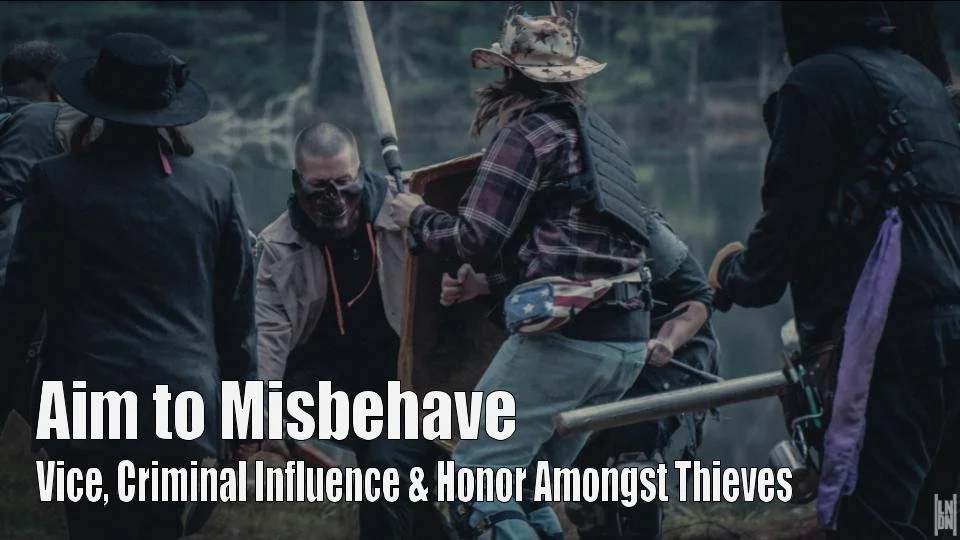
Once during game a cabin may register with Ops a negative emotion in the form of an “I feel _____.” statement. This could be I feel aggressive, lonely, melancholy, hatred, etc etc. This is done for the entire cabin, so please make sure to discuss with your bunk mates before registering. Once a cabin has registered with Ops, we will (at some point during either night) find a way to represent, create or embody that emotion in the cabin at our discretion. This could be a scene, a threat, some fresh new trauma for your characters to bond over or other various things that come with the season. The sooner a cabin registers the more time we will have to plan a fun encounter for all those who are staying there so feel free to start those conversations before game !
Unfinished Business
With a new season of Dystopia Rising New York beginning, there’s a few items that haven’t been taken care of.
Sure was a lot going on during Honor's Fall. Time to wrap up some loose ends as we roll on into SEASON TWO.
False Idol
Tired of seeing all your faithful friends murder each other? Hunt down the False Idol, put an end to it and maybe find out what or who it was in the process.
Red Line
Everybody loves Redline, but has anyone managed to figure out what it all does? Compare notes, get high off your ass, experience insane side effects, but hey where is it coming from anyway?
Meet The Families
Now that the dust has settled check out and rub shoulders with your new family heads and see the faces that will be wielding power in a newly reshaped Requiem.
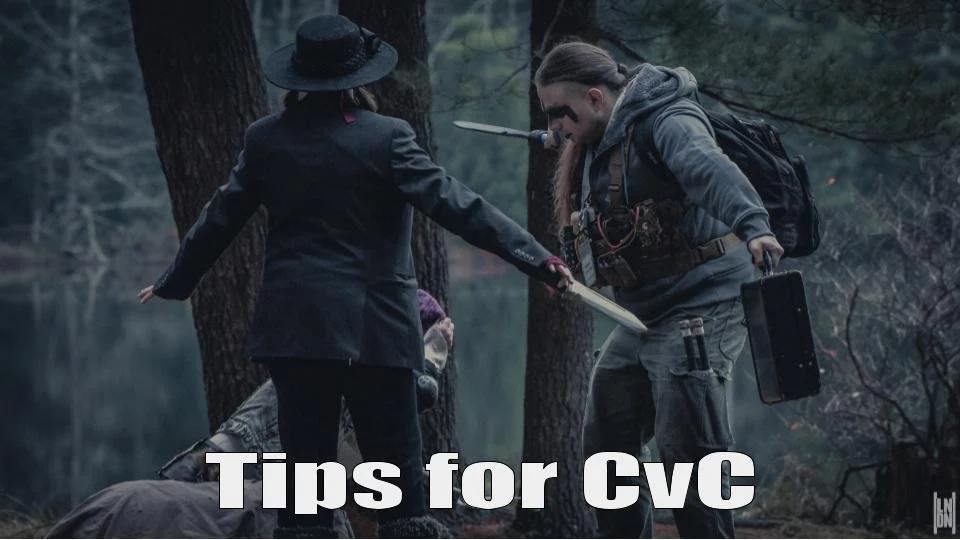
Tips For CvC
Dystopia Rising New York is a Character-versus-Character (CvC) oriented game. Despite this, there’s not much more CvC than you might find at other chapters - even at Honor’s Fall, there have not been many instances where one character attacked and killed another. Instead, our CvC has many levels.
Dystopia Rising New York is a Character-versus-Character (CvC) oriented game. Despite this, there’s not much more CvC than you might find at other chapters - even at Honor’s Fall, there have not been many instances where one character attacked and killed another. Instead, our CvC has many levels: characters yelling at each other over disagreements, direct competition for resources, and indirect jockeying for power. However, we do expect CvC to occur when the sun goes down Saturday night at Honor’s Fall, and wanted to offer a few tricks to help people enjoy the experience.
Don’t Confuse the Possibility of CvC With Actual Conflict
Practically all of Requiem is Wasteland. You can be attacked at any point without a guide. So how come there’s not much CvC violence in Requiem?
The answer is simple: CvC conflict requires both motive and opportunity, and the possibility of CvC only offers players the opportunity to attack other players. The structure and style of Requiem means that there’s not much random violence from player characters (the same can’t be said for some of the roving bands of NPCs you might encounter, of course). The constant opportunity for violence means there’s always the possibility of CvC, but it’s extremely rare for actual conflict to occur without a motive.
So the first CvC tip is this: consider who specifically might want to attack or kill your character… and if you can’t think of anyone, relax a bit. If you can’t think of anyone who might hire an assassin to kill your character, there’s probably no one coming after you. If there is someone, and you really don’t want to engage in CvC, reach out to them and talk. Which brings us to our most important tip.
Engaging In CvC Is a Sign Of Respect and Trust
It’s actually really hard to kill a player in Dystopia Rising, particularly without a guide. In the heat of the moment, calls get missed, Body gets miscounted, and people use rules incorrectly. This isn’t necessarily cheating… people make mistakes. It’s incredibly important to give your other players the benefit of the doubt, to show empathy, and remember that behind that character you’re fighting is another player.
Here’s our next tip: only engage in CvC with players you respect and trust. If you don’t, then you can’t count on them to work through bleed and keep things in character. If someone’s about to engage in CvC with you, take that as a sign of respect and trust, and if you don’t want it, say so… politely and respectfully… out of character.
Remember: it’s easy to mistake a person trying to hurt your character as trying to hurt you (this is the very definition of bleed). If you feel scared or threatened, saying so out of character is a quick way to see an enemy character turn into a helpful, out-of-character friend.
Play Hard, Play Through, and Leave It All On the Field.
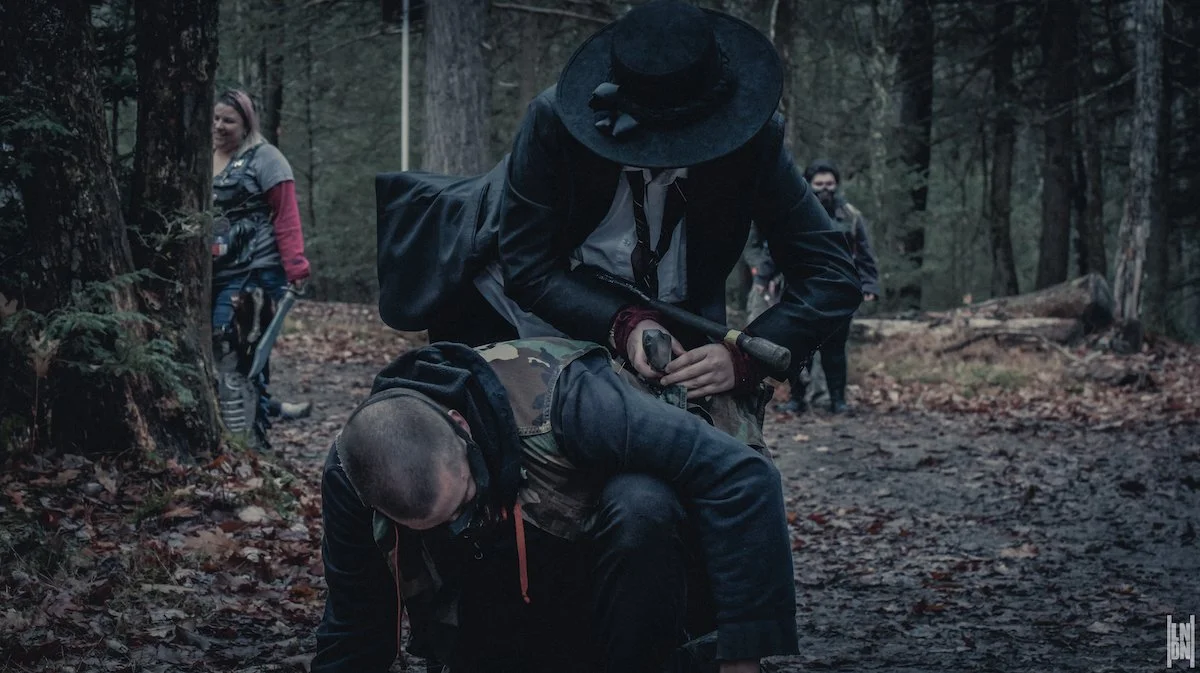
Okay, so you’re ready to CvC. You know your target - it’s your buddy, and you two have been hyping up the conflict for months. Your character is going to try to murder theirs, and when the siren goes off on Saturday, it’s go time. So how do you do CvC cleanly and fairly?
First, play hard. This means putting all your effort not only into “winning” (in-character, of course) but making sure you’re following all the rules and playing fairly. Do you have a killer combo that you’re sure works? Run it by the staff to make sure everyone agrees it works like you think it does. Check your cards to make sure they’re not expired. Go over your character’s skills so you know what they cost. It’s not enough to play hard once the siren goes off… if you’re planning any CvC, you have to prepare just as hard so that any conflict goes smoothly.
Second, if there’s a problem, play through. It doesn’t matter if you’ve devised the perfect death trap, and have your enemy Mangled, tied up, and under “No Escape” in Bleed Out, and the guide lets them “Never Here.” That’s a blown call, and it’s wrong, but just keep playing. It’s okay to do a quick clarification of a single sentence (“Can you “Never Here” under “No Escape?”), but after the guide reaffirms the call, don’t argue, and play through. It sucks, but there will always be blown rules calls in even the tightest of games, and you have to keep going.
Finally, leave it all on the field. Maybe you kill your friend’s character. Maybe they kill yours. During CvC, your emotions will be high and that can lead to great role-play. So let it… and let your character scream, cry, and have all the negative emotions you’re experiencing, so that when you go out-of-character, they’re purged from your system.
Remember, larping isn’t real, but it really happens. You’re not actually trying to kill the other player, but you are stalking them silently through the woods, and about to hit them with foam weapons with murderous intent. You’re going to have a lot of feelings when that’s happening! It’s easy to say “well, we’ll keep everything in character” when you’re at home, reading this blog, but you should prepare for the heightened emotional state that comes with CvC. Preparing now, and thinking about how you’re going to manage your emotions will help you immensely when the siren sounds at Honor’s Fall.
Aim to Misbehave
Requiem doesn’t really have laws… it has rules. The Treaty of the Fold binds the Families of Requiem together under the rule of the High Lord Executioner, but historically, people ended up here because they got run out of somewhere else.
Requiem doesn’t really have laws… it has rules. The Treaty of the Fold binds the Families of Requiem together under the rule of the High Lord Executioner, but historically, people ended up here because they got run out of somewhere else. The Families more resemble a crime syndicate than traditional government, and the setting encourages sketchy activities like drugs, theft and murder (as long as you don’t get caught). While the staff talks a lot about Character versus Character (CvC) conflict quite a bit, there’s actually not much more CvC in Requiem than in other chapters. Most of the conflict remains CvE, which poses a question: if we’re not harming each other, how do we misbehave in a setting appropriate manner? Here are some ideas for both locals and travelers as we approach Honor’s Fall.
Rule 0: Consequences, not laws
Requiem is governed by a treaty, not a constitution or a charter. In most governments, there’s an authority figure who has “legitimate” power over everyone who lives there. In a treaty, various groups agree to abide by the same rule and suffer consequences enforced by their peers. There’s not a whole lot that the High Lord Executioner can do to go after Seraphis Volkov if she kills someone in the streets of Requiem… except that the other Families would back him up, and possibly destroy the Seraphis’ entire family if she didn’t submit to his judgment. The threat of war (as seen during our last plot arc, the Reckoning) keeps the peace.
While all the Families care about the Treaty, it’s out of self-interest, not a sense of justice. If someone disrupts the peace, they’ll be dealt with quickly, but there’s not a police force investigating crimes in Requiem. Therefore, you have an unspoken rule that exists in many places, but is even more true here: don’t get caught.
Vice Is Part Of the Setting
We’ve just introduced a new drug, Redline. The local bar, the Wilted Rose, is a brothel. We have heavy metal raiders. Sex, drugs and rock-and-roll are integral to the setting, and we encourage players to indulge their character’s vices. While we have to be respectful to real-world addictions and player boundaries, vice is one of the best ways to role-play Requiem’s lawless nature. It’s not that Requiem has vices you can’t find anywhere else, it’s that in Requiem, locals focus on vice as an enterprise. It’s not a Hedon paradise, because in Requiem, vice is a business.
How do you get involved in vice? Buy intoxication brews (and then role-play the effects). Do Redline. Frequent the brothel (just don’t expect actual sexual contact with the players!) Or start your own rackets: maybe you can learn three-card monte (and run it as an actual grift with a partner). Do some gambling and lose some bets. Cheat at cards. Find something that feels good, then charge characters in-game money to indulge.
Criminal Conspiracies
Requiem has a strong emphasis on Criminal Influence, as well as societies such as Murder Inc. We typically have our meetings early in the gathering, to provide guidance to players throughout the event. Our Criminal Influence meeting usually has over half the event in attendance (we currently have 110 players checked in with at least basic Criminal Influence), while our Murder Inc meeting usually meets in a smaller group that requires more effort to attend. These groups have a strong presence in the Families of Requiem, and typically offer an opportunity to get involved with plot in a setting-appropriate manner.
Remember, Criminal Influence is not a rare skill in Requiem. While it still values secrecy, when most of the game has the skill, it’s not an exclusive club. When you go to the Criminal Influence meeting, expect to see high-ranking Family members (both player and NPC) expressing political opinions, a couple of job offerings, and probably people fencing some sketchy items. Murder Inc, however, generally requires more commitment: you’ll be asked to use proficient Stealth to make a disguise, and then meet at ops to be escorted to the meeting location. There are often in-depth discussions of what the organization will do over the course of the gathering, and if there’s to be an assassination, this is where it’ll be decided.
Honor Amongst Thieves
The single best way to engage in Requiem’s setting is to embrace the idea of “honor amongst thieves.” The people of Requiem have various codes they live by. For example, they don’t rat people out (or at least try not to get caught doing it). If they shake on an agreement, they expect it to be honored; this isn’t a “Rover deal” but rather a realization that the other person might do violence if they welch. And they value loyalty… loyalty to their family, in particular… above all else.
At Honor’s Fall, we’ll bring in a new item to focus on this theme, as we introduce special challenge coins. Extremely rare, these coins were inspired by the gold coins in the John Wick movies: they represent a favor more important than life itself. We’ll explain more about them in an announcement, but realize that they’re only given out to players on rare occasions, and if you have one, you can return it to an NPC to call in just about any favor you can think of from them.
But I’m Not A Crook
Not everyone plays a criminal, but everyone in Requiem is playing in a town built by crooks, con artists and scoundrels. While, we don’t create plots that focus exclusively on these scoundrels, apart from a couple of Criminal Influence mods, realize that to a majority of players, the criminal aspect of Requiem is an important part of the game. If you’re playing a character who doesn’t have Criminal Influence, who doesn’t indulge in vice, or even plays law enforcement… cool. That’s also part of the setting, but we do expect you to interact with others with the knowledge that all the rackets, grifts and conspiracies that are going on around you, are important to other players. There are ways to get involved indirectly, with many criminal organizations maintaining strong ties to people otherwise on the up-and-up. We’re committed to not gate-keeping our plots and modules behind Criminal Influence or that sort of role-play, but realize that many of our plots are going to have that sort of aesthetic. By engaging with it, even in an antagonistic manner, you can get involved in a uniquely Requiem way - by indulging your vices, acknowledging the sense of honor amongst thieves, or even by refusing to give up your sense of law and order.
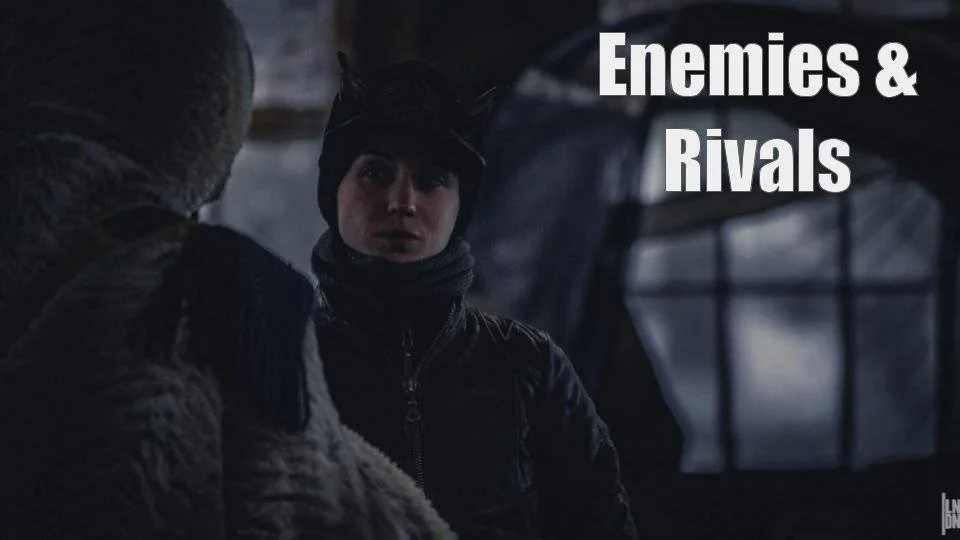
Enemies and Rivals
We’ve talked about Character versus Character (CvC) conflict (several times), but we never really addressed the role-play aspects of in-character rivalries. In a setting like Requiem, our focus on CvC doesn’t mean that we just have to deal with the direct conflict between characters, but the role-play of having another player character as an enemy. How do two players… who we expect to cooperate out-of-character… play bitter enemies? Here’s a few pieces of advice to help you navigate this dilemma.
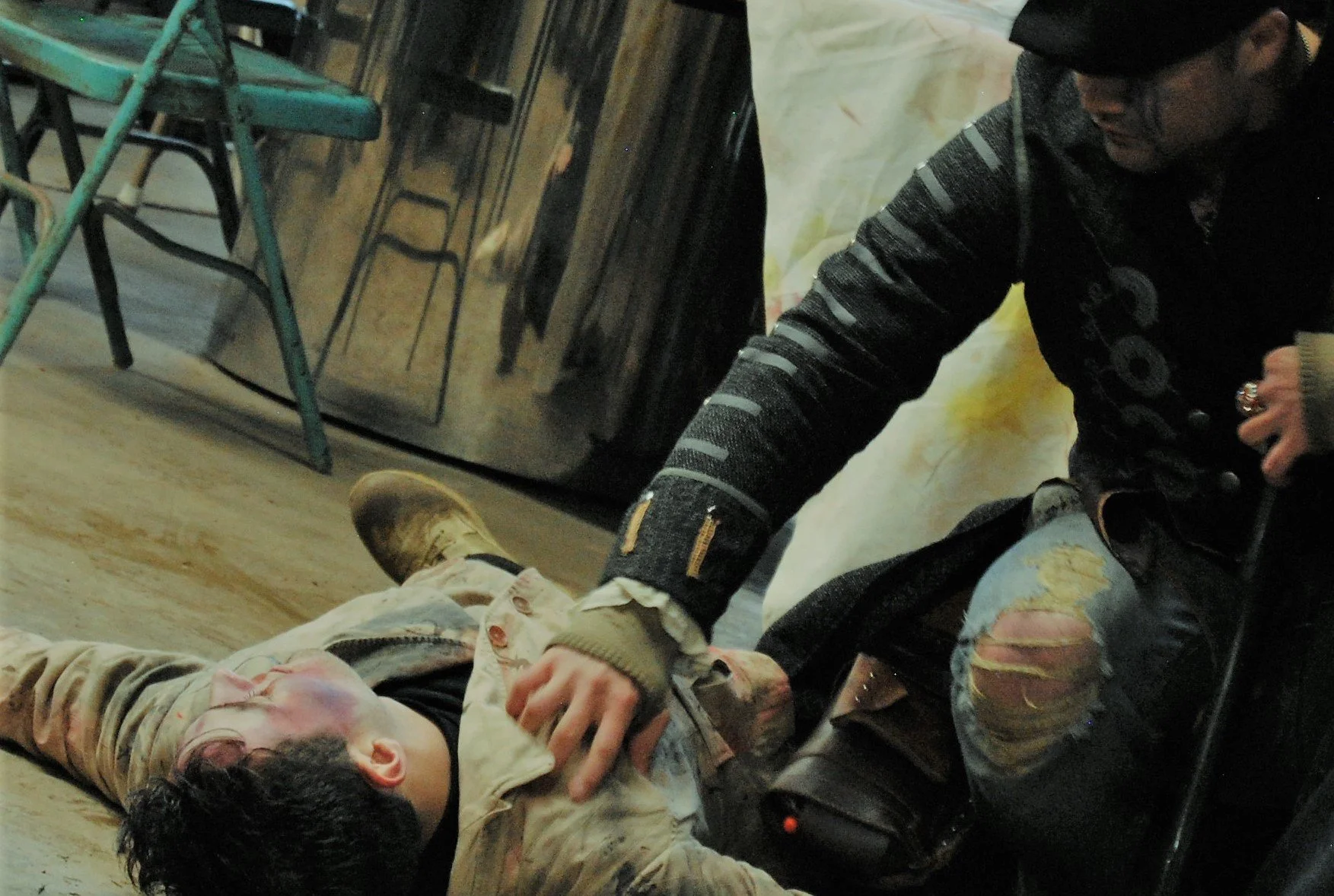
Your Character Isn’t the Good Guy…
And your enemy isn’t the bad guy.
Here’s a quick gut check: do you think you play a good guy? Are you engaging in violent CvC? Because you can’t really answer “yes” to both questions. Batman, for example, isn’t a “good guy,” he’s a billionaire who beats up low-income criminals, putting them in a hospital because he won’t see a therapist. That said, he’s not really a bad person either: he at least uses his skills and abilities with restraint (refusing to kill) and to oppose murderous forces like the Joker at great personal risk. So Batman is a mixed bag. So is your character.
Your enemy is also a mix of good and bad - and most likely isn’t much worse than you. The first thing to accept when you’re role-playing a rivalry is that you are not the main character; nor is the other character your personal villain.
You Should Be Friends With the Other Player…
Or at least friendly.
Think about the characters with whom you have conflict. Now look at that player. Have you ever sent them a text or a message about something other than the larp? Have you hung out in real life away from the game? Then be careful, because you really don’t know the other player, except for the character you’re trying to defeat in CvC.
People generally make friendly ties with their friends, and find enemies through role-play. Often, the conflicts arise organically, as two players find that their characters are at odds. However, this is an explosive situation, as there’s no relationship of trust and respect between the players. If you have a rival in-character, consider reaching out to the other player, acknowledging the rivalry, and perhaps having a conversation about something other than the fact your characters hate each other.
Role-Play at Game, But Don’t Trash Talk Online
Role-playing conflict can be intensely rewarding. Seeing someone talking about how they’re going to kill your character rarely is. CvC is anxiety-inducing - you don’t know what’s going happen, and you might want to joke or even posture in front of your friends. But while your role-play is in character, talking about how your character is going to smash another is an out-of-character action: now you’re addressing the person.
A better way to do it is to remember that game happens at game. If you want to reflect on the rivalry, focus on memories, and share them with the player of your rival. Building camaraderie between the two of you will result in a better story, and less stress on everyone involved.
A rival can, in a way, be the closest and most interesting character tie you can make. A long-term rivalry can end in defeat, but that relationship can also evolve, like Professor X and Magneto. By making sure you don’t let the CvC develop into a conflict between players, you open yourself up to a healthier and more engaging story.
The Strange Case of Theft in Dystopia Rising
We covered Character versus Character (CvC) conflict in three parts earlier, and it’s time to talk about the oddest case of CvC in Dystopia Rising: theft. Theft occupies a unique place in terms of consent: it’s inherent to the game via the rules there’s no real way to opt-out of it.
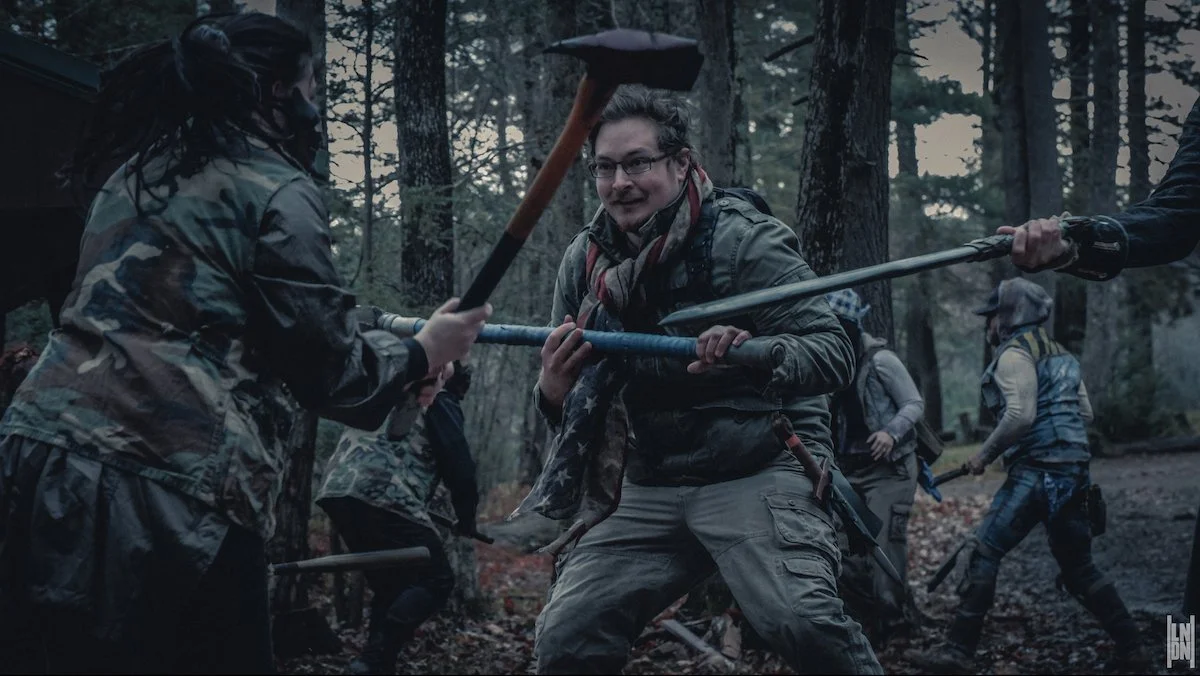
We covered Character versus Character (CvC) conflict in three parts earlier, and it’s time to talk about the oddest case of CvC in Dystopia Rising: theft. Theft occupies a unique place in terms of consent: it’s inherent to the game via the rules there’s no real way to opt-out of it. To help players better understand it we’re recapping how to steal stuff, both with Basic Larceny and good, old-fashioned theft.
Consent and Theft
When you play Dystopia Rising you are inherently consenting to theft. It’s hidden in the section “Thick as Thieves” on page 158 (emphasis added):
Always remember that the player is more important than the character; just because your character is a master thief doesn’t mean you should try and steal every single item from someone you know may become upset. You do not need to check in with another player prior to using a thieving skill on their character, but you should prioritize the mental and emotional health of the player representing the character you are stealing from over your character’s fiction desire to steal.
So you don’t need to use the Conflict Check-In but you need to prioritize the emotional health of the other player. This is very different from what we’ve talked about in our Consent and CvC series! Instead of direct communication you need to be a bit of a mind-reader. Luckily there is a solution built-in: every theft in Dystopia Rising requires a Guide.
Using a Guide
Whether you use Basic Larceny or pick up an unattended object you will need to have a Guide present to monitor the theft. They’ll help you negotiate the situation and, if needed, gauge the other player’s reaction. When you steal something with Basic Larceny they’ll notify the other player and retrieve the card for whatever you stole. If it’s an unattended object they’ll help you register it in the theft log. Having a guide involved helps to meet the intent of the theft rules by ensuring there is a neutral third party considering the other player’s feelings.
What You Can’t Steal
The rules are quite clear on what can’t be stolen: anything on or under your bed is considered out-of-character and can’t be stolen. However, you can’t hide carded items there unless you’re on NPC shift. You also can’t steal a supply bag: you have to loot it and leave it behind.
Other Notes on Theft
Similar to causing infection loss, you have to remain in play for at least 4 hours as the character who committed the theft after you steal anything.
When you’re stealing from a body, you can only steal items from the supply bag or phys repped items. Don’t dig around in people’s pockets. In Dystopia Rising New York, we ask that if someone loots your supply bag while you’re wearing it, you also hand over all your cash.
You can pick a person’s pocket by attaching a black clothespin to it. You can do this if you spot where someone keeps their money.
If you steal a phys rep, you have to hang onto it for 30 minutes (so there’s a chance you get caught) and then turn it into operations (so the other person can use the phys rep).
Consent and CVC (Part 3)
In Part 2, we talked about explicit consent, and how it was required for fighting, theft and infection loss. But how do we signal, obtain, and confirm explicit consent? Luckily we have tools described in our rulebook to obtain them. They include negotiation, the Conflict Check-In, and the Wasteland. We also have the Survival Ethos System (SES), also called the Red Ledger.
Negotiation
You'll always have the option of talking to other people out of character, which is recommended if you have any doubt about the CVC. If you go over an action with another player, and they agree to it, then you have consent from all people engaged. You can put any restrictions you like on it: for example, you agree to lethal CvC at any time except while you’re sleeping, or say “take your shot after sunset on Saturday,” or “it’s okay if you take all my stuff or my infection, but please not both.” Negotiation is your most powerful tool for obtaining consent. Negotiation is strongly recommended for any CvC that would result in infection loss (but see the Survival Ethos System, below).
The Conflict Check-In
A simpler option than out-of-character negotiations, the Conflict Check-In (also called the “C Check”) is described on page 155 to 156 of the rulebook. Without negotiation you have to use the Conflict Check-In before initiating any fighting outside of the wasteland. Even in the wasteland you still have an option of giving a “thumbs down” sign to opt out of CvC. Remember, the Conflict Check-In relates to a particular instance of CvC and you can thumbs down at any time. For example: you can give a “thumbs up” to fighting and get knocked into bleed-out, but then give a “thumbs down” to the killing blow. The limitation of the Conflict Check-In is that it only transmits a “yes” or “no,” and not other restrictions. If you want restrictions on CvC, go out-of-character and negotiate.
The Wasteland
Dystopia Rising New York (DRNY), like every other chapter, has a defined wasteland - an area where players can expect CvC to occur. This has two big implications. First, you don’t need to use the Conflict Check-In before initiating CvC. If you’re attacked, you can still give the thumbs down, but CvC is opt-out. Further, if you’re a person watching CvC, and you don’t want to be around it, you’re expected to leave the area, because the other people are in the “right place” for it.
The Survivor Ethos System (SES) and the Red Ledger
The SES is an opt-in system that signals you consent to any and all CvC. When you opt-in to the SES, you should expect that anything can happen: someone can kill you in bed at night, or on your way back from the shower. It’s important to understand this is “no-quarter” CvC: if you want to negotiate boundaries for CvC, you might not want to put yourself on the SES. Realize that if you attack someone on the SES, you’re giving implied consent to no-quarter CvC with that person… if you want restrictions, you should still negotiate with them. In DRNY, the SES is along side an in-character organization called the Red Ledger. Red Ledger missions are reserved for people who want that no-quarter CvC. You don’t need to be in the Red Ledger, if you’re on the SES, but you have to be on the SES if you want to join the Red Ledger (the SES is a prerequisite for the Red Ledger).
These tools are just that… tools for you to use to navigate conflict. As long as everyone involved consents to the activity, have fun. The purpose of these tools is to remove ambiguity so please make sure to clarify with the DRNY staff if you have questions.
Consent and CVC (Part 2)
Larpers (and people in general) like hard and fast rules that apply in all situations - it makes it easy to know what is allowed and what is not ok - but not all situations are the same. In Part 1, we talked about the different groups of people who have to consent to Character versus Character (CvC) conflict but we didn’t talk about how they signal, obtain, or confirm it. The key to any of those topics is this: consent should be appropriate to the risk of the action.
What does this mean? If we establish a protocol to handle consent then we want it to be used in every case. For example, let’s say we said we needed positive, verbal consent to any physical interaction. At first glance, this sounds good, but what about handshakes? It’s very difficult to shake hands with someone without their consent. If we add the additional step to handshakes, we have a high chance that people will ignore the protocol… and that leads to it not being used in higher risk cases. The protocol should be specific to the actions we’re trying to manage. As such we need to define levels of consent and how they relate to PvP. The three levels of consent are Inherent, Implied, and Explicit.
Inherent Consent
There are some things baked into Dystopia Rising, in terms of conflict - if you show up, you can expect to see these things, and have them happen to you. For example, you’re going to be attacked by zombies. In terms of CvC, it’s a role-playing game. People are going to get angry, yell and argue. With regards to the economy, people will compete for scarce resources, barter, and even exploit each other. You can always withdraw consent, but that only applies to you as a person engaged in conflict. If you’re a person watching a conflict and don’t want to witness yelling and screaming, then it’s on you to leave the area since that conflict is a core part of the game.
Implied Consent
Implied consent is consent that’s given as part of the actions you take. Generally, this doesn’t come up in CvC until you choose to engage in it. For example, if two people are fighting and you jump in, then you consent to the level of CvC they’ve already negotiated. If they’re fighting to the death, and you interfere, you’re giving implied consent to being killed as well (so be careful about jumping into physical CvC). Another example is theft: if you’re going around stealing from people, then you consent to getting your equipment taken from you.
Explicit Consent
Explicit consent is when you need positive and continued consent to an action. Usually these are significant actions that can have lasting consequences for your character. We require explicit consent for fighting and infection loss. When we talk about consent in CvC we are usually talking about explicit consent.
Understanding these levels of consent help you understand when you need to obtain consent, and when you need to speak up if you don’t want something. In Dystopia Rising New York we need you to make sure to speak up if you want to withdraw consent from economic or social CvC - these are inherent to role-play and the other players need to know your boundaries. As for explicit consent, we’ll talk about our tools to manage it in next week’s post.
Search Posts
- CAPs
- Honor's Fall
- PFAs
- Premiere
- appreciation
- crime
- culture
- cvc
- design
- families
- genre
- gravemind
- how to
- immersion
- larp advice
- live
- logistics
- making the most
- narrative
- new players
- npcs
- player tips
- politics
- rectangles
- religion
- requiem
- rules
- safety
- setting
- steering
- storytelling
- survival horror
- travel
- treaty of the fold
- war games