REQ-uired Reading
War Games - What To Expect
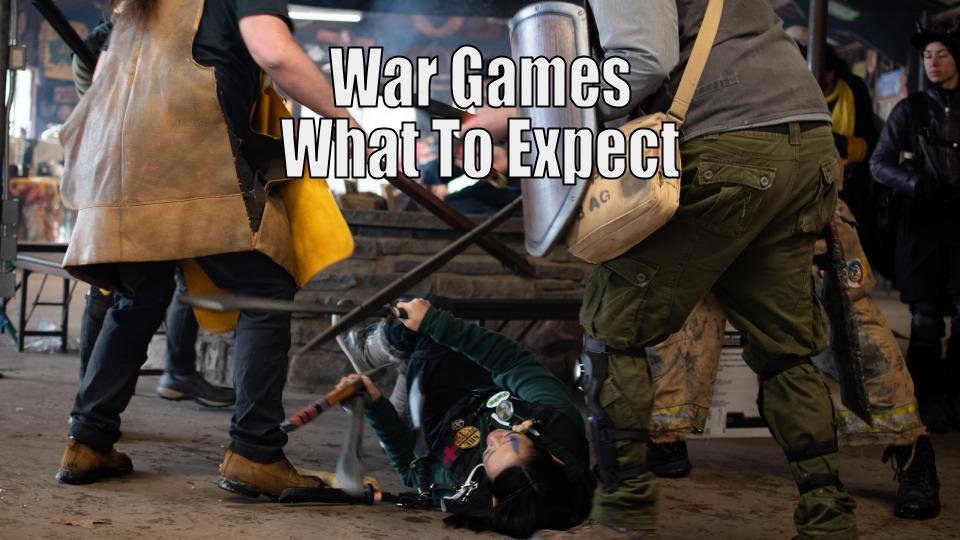
We’ve just released a Save-The-Date for our June Premiere Event, The Dogs of War, where we’ll spend the entire event telling the story of the Battle of Requiem. While this is far from the first time a Dystopia Rising chapter has simulated a battle, we want to approach this event differently. Often, larps about war focus on big battle scenes… that’s not what we’re going for. We want to bring you the tension and intensity of a wartime scenario, punctuated with brief and brutal episodes of violence.
So what does this mean when DRNY runs a war game?
The Base Mechanic: Hurry Up & Wait
“Hurry up & wait” is a common complaint in a war zone. You don’t know when the enemy will attack or reveal themselves, but you have to be prepared when they do. So there’s a lot of work to do, and you have to get it done fast to be ready… and then you wait. And while you wait, the work piles up again: the act of waiting expends resources. This creates tension where you always have something to do, but you’re also always waiting for something else to happen.
This is our focus during Dogs of War. Some people want to be out in the dark, stalking their enemies, or on the front lines fighting all the time (and we’ll have plenty for those people to do). But we also have a lot of crafters and cooks, researchers and spies, and those people will be the focus of the story most of the time. This game will demand a tremendous amount of supplies… and those supply needs will be time-critical, forcing you all to work together and prioritize. Further, you’ll have the chance to gather intelligence and dictate the course of the war by the information you collect and the decisions you make with it. In fact, these decisions will be central to the event.
The Focus: Decision-Making In War
We’re not going to line up your enemies in a shield wall all weekend and send wave after wave crashing down on you (although you can expect at least one pitched battle). This is a guerrilla-style war, where you have to put up patrols and test your enemy's defenses. This means that you’ll need scouts willing to sit out in the dark, waiting for an enemy to show themselves. When they do, you’ll need runners willing to bring the information back to your base, alerting the rest of your forces. And most importantly, you’ll have to decide what to do with that information.
We’re going to develop scenarios that force you to make interesting choices. They won’t be terribly complex, but they will be time-critical and important. When do you attack? Which resources do you conserve? We’ll give you some of the information you need to make a call, as well as an idea of the consequences of your decisions. And those decisions will have lasting effects during Honor’s Fall and the future of Requiem and the Fold.
The Fighting: Nasty, Brutal, and Short
We’re expecting well over 100 players for this event… even for our stronger NPCs, we know you can overwhelm your enemy with sheer numbers. So we’re going to spread you out, and make you watch different areas of the camp. And when we attack, it’s going to be sudden and hard, making targeted strikes that end quickly. If you’re mobile, and run to the sound of combat, you’ll probably get there on time. If you don’t, you better hope your comrades are ready for a nasty fight. This will make scouts, stealth, and reinforcements more important than just getting all the fighters together and charging.
That said, you can expect some big fights as well. Without giving away our plans, we have some ideas to challenge you and give you some of the most memorable combats you’ve had in Dystopia Rising. And of course, we’re planning on the biggest fight Requiem has ever seen to cap off the weekend.
Our Secret Weapon - The Return of the Trained Survivors
We’re going to be offering some special incentives to get you to take some extra NPCs shifts over the weekend, but we have one we’re really excited about. Old Timers might remember way back in 2015, when Dystopia Rising recruited military veterans at a national event to run special mods against their friends. These were called the “Trained Survivors,” and we’re bringing them back for our June Premiere.
The Trained Survivors will be asked to do two additional NPC shifts, one Friday night and one Saturday during the day. In return, we’ll comp their tickets and offer full Build, along with a very special “thank you” gift. Your characters will also get special plot consideration, operating “far behind enemy lines” to bring back special intel. We will prioritize people with military experience and similar training for this crew, and you’ll be assigned your Guide to travel with you for your shifts.
We’ll be posting more about The Dogs of War with our War Games blog posts in the months leading up to the event. Also look for information on our AMA events, where you can bring your questions and concerns directly to the staff.
This Is Your Game - Building The Culture You Want
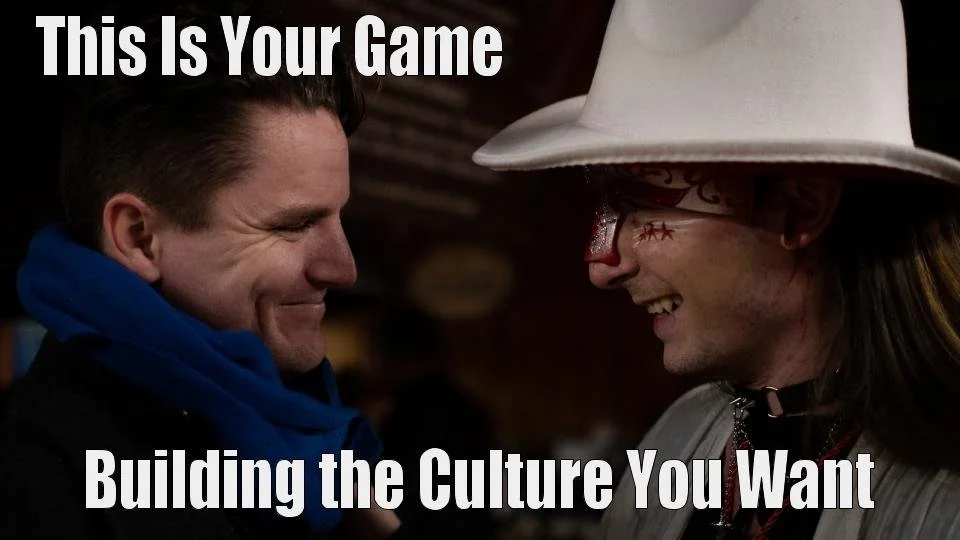
At Dystopia Rising, we often talk about our Community, and we’re proud of the group of people who create and attend our events at Dystopia Rising New York. But a community is more than a group of people with a common pastime: together, we create a culture, a collection of norms and behaviors that drives our events and allows us to come together to play safely and effectively.
At Dystopia Rising, we often talk about our Community, and we’re proud of the group of people who create and attend our events at Dystopia Rising New York. But a community is more than a group of people with a common pastime: together, we create a culture, a collection of norms and behaviors that drives our events and allows us to come together to play safely and effectively. As we enter the home stretch of our second year of live games, we want to talk about the culture we - both staff and players - are creating together, and how we can continue to excel in 2023 and beyond.
You Are Dystopia Rising New York
Nine times a year, we schedule an event where a couple of directors and a handful of storytellers build a plan, a few dozen guides provide the structure, and a hundred players create a game. We’ve achieved tremendous growth since we reopened eighteen months ago, and that’s not just because of our storytelling, or marketing, or logistics. It’s because of the enthusiasm and effort that the players bring month after month, co-creating with us, and lending their support during set-up, throughout the event, and clean-up. We want to thank you for this - we get a lot of credit for Dystopia Rising New York’s success, and we want to share it with you. Specifically, we want to thank you for what you do, and point out the specific things that make our culture a success.
A Culture of Safety
First and foremost, we, as a community, have to provide each other with a safe and accessible space to play. You’ve been a key part of this in two very important ways. First, you’ve consistently brought your concerns to us in an open and honest way. Our staff between events is relatively small and we can’t see everything. Your emails and conversations serve as our eyes and ears, and let us address everything from inappropriate comments towards other players to logistical concerns at the site. Your inputs have helped us successfully introduce initiatives such as topfree equality, made our site more accessible, and allowed us to manage the risk for events such as The Feast of Flesh. Second, when we respond to your concerns by offering tools to mitigate risk, you use them. We can’t thank you enough for your preparedness during the cold winter and spring of 2022, particularly when we had unique challenges on site. Again and again, when we communicate our problems and our solutions, you work with us as a team to make sure our events are a success.
As we go forward in 2023, we want to formalize this process. As our culture matures and we iron out large problems, we increasingly see individual issues arise that require our attention. When you have a problem, we want to work with you to create a reasonable accommodation that is specific to your needs. This is a flexible and interactive process, and relies on you continuing to bring us your concerns. Remember, when you come to us with an issue, we’re going to assess whether this is a general or specific issue, and likely work with you to establish a solution that allows you to play safely and effectively. Please understand we can’t always implement the specific solutions you ask for; this is a back-and-forth where we work together, and we have to consider the larger picture with all of our solutions.
A Culture of Accountability
Over the course of 2022, our staff worked very hard to make sure that when we had to make a correction to behavior, we did so to improve everyone’s play in the future, and not to punish past actions. And for having nearly a thousand players, we had very few problems. It’s not that you avoided bad behavior… you actively supported the games. You showed up for early set-up, stayed late to help with other clean-ups, and gave us your all on NPC shifts. Most importantly, you took care of each other, and we knew that if we weren’t there when something happened, our players would step up until we got there.
We can always improve, and as the game grows, we also know we’ll have more instances where people need reminders to do the right thing. These are not call-outs, they’re call-ins; we know people come to our games with the intention of being a positive addition to our community, but sometimes get tired, or distracted, or have problems. Part of our initiative for 2023 is empowering our guides to talk to people on the spot if they’re late for a shift or not engaging in clean-up: we know it’s not because you don’t care, but that we just need to refocus. We’re also going to address underlying issues rather than just telling you to do more: if you’re tired on an NPC shift, expect us to ask you to go to bed and come back, or if we’re worried about an injury, we might ask you to non-com for an event. We understand that sometimes people push themselves too hard, and we’re accountable for your well-being at an event. Accountability isn’t just making sure people do what they’re supposed to, it’s also about taking care of each other.
A Culture of Play
We’re extremely proud of the culture of play at Dystopia Rising New York. You all have handled challenging mechanics such as Compulsion and Unstoppable, long-term plotlines that have taken months to pan out, and altered your playstyle in some cases to buy into the storyteller’s vision. As we prepare for our premiere event in June and Honor’s Fall in August, we’re confident you’ll have a good time, as we all have cultivated a culture of play where we support each other’s choices and come together as a group.
In 2023, you’re going to see more discussions where we talk about how to engage with our plots and mechanics, so you can understand our intent, and engage with them on those terms. We’ve found that if we just roll out a mechanic, you might not understand our vision for how it plays out. Likewise, we often get action requests or emails from players describing what their character does, without telling us the experience they want to pursue. Our goal is more open and direct communication, so that we can continue to build on our current culture of play.
No game is perfect, and we, as a community, have dealt with many problems over the last eighteen months. However, we have, as a community, built a culture where we address problems and continue to communicate about potential solutions. With many of our policies and mechanics now set, we want to work with you to fine-tune our culture, and eagerly await the opportunities to do so in the coming months.
What Is Dystopia Rising All About?
A larp isn’t really an experience - it’s a chance to create your own experience with your friends. At Dystopia Rising New York, we offer many things to enhance that experience - antagonists, narratives and a beautiful campsite - and we have a lot of elements unique to Requiem. But what’s the core of the Dystopia Rising experience? When you and your friends get together and play Dystopia Rising, what do you expect? What about the game appeals to you?
We’ve come up with a few ideas… please let us know your thoughts.
Fighting Zombies (and Raiders and Critters…)
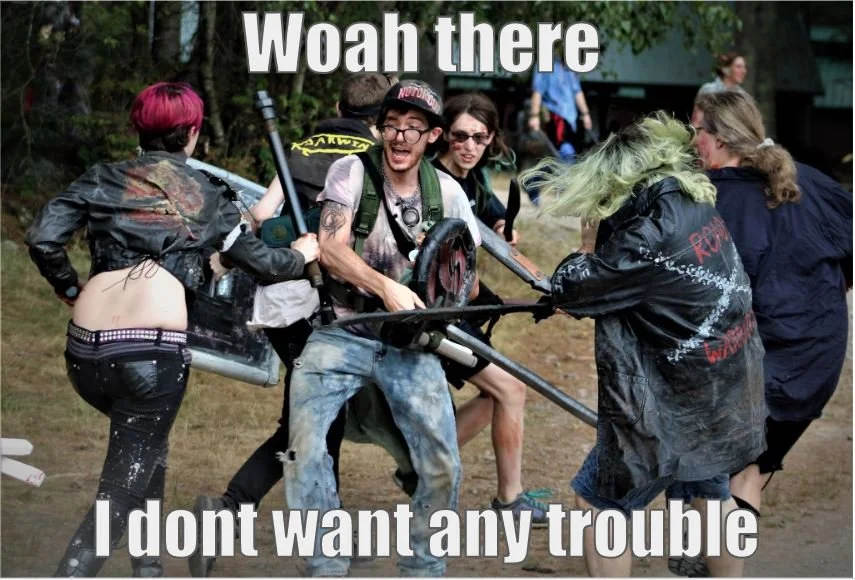
Dystopia Rising is a boffer larp, which means players expect there to be something to fight. It’s probably not the most common activity (if you have 6 to 8 hours of solid combat over a weekend, it’s probably a lot), but it defines the experience. You can hit your friends with foam swords at any boffer larp, but at Dystopia Rising, you get to fight zombies. It’s what makes the larp unique.
It’s also what makes it immersive, because the activity of boffer fighting aligns your body with what your character is doing. We may not be expert sword fighters or marksmen, but the act of swinging a foam sword in real-time in the chaos of a boffer battle feels more real than if we were playing a table-top game with dice. We think this is a major part of the appeal.
Hanging Out With Your Friends In The Woods In Costume
A big appeal of any larp is seeing your friends - larp is a social activity. Sometimes, we get too into it, and it’s our only social activity, but it’s a great way to reliably see a core group of friends every month. And when we do, we play… just like if we were in a bowling league or on a softball team, we play a game. This recharges us, because playing with friends (in this case role-playing) is a vital activity for adults to do.
With Dystopia Rising, we play in a particular aesthetic… and this aesthetic is important. We don’t just play for a couple of hours; we travel to the woods, put on post-apocalyptic costumes, and play for days. We don’t just role-play the exciting parts; we also cook in-character, we play music in-character, we craft in-character. Again, this is immersion, and it’s part of the unique appeal of a Dystopia Rising larp.
The Weird Stuff
We don’t mean “weird” in a bad way… we mean the stuff particular to Dystopia Rising larps that no one else offers. This could be Gravemind lore. It might be religious roleplay. The economy of the larp is unique and a tremendous draw for some people. There are lots of things that make Dystopia Rising unique, and each one is special to some player.
The important thing with the “weird stuff” is that there’s something for everyone, but not everyone likes the same thing. Some players will jump into a Gravemind scene every chance they get. Others spend hours collecting every blueprint. Having opportunities for both draws players to the game, where they’ll have the chance to hang out with their friends and fight zombies.
These are just our answers to “what is the appeal of Dystopia Rising?” What parts of Dystopia Rising do you come to game for?
A LARP Conundrum: Skill Calls and You
Hello Readers! We are back with another blog post, and this one serves a couple of purposes; transparency and bringing attention to collaborative play.
The Ground Work
At DR:NY, we have been lucky enough to enjoy some bigger games over the past few months but as we push into the colder seasons we expect to see some of our warm weather friends take a bit of a break which leads to some more intimate games. As you might imagine, as a game runner, large and small games present their own types of challenges. One of the biggest challenges is smaller NPC groups, because we love to push you to that ‘oh shit’ moment, and that is a lot harder to do when we have 3 people rather than 10.
Here’s the Scene
So, I want you to imagine for a moment - you’re out playing your character. Things have been pretty quiet… and then HARK! Are these the harmonious groans of zed? Or perhaps the grunting rumblings of some raiders!? You can feel your adrenaline start to rush as you reach for your weapons. You can see them now - only 4 of them. They engage with a group of people who had advanced to intercept them. “Mangle, mangle, break weapon, mangle, break weapon, mangle, break weapon…” One by one, the raiders are quickly dispatched. You didn’t get a chance to swing on them. Maybe they’ll respawn? There! From the treeline- more raiders! “Break weapon, breakmanglebreakweapon mangle…” dead again. They don’t respawn. There weren’t enough of them, you never even got close enough to swing. You watch the NPCs march away into the night, because after all, there are other players that also haven’t seen any action for a while and they need to be entertained as well.
The Dilemma
There are two major points to this blog. The first is really to point out that we (your game runners, your Ops guides) want to send you that threat, we want you to have fun engaging it, it’s literally what we are here for. We all have these skills, all this mind, brews, meals, all this build and time we have spent acquiring the aforementioned skills/items but when it comes to some of those smaller NPC groups, some of those lower threat baddies, the player may want to think about how using those skills could negatively impact the scene. We’re not saying don’t use your stuff - that’s kinda the whole point of playing. That being said, skill spamming can really suck from both sides of the aisle for a multitude of reasons. You’ve all been on the NPC side of things and heard the whole ‘don’t skill spam - it’s no fun for the players who have waited for something to fight and want to get in there and feel cool. You aren’t the hero, they are.’ We don’t think about how it is for the people on NPC shift and the guides when we try to bring a low to moderate threat out and it gets steamrolled in thirty seconds. It unfortunately ends up being not that much fun for most parties involved - the NPCs don’t enjoy being immediately potatoed and not being able to engage their friends, the guide has to try to figure out if there is something they can do that would be fair but more engaging for the players that are there, and the players that are not the ones who immediately engage in the fight don’t get in on any of the action.
What We Don’t Want
“Okay, well, why don’t you just up the stats of the NPCs?” Good question. A lot of the time we do. Being able to adapt on the fly is an important tool out in the field. If I know I am hitting a bunch of veteran players, you better believe those NPCs will be above threshold. But there are also variables ( weather, temperature, how much combat that group of NPCs has already done etc.) that impact us being able to respawn for long periods of time, and just making a threat immune to skills or having ‘yes’ body is something we avoid, or don’t do at all at DR:NY. There are also the cases where the groups of players we see are mixed build levels. If we want to send something out the low to mid build characters can engage with and they happen to be hanging out with a couple players that have high build, it is very difficult if not impossible to balance appropriately. You can see how all of this can be quite a challenge.
What It Boils Down To
So what is the moral of this ramble? I guess it boil down to three things:
Spamming skills has a time and place, and that is with a larger or higher threat group of NPCs
Be mindful of the people you are around, they want to get in on that combat too. If one or two players engage the threat and beat it down in 30 seconds, that’s not nearly as much fun.
The people you are fighting against, the NPCs, those people are your friends too. And sometimes they just wanna play wacky bats and steal your bucket…
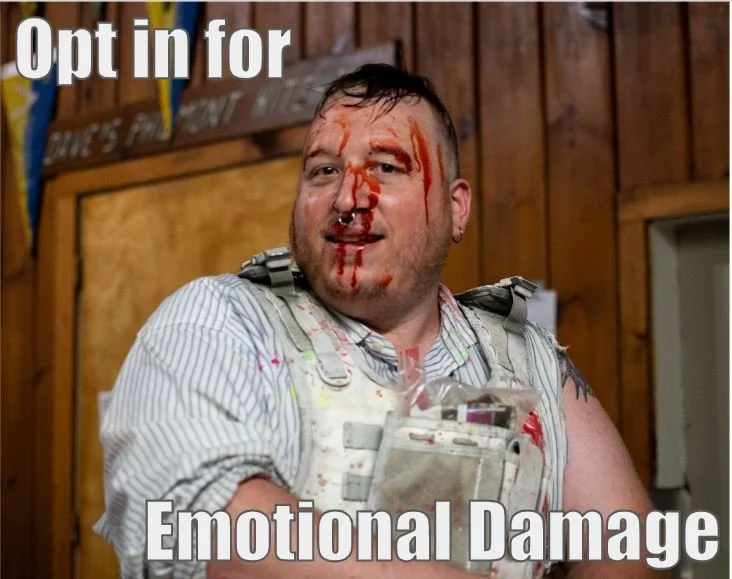
Emotional Damage
It’s clear to us that our players have enjoyed the “Fuck Around And Find Out” mentality and ability to opt in that came with Red Line. While thats still very much on going, we would like to offer another opt in for “Fuck Around And Find Out” that’s a bit more in theme for the spooky season.
How do you get involved?
Once during game a cabin may register with Ops a negative emotion in the form of an “I feel _____.” statement. This could be I feel aggressive, lonely, melancholy, hatred, etc etc. This is done for the entire cabin, so please make sure to discuss with your bunk mates before registering. Once a cabin has registered with Ops, we will (at some point during either night) find a way to represent, create or embody that emotion in the cabin at our discretion. This could be a scene, a threat, some fresh new trauma for your characters to bond over or other various things that come with the season. The sooner a cabin registers the more time we will have to plan a fun encounter for all those who are staying there so feel free to start those conversations before game !
Unfinished Business
With a new season of Dystopia Rising New York beginning, there’s a few items that haven’t been taken care of.
Sure was a lot going on during Honor's Fall. Time to wrap up some loose ends as we roll on into SEASON TWO.
False Idol
Tired of seeing all your faithful friends murder each other? Hunt down the False Idol, put an end to it and maybe find out what or who it was in the process.
Red Line
Everybody loves Redline, but has anyone managed to figure out what it all does? Compare notes, get high off your ass, experience insane side effects, but hey where is it coming from anyway?
Meet The Families
Now that the dust has settled check out and rub shoulders with your new family heads and see the faces that will be wielding power in a newly reshaped Requiem.
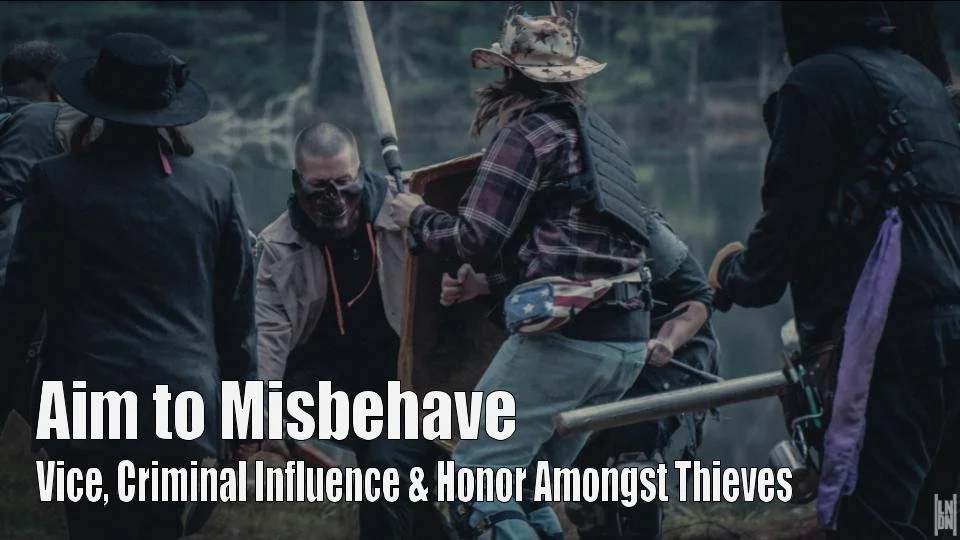
Aim to Misbehave
Requiem doesn’t really have laws… it has rules. The Treaty of the Fold binds the Families of Requiem together under the rule of the High Lord Executioner, but historically, people ended up here because they got run out of somewhere else.
Requiem doesn’t really have laws… it has rules. The Treaty of the Fold binds the Families of Requiem together under the rule of the High Lord Executioner, but historically, people ended up here because they got run out of somewhere else. The Families more resemble a crime syndicate than traditional government, and the setting encourages sketchy activities like drugs, theft and murder (as long as you don’t get caught). While the staff talks a lot about Character versus Character (CvC) conflict quite a bit, there’s actually not much more CvC in Requiem than in other chapters. Most of the conflict remains CvE, which poses a question: if we’re not harming each other, how do we misbehave in a setting appropriate manner? Here are some ideas for both locals and travelers as we approach Honor’s Fall.
Rule 0: Consequences, not laws
Requiem is governed by a treaty, not a constitution or a charter. In most governments, there’s an authority figure who has “legitimate” power over everyone who lives there. In a treaty, various groups agree to abide by the same rule and suffer consequences enforced by their peers. There’s not a whole lot that the High Lord Executioner can do to go after Seraphis Volkov if she kills someone in the streets of Requiem… except that the other Families would back him up, and possibly destroy the Seraphis’ entire family if she didn’t submit to his judgment. The threat of war (as seen during our last plot arc, the Reckoning) keeps the peace.
While all the Families care about the Treaty, it’s out of self-interest, not a sense of justice. If someone disrupts the peace, they’ll be dealt with quickly, but there’s not a police force investigating crimes in Requiem. Therefore, you have an unspoken rule that exists in many places, but is even more true here: don’t get caught.
Vice Is Part Of the Setting
We’ve just introduced a new drug, Redline. The local bar, the Wilted Rose, is a brothel. We have heavy metal raiders. Sex, drugs and rock-and-roll are integral to the setting, and we encourage players to indulge their character’s vices. While we have to be respectful to real-world addictions and player boundaries, vice is one of the best ways to role-play Requiem’s lawless nature. It’s not that Requiem has vices you can’t find anywhere else, it’s that in Requiem, locals focus on vice as an enterprise. It’s not a Hedon paradise, because in Requiem, vice is a business.
How do you get involved in vice? Buy intoxication brews (and then role-play the effects). Do Redline. Frequent the brothel (just don’t expect actual sexual contact with the players!) Or start your own rackets: maybe you can learn three-card monte (and run it as an actual grift with a partner). Do some gambling and lose some bets. Cheat at cards. Find something that feels good, then charge characters in-game money to indulge.
Criminal Conspiracies
Requiem has a strong emphasis on Criminal Influence, as well as societies such as Murder Inc. We typically have our meetings early in the gathering, to provide guidance to players throughout the event. Our Criminal Influence meeting usually has over half the event in attendance (we currently have 110 players checked in with at least basic Criminal Influence), while our Murder Inc meeting usually meets in a smaller group that requires more effort to attend. These groups have a strong presence in the Families of Requiem, and typically offer an opportunity to get involved with plot in a setting-appropriate manner.
Remember, Criminal Influence is not a rare skill in Requiem. While it still values secrecy, when most of the game has the skill, it’s not an exclusive club. When you go to the Criminal Influence meeting, expect to see high-ranking Family members (both player and NPC) expressing political opinions, a couple of job offerings, and probably people fencing some sketchy items. Murder Inc, however, generally requires more commitment: you’ll be asked to use proficient Stealth to make a disguise, and then meet at ops to be escorted to the meeting location. There are often in-depth discussions of what the organization will do over the course of the gathering, and if there’s to be an assassination, this is where it’ll be decided.
Honor Amongst Thieves
The single best way to engage in Requiem’s setting is to embrace the idea of “honor amongst thieves.” The people of Requiem have various codes they live by. For example, they don’t rat people out (or at least try not to get caught doing it). If they shake on an agreement, they expect it to be honored; this isn’t a “Rover deal” but rather a realization that the other person might do violence if they welch. And they value loyalty… loyalty to their family, in particular… above all else.
At Honor’s Fall, we’ll bring in a new item to focus on this theme, as we introduce special challenge coins. Extremely rare, these coins were inspired by the gold coins in the John Wick movies: they represent a favor more important than life itself. We’ll explain more about them in an announcement, but realize that they’re only given out to players on rare occasions, and if you have one, you can return it to an NPC to call in just about any favor you can think of from them.
But I’m Not A Crook
Not everyone plays a criminal, but everyone in Requiem is playing in a town built by crooks, con artists and scoundrels. While, we don’t create plots that focus exclusively on these scoundrels, apart from a couple of Criminal Influence mods, realize that to a majority of players, the criminal aspect of Requiem is an important part of the game. If you’re playing a character who doesn’t have Criminal Influence, who doesn’t indulge in vice, or even plays law enforcement… cool. That’s also part of the setting, but we do expect you to interact with others with the knowledge that all the rackets, grifts and conspiracies that are going on around you, are important to other players. There are ways to get involved indirectly, with many criminal organizations maintaining strong ties to people otherwise on the up-and-up. We’re committed to not gate-keeping our plots and modules behind Criminal Influence or that sort of role-play, but realize that many of our plots are going to have that sort of aesthetic. By engaging with it, even in an antagonistic manner, you can get involved in a uniquely Requiem way - by indulging your vices, acknowledging the sense of honor amongst thieves, or even by refusing to give up your sense of law and order.
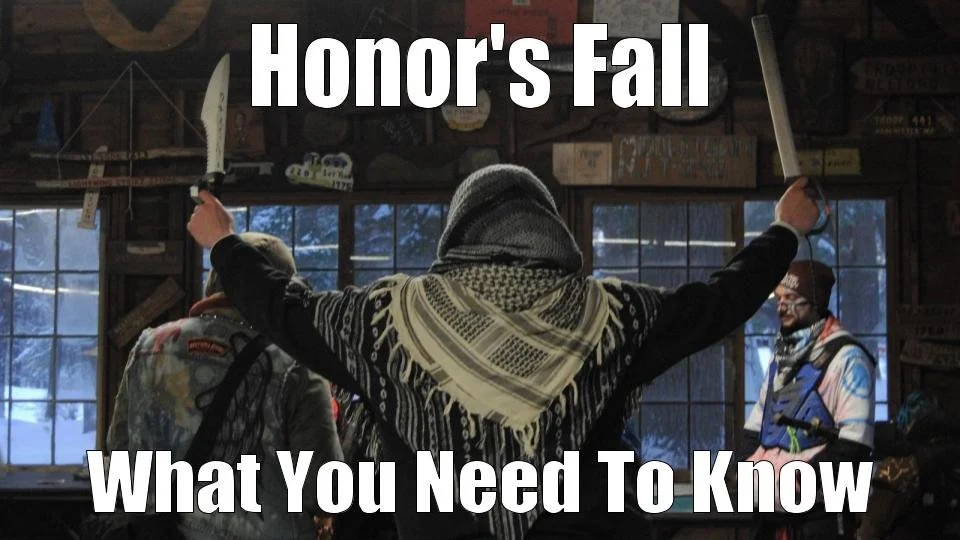
Honor's Fall - What You Need To Know
For the past twelve months, we’ve talked about Honor’s Fall… it’s the climax of the year for Dystopia Rising New York. However, every year, Honor’s Fall changes a little, and it’s important to understand the “rules of the game.” We want to make sure all players, both in- and out-of-character, know what to expect this August.
In-Character Justification
For players who have attended Honor’s Fall in the past, you know there are always small changes as the staff adjusts to lessons learned. In-character, these changes are due to the authority of the High Lord Executioner, who has a great deal of influence over the process. Last year, we saw Anton Anastasia at the height of his power effectively control all aspects of Honor’s Fall, as he slipped into authoritarianism and was ultimately killed by Jones. This year, with Anton taking a step back, his second-in-command, Essex, has asserted his personality on the event. As a result, one can expect less pageantry and intrigue, as Essex favors the direct approach.
This is just a justification: your staff made changes to promote gameplay. We appreciate your buy-in on this: we’re being as transparent as we can, and would appreciate you steering your character towards acceptance of these changes.
How Honor’s Fall Works
At sunset, the Treaty of the Fold is suspended, and everyone in town can do as they will. By tradition, the Heads of the Patron Families of Requiem hunt each other to retain their position and choose the High Lord Executioner. While the activity is simple, we have several rules in play that the Families are expected to follow:
All Families of Requiem, Patron and Ward, standing and perspective, are expected to participate in Honor’s Fall.
For the sake of clarity, “participate” means the Family Head has to be “on the field”: visibly participating in Honor’s Fall. They should spend significant time (at least three hours) undisguised and out in the open where people can find them.
Families fight to collect “trophies,” the severed head of the leader of one of the Patron Families.
This year, as there are only 9 Patron Family Heads, there are only 9 trophies. To correct for this situation, the six remaining original families (Anastasia, Boon-Helm, Molon, Volkov, Warren, Zodiac) do not need to collect a trophy.
The three more recent Patron Families (Brokentooth, the Devils, and Lonely Streetz), as well as any prospective Family, must collect a trophy and place it in the Wilted Rose by sunrise to retain or gain Patron Family Status.
If there are more Prospective Families with trophies than there are available positions, the existing Families vote on who will become a Patron Family.
Family Heads can’t make deals to trade their trophies. They must be taken by force. After a trophy is in one’s possession (i.e. taken from the corpse of a Family Head), deals can be made.
Other than that, Families can do whatever they can think of to keep their Family Head safe. If they violate the spirit of the rules, they might find there are severe consequences.
The last Family Head standing in the Wilted Rose by sunrise will be declared the High Lord Executioner (there’s a catch, however, see below).
Once a Family Head is killed, they no longer need to participate in Honor’s Fall, but they still need to show up at the Wilted Rose with a trophy.
The High Lord Executioner
The political purpose of Honor’s Fall is to pick the High Lord Executioner, who will enforce the Treaty of the Fold for the next year. Traditionally, the High Lord Executioner was the “last one standing,” which led to a great deal of wheeling and dealing throughout the night. Contrary to popular belief, the High Lord Executioner doesn’t have to be the only Family Head who survives the night… they have to be the last survivor who is standing in the Wilted Rose at sunrise. Some specific points:
Only Family Heads can become the High Lord Executioner.
If a Family Head dies during the night of Honor’s Fall, they can’t become High Lord Executioner.
Unlike the collection of trophies, deals to determine who becomes High Lord Executioner are very common. If a Family Head hasn’t died, they simply step out of the Wilted Rose before sunrise if they don’t wish to oppose the claimant.
If there is more than one Family Head in the Wilted Rose who hasn’t died by sunrise, it’s likely to end in a great deal of bloodshed. This hasn’t happened yet, and all the Families will do whatever it takes to avoid this sort of war.
How To Enjoy Honor’s Fall
You have three options to enjoy the night of Honor’s Fall: political Character versus Character (CvC), political Character versus Enemies (CvE), or survival CvE:
If you’re heavily involved in Family politics, you can actively hunt (and be hunted by) other players. If you play a high-ranking member of a Family, you’ve opted into this already; other players may choose to get involved in the CvE aspects of Honor’s Fall.
If you want to get involved in the bloody politics of Honor’s Fall, but prefer less CvC, you can hunt and oppose the NPC Patron Families, who will all be out in force. Remember, they’re often as dangerous as other PCs.
If you want to stay out of the politics of Requiem, you can just try to survive the carnage, and help others to do so. The battles of Honor’s Fall are known for their collateral damage, so there are lots of challenges for you.
All Night Long
We’ll be running Honor’s Fall plot from sunset to sunrise (7:50 pm to 6:14 am… almost 11½ hours). How do we expect you to manage that?
First, to set expectations: after it becomes apparent who the High Lord Executioner will be (i.e. all the other Family Heads have died), the violence dies down. We’ll go all night, but realistically, NPC threats will be rolling back around 4 am (like a normal Dystopia Rising New York game). While you’re not “safe,” you can probably find someplace to sleep if you're not affiliated with a Family whose Head is still alive.
That said, a lot of you will be up at sunrise to see how events pan out at the Wilted Rose. First light is 5:45 am, and there will be important events that occur at this time. We expect you pace yourself on Saturday, and understand the staff are pacing ourselves as well. This includes a 4-hour siesta on Saturday, where no events will be scheduled. This includes player-driven events: please do not schedule anything during the Saturday siesta… this is time for you to relax and hopefully nap.
Trophy Hunting
Collecting heads is very important to Honor’s Fall, and we have a local item to do so. It’s the Boone-Helm family item, the Blood Covered Artist’s Toolkit:
A kit used to make trophies. Requires 30 seconds of role-play. When combined with any level hooch, allows the taking of a non-mechanical trophy. If used on a recurring named NPC, or local unique high level threat, it will produce a Creature Comfort card. The card produced lasts 3 years.
So to collect a head, you need this item and a bottle of hooch, and take 30 seconds roleplaying collecting a trophy from a dead Family Head. For Honor’s Falls, we have some special things we’re doing to make this easier:
First, the Boone-Helm are happy to support the artistic endeavors of all this Honor’s Fall. You can buy a Toolkit at the Post Office for 5 wagers or 1 wager signed by Polaris Boone-Helm.
You have to have some sort of physrep for the kit… it doesn’t need to be elaborate, but it should be something you’re carrying around. Additionally, you should have some sort of physrep for the trophy you collect with it, if at all possible.
Family Heads (including PCs) will have a creature comfort card on them representing their “head.” This item card can’t be used, traded or stolen until someone kills the Family Head and uses the Toolkit on them. The Family Head will then hand the person who used the Toolkit the card.
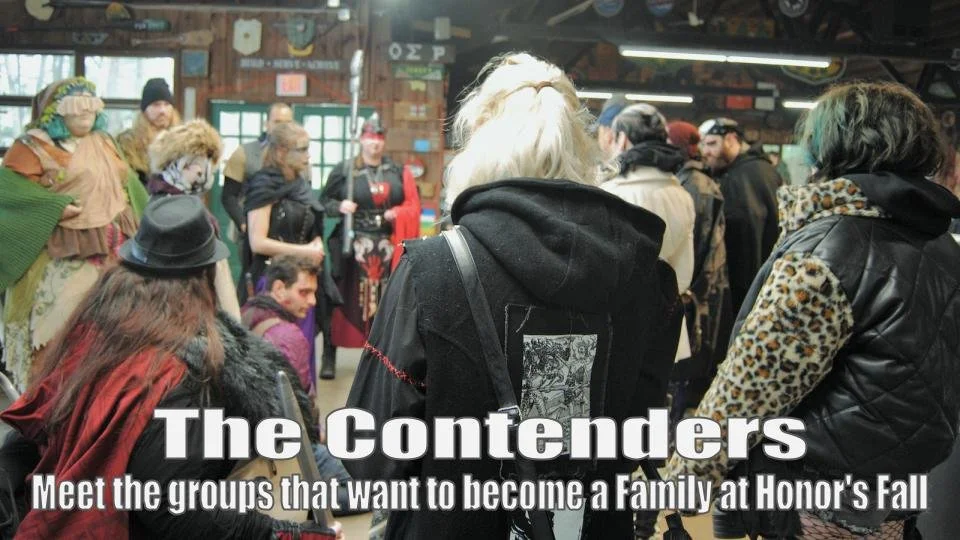
The Contenders
If you pay attention to the politics of Requiem, you’ve probably heard someone mention “the Thirteen Families.” The problem: there aren’t Thirteen Families. The number shifts, and depends on how you count them… so we’ll just talk about Patron Families that exist right now. As of the summer of 2022, we have nine Patron Families - six Families with NPC Heads (Anastasia, Boonhelm, Molon, Volkov, Warren and Zodiac) and three with players leading them (Brokentooth, Devils and Lonely Streetz). So with only nine Patron Families, what happened to the other four, and where do we go from here?
Why Are There Not 13?
The short answer: there were 13, and then things changed. Families die, vie for power, lose their position and evolve over time. Often, they meet bloody ends (like the Jones Collective at our last event). We also want to make sure there is room for player-created Families, and make sure there are significant stakes at Honor’s Fall.
When we returned from the Pandemic in August of 2021, we re-evaluated every Family, and ended up with eight: seven NPC-led Families and Brokentooth. Over the last year, we added two player-led families, and saw the demise of Jones, which lands us at our current number. During this Honor’s Fall, we’ll see the number grow to 13 again, as the players help decide which groups will enter the ranks of the Patron Families.
Who Are the Contenders?
During Honor’s Fall, the Families will vie for power in Requiem, and try to ensure their own survival as a Patron Family. While they do, a number of contenders will jockey for power, hoping to be elevated to the their status. If you’ve played in Requiem this year, you might have met many of these groups, but here’s a refresher:
The Anderson-Ambrosias - A player-led Ward Family, the Anderson-Ambrosias are led by the Faithful of both the Sainthood of Ashes and the Nuclear Family. After the fall of the Jones Collective, they seek to position themselves as the “tenders of the Faithful” in Requiem.
The Bloodwraiths - A mercenary company who made it a practice to pursue “big game”; they entered the Fold tracking the undead creations of Zodiac. They believe that the “weak can become strong” and seek to help people defend themselves, but as a mercenary company, they’re also known to be more than a bit greedy.
The Dioscuri Bloodline - A family of psions who deal in a strange sort of “crystal-tech” that they manufacture with their abherrent powers. While little is known of them, rumor has it that they seek to protect the “Gifted” from the “Unworthy,” although it’s not entirely sure what that means.
The Doctorium - At their core, a group of well-guarded Doctors, this faction seeks to develop a panacea for all diseases. In Requiem, they offer medical treatment in exchange for compensation. However, beneath such noble goals, there are rumors that they’ll perform less-than-ethical experiments on “volunteers” - individuals who failed to pay their contracts.
The Knite Council - Newcomers to Requiem, most people of the Fold haven’t had much interaction with this group except with their pig-faced leader (prophet? god?) Argor. Concerned primarily with cleaning the corruption they find blighting the land, Argor’s followers have begun to reach out to the Families, seeking to join them.
The Stevensons - A collection of Landsmen… heavily influenced by faith the Nuclear Family… the Stevensons have a long history in the Fold but have avoided entanglements with the politics of Requiem until the Reckoning. Farmers by trade and soldiers by necessity, they want to assert themselves as the voice of the common folk.
The Tarrarian - This faction believes in self-control and rehabilitation; they dwell in the tunnels beneath Requiem, and are actively attempting to make their living space accessible and hospitable. Of course, a clan of gorgers has some obvious… conflicts of interests cohabitating with those who could also be their food supply.
Other contenders might still emerge, including player-led Families who meet our requirements (if you’re interested in contending for Family status at Honor’s Fall and have the appropriate number of people, make sure you give us at least 30 days notice with an action request).
What Happens Next
With Honor’s Fall coming up, there will be openings for new Patron Families… but not enough room for all the aspiring and current powers-that-be. Player actions will determine which families remain after Honor’s Fall, and who gets to take their place.
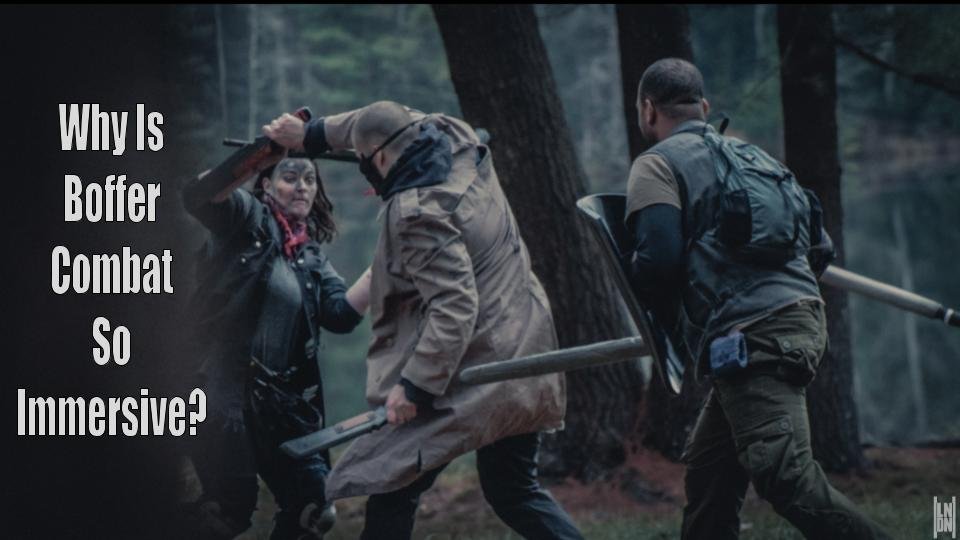
Why Is Boffer Combat So Immersive?
A big appeal of Dystopia Rising is hitting your friends with foam swords. It’s a fun activity: if you hand non-larpers a bunch of foam swords, they’re probably going to start playing around and swing at each other without worrying about hit points or genre. However, it’s also a tremendous tool for immersion, and one often overlooked by larps with more expensive designs. Because combat is so hard to simulate, but so integral to many of our narratives, boffer larp offers immersion unrivaled by other forms of larp.
A big appeal of Dystopia Rising is hitting your friends with foam swords. It’s a fun activity: if you hand non-larpers a bunch of foam swords, they’re probably going to start playing around and swing at each other without worrying about hit points or genre. However, it’s also a tremendous tool for immersion, and one often overlooked by larps with more expensive designs. Because combat is so hard to simulate, but so integral to many of our narratives, boffer larp offers immersion unrivaled by other forms of role-play.
What Is Immersion?
In larp, “immersion” is one of those words often used and rarely defined, so here’s a description for this conversation: immersion in larp happens when a person can keep playing without actively thinking about the fact they’re in a larp. It’s spectrum, not a binary state, and the degree of immersion changes from moment to moment. To have immersion, you need two things: verisimilitude and acclimation.
Verisimilitude is the quality of seeming real. It’s not the same as being realistic, as often our perceptions of reality differ quite a bit from what actually is (particularly with science fiction, where people’s experience with fiction exceeds their experience with science). When something has verisimilitude in larp, it seems real in both appearance and in function.
Acclimation: when people see something different or new, they immediately realize it… and then begin to forget about it. An example of this are new smells: people generally only recognize a smell for a couple of minutes, and then forget about it. The smell doesn’t go away - they become acclimated.
When a designer introduces something that isn’t real into a larp, they try to make it seem real. The degree to which they succeed determines verisimilitude… but then time acclimates the players to the difference between the larp and reality, and they get used to it. They become immersed in the environment, and forget they’re role-playing with something that’s not real.
Why Combat Works
Combat in Dystopia Rising is not like real fighting. People don’t have hit points, the techniques for lightest touch aren’t real, guns don’t work that way (and neither do knives, for that matter). But compared to other other role-playing games, it has a lot of verisimilitude:
There’s not a call for initiative or shift in narrative context… combat flows from other activities without a shift. There’s no break in acclimation when it begins or ends.
The physical activity resembles actual fighting. While swinging a boffer in a 90 degree arc is not the same as actual knife fighting, they both involve footwork, positioning, hand-eye coordination - the type of skill is similar, even if the skill itself is different.
While boffer combat is a simulation of fighting, the tactics surrounding boffer combat can be extremely similar to real world tactics.
Combat is a continuous flow, as opposed to turn-based or negotiated, meaning players experience it in the same timeframe as their characters.
A majority of role-playing games focus on combat mechanics, with good reason: a player can lie to another player, buy an item, and even have a romance without anyone necessarily getting hurt, but combat simulations come with significant risk. Further, the importance of combat to many of our narratives (particularly genre fiction, such as sci-fi or fantasy) make it an important part of a larp. Because boffer larp handles it so seamlessly, it offers immersion one can’t find in other larps.
However, one of the big strengths of boffer larp might also be a side-effect of the style. Because you need a lot of space to have a boffer larp, they’re often located at campsites for weekend long events. Combined with the episodic nature of boffer larps, players enjoy hundreds of hours playing throughout a year. This acclimation makes things like hit points and rules calls seem less disruptive (and hence more immersive), until the simulation feels just like reality.
Search Posts
- CAPs
- Honor's Fall
- PFAs
- Premiere
- appreciation
- crime
- culture
- cvc
- design
- families
- genre
- gravemind
- how to
- immersion
- larp advice
- live
- logistics
- making the most
- narrative
- new players
- npcs
- player tips
- politics
- rectangles
- religion
- requiem
- rules
- safety
- setting
- steering
- storytelling
- survival horror
- travel
- treaty of the fold
- war games