
REQ-uired Reading
Making the Most of...
At Dystopia Rising, we spend a lot of time on our costumes, and they look great. We distress our jackets, sew all sorts of patches and accessories, and craft realistic boffer weapons. However, then we often pack those costumes into suitcases, cover our bunks in sleeping bags and spread out all sorts of non-genre items across our sleeping space.
Remember: there’s nothing wrong with this. The most important thing about your sleeping space is that you’re comfortable sleeping in it, and genrefying your sleeping space costs both time and money that not everyone has. But we do spend a significant amount of time in our bunks, and if you want to make it an immersive space, consider the following tips for making the most of your sleeping space.
Start with bedding
Remember the number one rule: you have to be comfortable sleeping in your bunk, so if the sleeping bag works for you, go with the sleeping bag. However, having actual bedding… sheets, blankets and pillows… is the first step to making your sleeping space look post-apocalyptic. It’s also a role-play opportunity. Does your character make the bed? Do they have an elaborate set-up of pillows and quilts or just a spartan blanket over white sheets? Do they make militaristic hospital corners? And even if you have a sleeping bag, consider bringing an old sheet or blanket to throw over it when you’re not using it.
Find the best bags
Particularly for Dystopia Rising New York, your storage and travel space may be limited. People who ride share might not be able to take extra equipment to phys rep their space. In this case, consider what you’re using to carry your stuff to game. A military duffle can probably carry all your gear, and it’s completely in genre for Dystopia Rising. If you have space in a car, a trunk can store a tremendous amount of storage, and double as furniture. Often these solutions are less expensive than buying a modern roller bag, and can often be found at military surplus stores (if you’re in New York City, consider Army Navy Bags… a store that just sells military bags at low prices.)
Organize your space
Bunks at Dystopia Rising often are in tight, cramped areas that become even tighter and more cramped when you add a dozen larpers. Work to keep your stuff in bags, boxes and out of piles on the floor. This isn’t just consideration for other larpers, but an actual survival tactic: when you’re in SERE (Survival, Evasion, Resistance, and Escape) you’re taught to keep your stuff off the ground as much as possible to keep it clean. Even if you can’t keep it out of piles, consider throwing up a privacy sheet around your bed, and then piling it on top, at least until you go to sleep.
A little goes along way
A string of christmas lights, a couple of tea lights, and a few pieces of paper or clippings to hang on the wall go a long way from transforming your space from a temporary bunk to a living space for your character. Is there a drawing you particularly like? An in-game newspaper article or picture? A piece of canvas with your faith’s holy symbol? These items will fit in a backpack without taking up too much space, and help make your sleeping space more immersive.
Remember, a sleeping space is a place for sleep, first and foremost, and genrefying it is a nice “extra.” Using these tips can help make your character feel like a more persistent presence in the world in an affordable and easy manner.
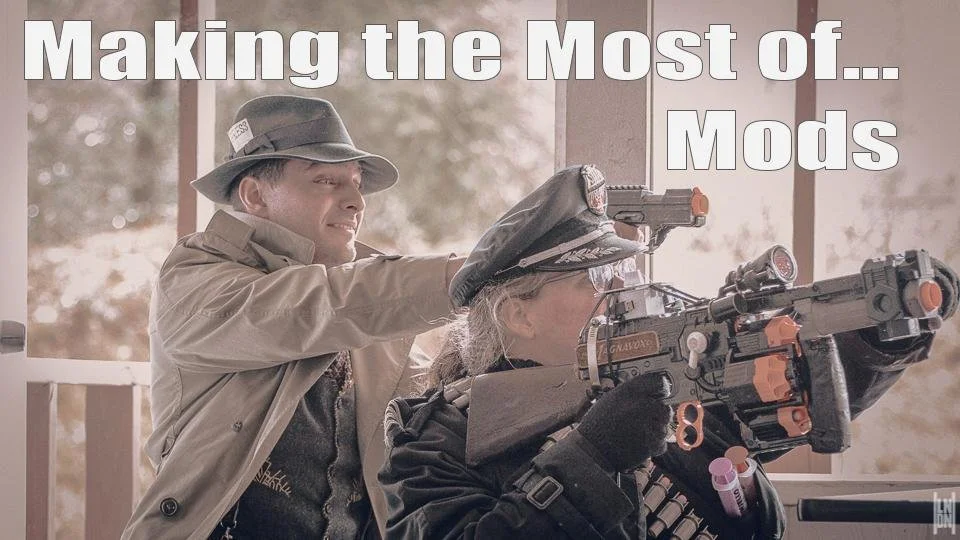
Making the Most of... Mods
A Dystopia Rising game has many parts: the economy, roaming threats of zed and raiders, and persistent NPCs (or “Casted Characters”) to name a few. One staple of the Dystopia Rising experience are mods; short stories that typically last an hour or so, using the players on NPC shift.
A Dystopia Rising game has many parts: the economy, roaming threats of zed and raiders, and persistent NPCs (or “Casted Characters”) to name a few. One staple of the Dystopia Rising experience are mods; short stories that typically last an hour or so, using the players on NPC shift. At their best, mods are creative and original, creating a memorable experience. At their worst, they’re formulaic and forgettable. The staff of every game commits to creating the highest quality of mods that they can, but even experienced designers don’t hit their marks every time. So how does a player make sure they have a good time on mods?
Remember that mods are just an opportunity for role-play
Mods aren’t stories in and of themselves, they’re opportunities to tell a story. Designers spend a lot of time making their hooks original and their encounters challenging, but all that really matters is “did the players engage and have fun?” When a mod goes out, it’s going to wander the area of play, offering players the chance to engage. Remember this: if you choose to engage in a mod, commit to the bit. If a merchant mod comes out with NPCs selling items and equipment, put down what you’re doing and talk to that NPC. Play “yes, and…” or “no, but…” with the NPC, building a rapport more than “how much money for those item cards.” You don’t have to engage with a mod, but when you do, fully engage with it. A mod is just an opportunity, don’t half-commit to that opportunity.
Understand the structure
While designers strive for creativity, predictable structures aren’t bad: they let the players know how to engage in the mod. Mods often have a set structure: a hook goes out to let players know “hey, this thing is happening,” (i.e. zed are coming out of the morgue), then the challenge occurs after the players gather at the location, and finally, there’s some resolution at the end. The heart of the mod is usually the challenge: that’s the reason the mod goes out, so players have something to do. Gathering for the mod is an important response to committing to the opportunity (see below), but players also have a hand in resolution. Remember, the NPCs are going to go back to ops, drink water, put their clothes back on racks, and then get ready to go again. There’s not much opportunity to have resolution beyond the point where the NPCs head back, so realize you have leave everything on the table before the end of the mod. Say what you want to say to the NPCs as if you’ll never see them again, make sure you get any rewards you think are due, because once the mod ends, there might not be any follow-up. And, of course, leaving nothing unsaid makes the mod more memorable, which actually increases the chance of follow-up.
Gather your forces
Mods are usually timed (i.e. “4 pm on Saturday”), so you never know who’s around when the mod goes out. Instead of looking for your friends, try a new version of the 10-foot rule… ask everyone within 10 feet of you if they’ll help. Having a motley crew of strangers out on a mod is often more interesting than going out with the people you hang with all the time. If someone you rarely role-play with asks for your help, and you’re not doing anything, consider going with them and committing to the bit.
You can’t control the mods that go out, but you can control how you engage. These three tips… commit to the bit, leave everything on the table, and the 10-foot rule… will help maximize your enjoyment on mods, regardless of the situation.
Search Posts
- CAPs
- Honor's Fall
- PFAs
- Premiere
- appreciation
- crime
- culture
- cvc
- design
- families
- genre
- gravemind
- how to
- immersion
- larp advice
- live
- logistics
- making the most
- narrative
- new players
- npcs
- player tips
- politics
- rectangles
- religion
- requiem
- rules
- safety
- setting
- steering
- storytelling
- survival horror
- travel
- treaty of the fold
- war games