REQ-uired Reading

Setting Info DR NY Setting Info DR NY

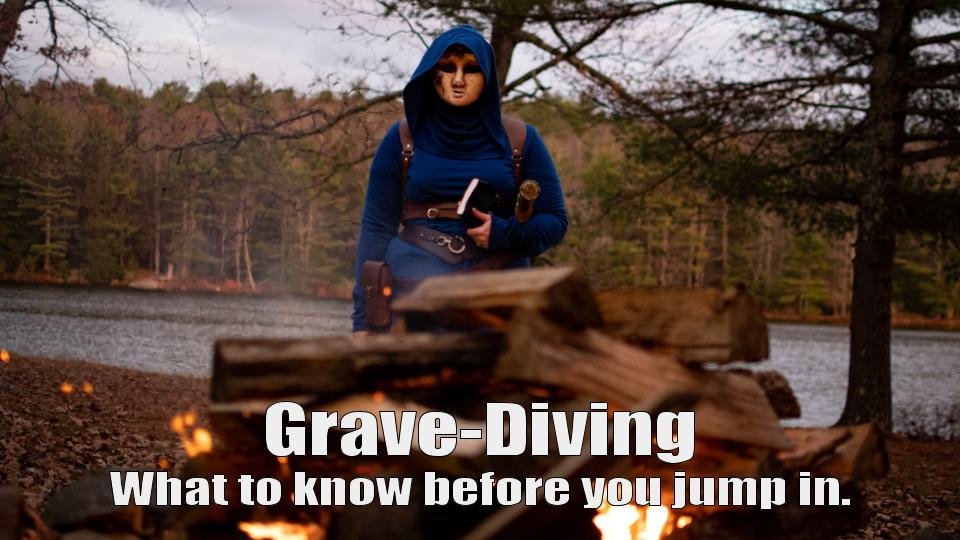
Grave-Diving

The Grave Mind is the weirdest part about Dystopia Rising, and players love weird stuff. It’s where our world becomes unique and unpredictable.
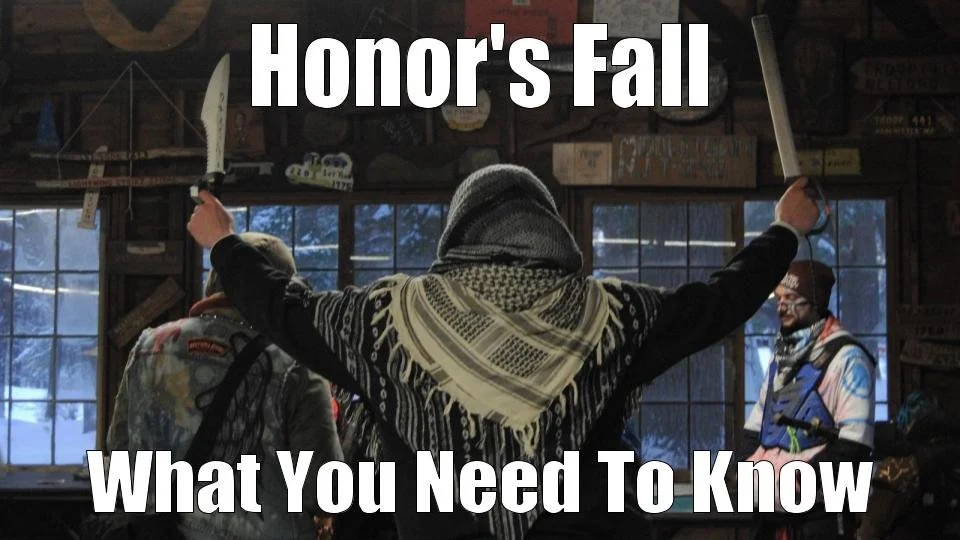
Photo by Shawn Smith

The Grave Mind is the weirdest part about Dystopia Rising, and players love weird stuff. It’s where our world becomes unique and unpredictable. Picture this conversation between a New Player Guide and newcomer:

Guide: So, this is a zombie larp.

New Player: Got it.

Guide: It takes place years after the fall of humanity, so no one remembers exactly what happens. Also, we’ve all evolved into slightly different strains of humanity.

New Player: Got it. Different strains of humanity. Got it.

Guide: Also, inside everyone and everything is a fungal strain we call Infection, and it’s why when you die you get resurrected; but it’s also why there’s a psychotropic hell you have to go through each time, and it makes weird stuff appear every now and then.

New Player: ???

Can it be confusing? Yes. Does everyone have a different opinion on how the Grave Mind should work? Seems like it. But if you’re new to Dystopia Rising and someone mentions there’s a fungal strain that creates a psychotropic hell, how many of you would make a beeline to any plot that had to do with it?  

Now you get our player’s obsession with “grave-diving.”

What Is Grave-Diving?

“Grave-diving” is a slang term we use for when players purposely seek to interact with the Grave Mind. This includes everything from using Death Brews to the Necrokinetics skill to being a full-on Graverobber, using the PFA with the Pallor Mortis procedure. Basically, if you’re having a Grave Mind scene and you didn’t just die, you’re Grave-diving. 

Let’s be clear: grave-diving is a fun and encouraged activity. We want you to engage in this part of the setting. So, before we talk about some of the problems with grave-diving, we’re going to give you a some of the more common ways to do it:

  • The easiest way to grave-dive is with Basic Necrokinetics. Using this skill, you can (with permission) listen to another character’s Grave Mind scene. 

  • More resource intensive, but still affordable, are Death Brews. Depending on the quality of the brew, you can be an unseen observer, be seen but not heard, or even fully interact with another character’s Grave Mind scene.

  • When we’re talking about grave-diving, we’re usually referring to the Pallor Mortis procedure, particularly the master level procedure, the Infectus Mortis. This is where you venture into a Grave Mind scene with the intent of regaining lost Infection.

If you want to be a really proficient grave-diver, we’ve got two PFAs to recommend to you, and associated equipment:

  • Grave Attuned (Necrokinetics) - With this PFA, you can “rescue” people who came into a Pallor Mortis scene with you: it’s essentially a ripcord that says “we’re getting out of here.”

  • Graverobber (Medical) - There are two pieces of equipment that every Graverobber covets. First, a Superior Helscape Deathmask not only lets the user spend 10 Mind to avoid Resolve lost in a Pallor Mortis scene, but it also allows a Graverobber to remain in the scene 10 minutes longer with one additional target. Even better is the Forged Helscape Suit, which allows a Graverobber to give another character a Resolve during a Pallor Mortis scene.

These last two advantages speak to the problem with grave-diving, however: it takes a lot of build and in-character resources to be very good at it. Which means it’s supposed to be hard.

The Two-Fold Paradox of Grave-Diving

Grave-diving has two problems, from a design standpoint. First, because it takes a lot of effort to be good at it, it stands to reason that it’s supposed to be hard. Expert Graverobbers have invested in the ability to spend Resolve for other characters (see below for more on that) and to safely escape in case of emergency. They should be able to assist and save their patients in a Pallor Mortis scene. But… that means the scene has to be difficult enough that their patients need their help. Herein lies the first paradox of grave-diving: for an adept grave-diver, the difficulty of the scene relies on the people you’re escorting being challenged, so that you can help them. The grave-diver themself actually has very little control over the success of the scene… their abilities only prevent (or delay) failure.

However, success or failure in a Pallor Mortis is completely different from any other experience in Dystopia Rising. Most of our challenges either use an accepted set of mechanics (i.e. you get hit with “Takedown” and call “Balance”) or are “what you see is what you get,” where you physically encounter a challenge (i.e. you have to find a box in the woods). A Grave Mind scene, however, is always somewhat freeform, requires some sort of narration, and is extremely subjective in terms of success or failure (you succeed when the storyteller decides you succeed). So this is the second paradox: you have something that’s supposed to be very challenging, and no accepted way to represent that challenge. 

How do we overcome these paradoxes? We need to set expectations.

What To Expect When Grave-Diving

When you go grave-diving, particularly when you perform a Pallor Mortis, the staff at Dystopia Rising New York wants you to have some expectations. This will help you make your decision to engage with this aspect of plot at our events, and also make these engagements more enjoyable. Here’s what we want you to remember:

1.Less Is More

We have a large and growing game, and a lot of people who want grave-dive. At our January event, we’re expecting 14 Graverobbers, not including unplayed alts. If every one of them wanted to do a Pallor Mortis every six months, we’d have more than two scenes to run each event. Running a Pallor Mortis should probably be a once a year event for most Graverobbers, so we can make it special and memorable each time.

2. It’s Supposed To Be Hard, But Not Impossible

The Grave Mind is more powerful than you: you’re not mugging the Grave Mind and taking its Infection; you can’t overpower the Grave Mind and there should be a lot of risk. The trait we’re looking for in a Grave Mind scene is grit: we want you to try a tactic, fail, then try again, and fail, and maybe at some point you succeed. But you’re not going to get what you want from the Grave Mind by being clever or strong. That’s why the Pallor Mortis saps your Resolve as you encounter difficulties: it’s a matter of will.

3. Someone’s Going To Fail

If it’s hard, someone is going to fail. If you’re in a Pallor Mortis scene with five people plus the Graverobber, someone is probably going to fail to get their Infection back, maybe more. If you’re a patient, be prepared that “this might not work.” If you’re a Graverobber, assume that this dangerous procedure probably ends with you spending a ton of Resolve for your patients or yanking them out of the scene. That’s why you have the PFAs you do, after all… it’s not to help them succeed, but save them from the consequences of failure.

4. It’s Going To Cost You (Resolve)

The cost of going grave-diving is Resolve. How much Resolve? That’s up to you. If you’re in an Infectus Mortis with five people, assume one person is going to succeed pretty quickly, and one person just might not get it. Everyone else is in a fight, a contest of wills. If you’re willing to spend everything you have, including taking fractures, you’re more likely to get what you want. But realize that going in: when you come out, you’re going to be tired, possibly fractured, and definitely have less resolve than you went in with. 

5. The More You Give Us, the More We Can Prep

Grave-diving scenes are hard to run. The more time… and the more we know about your character… the better we can run it. At the very least a two month head’s up is preferred. If you want a personalized scene and the storytellers don’t know your character extremely well, the best thing you can do is offer a reference: another player who knows your character well enough to know what elements might make for a memorable scene. The more we have to work with, the more personal and memorable your grave-diving scene will be.

Read More
Setting Info DR NY Setting Info DR NY

Honor's Fall - What You Need To Know

For the past twelve months, we’ve talked about Honor’s Fall… it’s the climax of the year for Dystopia Rising New York. However, every year, Honor’s Fall changes a little, and it’s important to understand the “rules of the game.” We want to make sure all players, both in- and out-of-character, know what to expect this August.
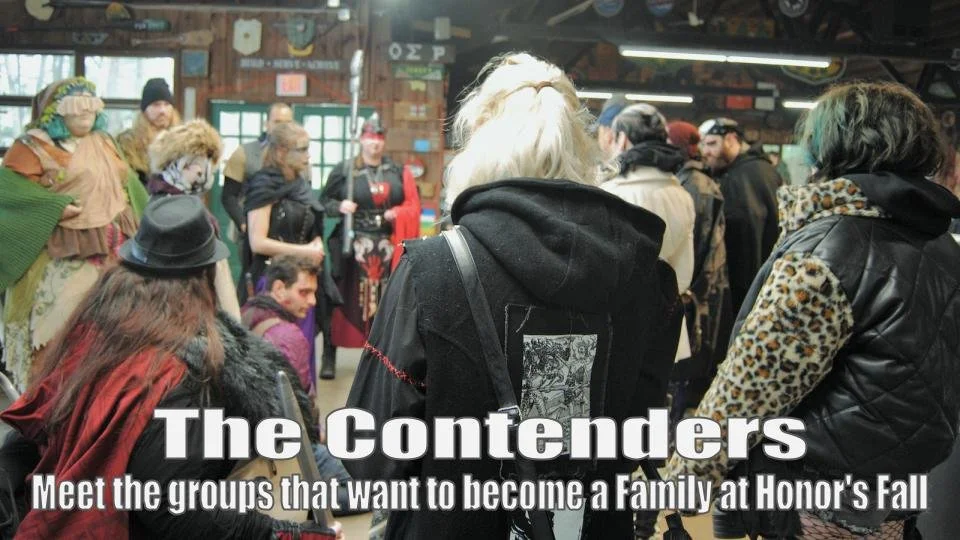
Photo by Allana Marie

For the past twelve months, we’ve talked about Honor’s Fall… it’s the climax of the year for Dystopia Rising New York. However, every year, Honor’s Fall changes a little, and it’s important to understand the “rules of the game.” We want to make sure all players, both in- and out-of-character, know what to expect this August.

In-Character Justification

For players who have attended Honor’s Fall in the past, you know there are always small changes as the staff adjusts to lessons learned. In-character, these changes are due to the authority of the High Lord Executioner, who has a great deal of influence over the process. Last year, we saw Anton Anastasia at the height of his power effectively control all aspects of Honor’s Fall, as he slipped into authoritarianism and was ultimately killed by Jones. This year, with Anton taking a step back, his second-in-command, Essex, has asserted his personality on the event. As a result, one can expect less pageantry and intrigue, as Essex favors the direct approach.

This is just a justification: your staff made changes to promote gameplay. We appreciate your buy-in on this: we’re being as transparent as we can, and would appreciate you steering your character towards acceptance of these changes. 

How Honor’s Fall Works

At sunset, the Treaty of the Fold is suspended, and everyone in town can do as they will. By tradition, the Heads of the Patron Families of Requiem hunt each other to retain their position and choose the High Lord Executioner. While the activity is simple, we have several rules in play that the Families are expected to follow:

  • All Families of Requiem, Patron and Ward, standing and perspective, are expected to participate in Honor’s Fall. 

  • For the sake of clarity, “participate” means the Family Head has to be “on the field”: visibly participating in Honor’s Fall. They should spend significant time (at least three hours) undisguised and out in the open where people can find them.

  • Families fight to collect “trophies,” the severed head of the leader of one of the Patron Families.

  • This year, as there are only 9 Patron Family Heads, there are only 9 trophies. To correct for this situation, the six remaining original families (Anastasia, Boon-Helm, Molon, Volkov, Warren, Zodiac) do not need to collect a trophy.

  • The three more recent Patron Families (Brokentooth, the Devils, and Lonely Streetz), as well as any prospective Family, must collect a trophy and place it in the Wilted Rose by sunrise to retain or gain Patron Family Status.

  • If there are more Prospective Families with trophies than there are available positions, the existing Families vote on who will become a Patron Family.

  • Family Heads can’t make deals to trade their trophies. They must be taken by force. After a trophy is in one’s possession (i.e. taken from the corpse of a Family Head), deals can be made.

  • Other than that, Families can do whatever they can think of to keep their Family Head safe. If they violate the spirit of the rules, they might find there are severe consequences.

  • The last Family Head standing in the Wilted Rose by sunrise will be declared the High Lord Executioner (there’s a catch, however, see below). 

  • Once a Family Head is killed, they no longer need to participate in Honor’s Fall, but they still need to show up at the Wilted Rose with a trophy.

The High Lord Executioner

The political purpose of Honor’s Fall is to pick the High Lord Executioner, who will enforce the Treaty of the Fold for the next year. Traditionally, the High Lord Executioner was the “last one standing,” which led to a great deal of wheeling and dealing throughout the night. Contrary to popular belief, the High Lord Executioner doesn’t have to be the only Family Head who survives the night… they have to be the last survivor who is standing in the Wilted Rose at sunrise. Some specific points:

  • Only Family Heads can become the High Lord Executioner.

  • If a Family Head dies during the night of Honor’s Fall, they can’t become High Lord Executioner.

  • Unlike the collection of trophies, deals to determine who becomes High Lord Executioner are very common. If a Family Head hasn’t died, they simply step out of the Wilted Rose before sunrise if they don’t wish to oppose the claimant.

  • If there is more than one Family Head in the Wilted Rose who hasn’t died by sunrise, it’s likely to end in a great deal of bloodshed. This hasn’t happened yet, and all the Families will do whatever it takes to avoid this sort of war. 

How To Enjoy Honor’s Fall

You have three options to enjoy the night of Honor’s Fall: political Character versus Character (CvC), political Character versus Enemies (CvE), or survival CvE:

  • If you’re heavily involved in Family politics, you can actively hunt (and be hunted by) other players. If you play a high-ranking member of a Family, you’ve opted into this already; other players may choose to get involved in the CvE aspects of Honor’s Fall.

  • If you want to get involved in the bloody politics of Honor’s Fall, but prefer less CvC, you can hunt and oppose the NPC Patron Families, who will all be out in force. Remember, they’re often as dangerous as other PCs.

  • If you want to stay out of the politics of Requiem, you can just try to survive the carnage, and help others to do so. The battles of Honor’s Fall are known for their collateral damage, so there are lots of challenges for you.

All Night Long

We’ll be running Honor’s Fall plot from sunset to sunrise (7:50 pm to 6:14 am… almost 11½ hours). How do we expect you to manage that? 

First, to set expectations: after it becomes apparent who the High Lord Executioner will be (i.e. all the other Family Heads have died), the violence dies down. We’ll go all night, but realistically, NPC threats will be rolling back around 4 am (like a normal Dystopia Rising New York game). While you’re not “safe,” you can probably find someplace to sleep if you're not affiliated with a Family whose Head is still alive. 

That said, a lot of you will be up at sunrise to see how events pan out at the Wilted Rose.  First light is 5:45 am, and there will be important events that occur at this time. We expect you pace yourself on Saturday, and understand the staff are pacing ourselves as well. This includes a 4-hour siesta on Saturday, where no events will be scheduled. This includes player-driven events: please do not schedule anything during the Saturday siesta… this is time for you to relax and hopefully nap.

Trophy Hunting

Collecting heads is very important to Honor’s Fall, and we have a local item to do so. It’s the Boone-Helm family item, the Blood Covered Artist’s Toolkit:

A kit used to make trophies. Requires 30 seconds of role-play. When combined with any level hooch, allows the taking of a non-mechanical trophy. If used on a recurring named NPC, or local unique high level threat, it will produce a Creature Comfort card. The card produced lasts 3 years.

So to collect a head, you need this item and a bottle of hooch, and take 30 seconds roleplaying collecting a trophy from a dead Family Head. For Honor’s Falls, we have some special things we’re doing to make this easier:

  • First, the Boone-Helm are happy to support the artistic endeavors of all this Honor’s Fall. You can buy a Toolkit at the Post Office for 5 wagers or 1 wager signed by Polaris Boone-Helm.

  • You have to have some sort of physrep for the kit… it doesn’t need to be elaborate, but it should be something you’re carrying around. Additionally, you should have some sort of physrep for the trophy you collect with it, if at all possible.  

  • Family Heads (including PCs) will have a creature comfort card on them representing their “head.” This item card can’t be used, traded or stolen until someone kills the Family Head and uses the Toolkit on them. The Family Head will then hand the person who used the Toolkit the card.

Read More
Setting Info DR NY Setting Info DR NY

The Contenders

If you pay attention to the politics of Requiem, you’ve probably heard someone mention “the Thirteen Families.” The problem: there aren’t Thirteen Families. The number shifts, and depends on how you count them… so we’ll just talk about Patron Families that exist right now. As of the summer of 2022, we have nine Patron Families - six Families with NPC Heads (Anastasia, Boonhelm, Molon, Volkov, Warren and Zodiac) and three with players leading them (Brokentooth, Devils and Lonely Streetz). So with only nine Patron Families, what happened to the other four, and where do we go from here?
If you pay attention to the politics of Requiem, you’ve probably heard someone mention “the Thirteen Families.” The problem: there aren’t Thirteen Families. The number shifts, and depends on how you count them… so we’ll just talk about Patron Families that exist right now. As of the summer of 2022, we have nine Patron Families - six Families with NPC Heads (Anastasia, Boonhelm, Molon, Volkov, Warren and Zodiac) and three with players leading them (Brokentooth, Devils and Lonely Streetz).  So with only nine Patron Families, what happened to the other four, and where do we go from here?

Why Are There Not 13?

The short answer: there were 13, and then things changed. Families die, vie for power, lose their position and evolve over time. Often, they meet bloody ends (like the Jones Collective at our last event). We also want to make sure there is room for player-created Families, and make sure there are significant stakes at Honor’s Fall. 

When we returned from the Pandemic in August of 2021, we re-evaluated every Family, and ended up with eight: seven NPC-led Families and Brokentooth. Over the last year, we added two player-led families, and saw the demise of Jones, which lands us at our current number. During this Honor’s Fall, we’ll see the number grow to 13 again, as the players help decide which groups will enter the ranks of the Patron Families.

Who Are the Contenders?

During Honor’s Fall, the Families will vie for power in Requiem, and try to ensure their own survival as a Patron Family.  While they do, a number of contenders will jockey for power, hoping to be elevated to the their status. If you’ve played in Requiem this year, you might have met many of these groups, but here’s a refresher:

  • The Anderson-Ambrosias - A player-led Ward Family, the Anderson-Ambrosias are led by the Faithful of both the Sainthood of Ashes and the Nuclear Family. After the fall of the Jones Collective, they seek to position themselves as the “tenders of the Faithful” in Requiem.

  • The Bloodwraiths - A mercenary company who made it a practice to pursue “big game”; they entered the Fold tracking the undead creations of Zodiac. They believe that the “weak can become strong” and seek to help people defend themselves, but as a mercenary company, they’re also known to be more than a bit greedy.

  • The Dioscuri Bloodline - A family of psions who deal in a strange sort of “crystal-tech” that they manufacture with their abherrent powers. While little is known of them, rumor has it that they seek to protect the “Gifted” from the “Unworthy,” although it’s not entirely sure what that means.

  • The Doctorium - At their core, a group of well-guarded Doctors, this faction seeks to develop a panacea for all diseases. In Requiem, they offer medical treatment in exchange for compensation. However, beneath such noble goals, there are rumors that they’ll perform less-than-ethical experiments on “volunteers” - individuals who failed to pay their contracts.

  • The Knite Council - Newcomers to Requiem, most people of the Fold haven’t had much interaction with this group except with their pig-faced leader (prophet? god?) Argor. Concerned primarily with cleaning the corruption they find blighting the land, Argor’s followers have begun to reach out to the Families, seeking to join them. 

  • The Stevensons - A collection of Landsmen… heavily influenced by faith the Nuclear Family… the Stevensons have a long history in the Fold but have avoided entanglements with the politics of Requiem until the Reckoning. Farmers by trade and soldiers by necessity, they want to assert themselves as the voice of the common folk.

  • The Tarrarian - This faction believes in self-control and rehabilitation; they dwell in the tunnels beneath Requiem, and are actively attempting to make their living space accessible and hospitable. Of course, a clan of gorgers has some obvious… conflicts of interests cohabitating with those who could also be their food supply.

Other contenders might still emerge, including player-led Families who meet our requirements (if you’re interested in contending for Family status at Honor’s Fall and have the appropriate number of people, make sure you give us at least 30 days notice with an action request).

What Happens Next

With Honor’s Fall coming up, there will be openings for new Patron Families… but not enough room for all the aspiring and current powers-that-be. Player actions will determine which families remain after Honor’s Fall, and who gets to take their place.

Read More
Larp Thoughts DR NY Larp Thoughts DR NY

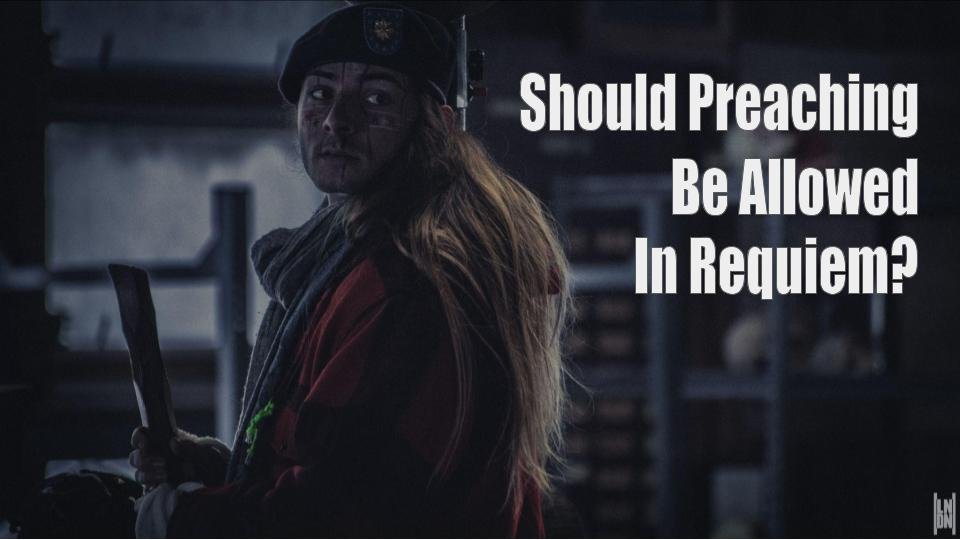
Should Preaching Be Allowed In Requiem

As we approach The Anarchy, there’s a question about one of Requiem's most controversial decrees: should the faithful be allowed to preach their religion in Requiem and the Fold? Rather than answer that question, we’re presenting arguments for and against.
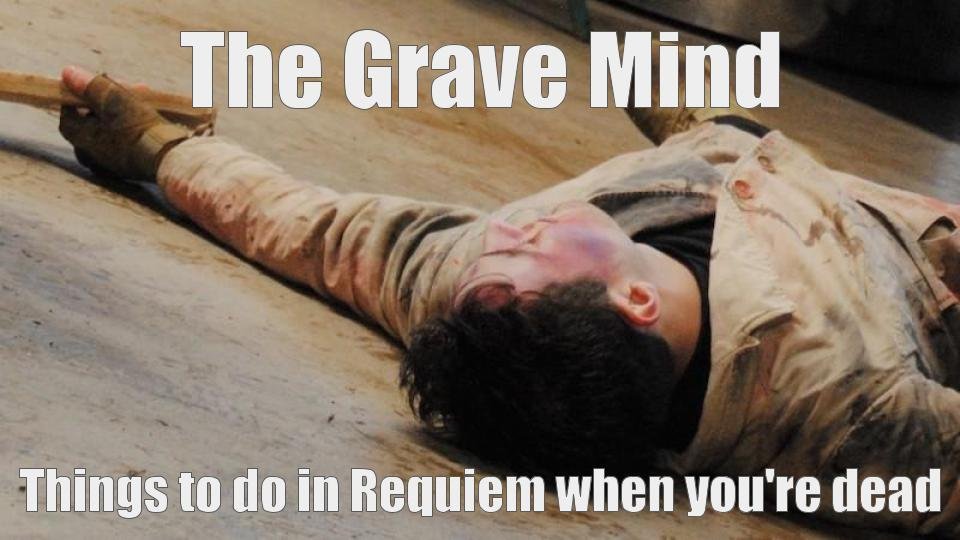
Photo by London Belli.

As we approach The Anarchy, there’s a question about one of Requiem's most controversialsdecrees: should the faithful be allowed to preach their religion in Requiem and the Fold? Rather than answer that question, we’re presenting arguments for and against.

First, however, background: the High Lord Executioner outlawed the preaching of religion in Requiem and the Fold. Religion isn’t illegal, but it’s illegal to proselytize and publicly gather. Obviously, this is a problematic edict, and unpopular in-character. However, this debate is going to be out-of-character, with a focus on player experience.  Let’s keep it out-of-character when we discuss the question: should preaching be allowed in Requiem?

No, it shouldn’t

Faith is still an important part of Requiem, what's more, being forced “underground” makes it uniquely Requiem. While certain faith motiffs repeat around the network, perhaps to the point of cliche, in Requiem, it allows players a unique opportunity to interact with their faith.

While a character may join the Sainthood at a meeting in another faith, in Requiem, it’s a one-on-one secret baptism. One’s a large scene, potentially with pomp and ceremony, the other is an intimate conversation. We want to steer the role-play in the direction of the latter. Further, the prohibition allows for a form of role-play not found elsewhere in the network. This is a place where priests and other faithful can be heroic, standing up to an unjust law and representing the struggle.

Yes, it should

Faith is a vital part of Dystopia Rising. The in-game religions bring additional character depth and have always been prominent in the setting. While the edict against preaching doesn’t remove faith from the game, or prevent characters from displaying symbols or using faith powers, it does prevent faith from playing a prominent place in the game. 

This prohibition prevents storylines like Nemesis stalking the night at Ween, Kings Court concerts, or open Fallow Hope armies. It also pushes faith into the background, potentially preventing newer players from finding out about a faith to join. As can be seen from other chapters, these role-play elements add a great deal to the Dystopia Rising game.

What’s your take? We want your perspective as a player, not as your character: we know of several people who play priests who prefer Requiem to continue the edict and disallow preaching, so they can continue to role-play the struggle. What do you think?

Read More
Setting Info DR NY Setting Info DR NY

The Gravemind in Requiem

As we prepare for an event that involves a lot of zed, the staff at Dystopia Rising New York (DRNY) wanted to go over our local Grave Mind, and how it works. While we strive to match our Grave Mind lore with the network as a whole, each chapter runs the Mortis Amaranthine (the formal term for the Grave Mind) a bit differently, and we want to make sure everyone has accurate expectations.
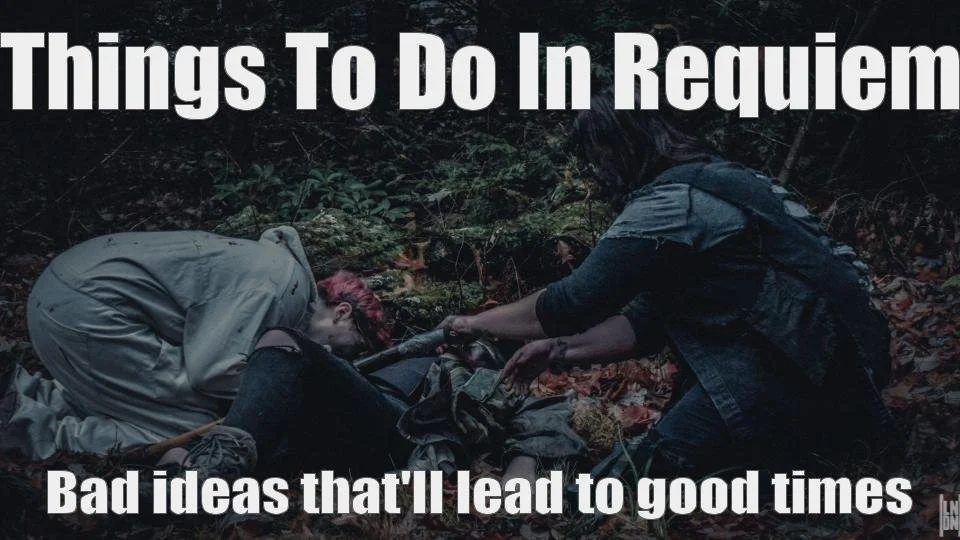
Photo by London Belli. Pictured - Daniel Carione

As we prepare for an event that involves a lot of zed, the staff at Dystopia Rising New York (DRNY) wanted to go over our local Grave Mind, and how it works. While we strive to match our Grave Mind lore with the network as a whole, each chapter runs the Mortis Amaranthine (the formal term for the Grave Mind) a bit differently, and we want to make sure everyone has accurate expectations.

The Grave Mind Doesn’t Care About You…

…Or anyone else.

With hundreds of storytellers across dozens of chapters, sometimes Grave Mind lore gets a little muddled. We stick very closely to the concept of the Grave Mind as described in the rule book: it’s a conceptual state of being, not a place or an individual. There’s no ego or intentions involved in scenes that occur “in” the Grave Mind - just your character’s perceptions of the world’s natural processes. That means that when the Grave Mind “does” something, it’s really just a consequence of previous actions, like a chemical reaction.

Weird Shit Happens in the Grave Mind

Things don’t always work “right” in the Gravemind. The skills and items you have work as prescribed in the rules and blueprints, but beyond that, when you enter a Grave Mind scene, be prepared for the storyteller to throw you a curve ball. Sometimes local items interact oddly, or there are additional effects or consequences beyond the rules. But remember, we do this for game play or dramatic effect, and not as part of an ongoing narrative. 

What does this mean? If you’re in a Grave Mind scene and another player wants to enter, we’ll find a way to make it happen. If things are going poorly and we want to help you out, we’ll make something up. We might add something to give you a jump scare or a surprise. What we won’t do is justify a plot or event as “Grave Mind bullshit”; for story purposes, we try to play skills and items as close as possible to the rule book. 

If you do see something weird, ask the storyteller after the scene. They’ll explain to you what happened, if it’s a deviation, and why. Remember, these are almost always one-off events (i.e. pulling a silent observer into a Grave Mind scene to help out a bunch of players with low Resolve) as opposed to a local mechanic.

Grave-Diving Has Consequences

You all like to go grave-diving. That’s awesome… we have fun when you use skills and abilities to explore the Grave Mind, and we hope you do to. But remember: actions have consequences. The more you go into the Grave Mind (i.e. “fuck around”) the more the metaphorical open wounds you leave behind will fester and spit out strange zed (i.e. “find out”). We do this for two reasons: first, we want to run a horror game, and in a horror game, actions have negative side effects. Second, we want to make sure the Grave Mind remains a strange and alien experience, and not a regular point of interaction.

You’re likely going to experience some consequences at our next event. Remember, the point is not to single out other characters as scapegoats or stop using Grave Mind-related skills and abilities. Instead, remember that the world of Dystopia Rising is a scary place, and get ready to be scared by new and interesting threats.

Read More
Advice DR NY Advice DR NY

Things To Do In Requiem

Are you a Requiem regular? A visitor who’s coming for their first time? Dystopia Rising always offers zombies to fight and friends to meet, but Dystopia Rising New York also offers a chance to delve into our setting. But setting only matters if players can use it to role-play - you need something to do. So here’s three ways to get involved in the social and political play of Requiem next game.
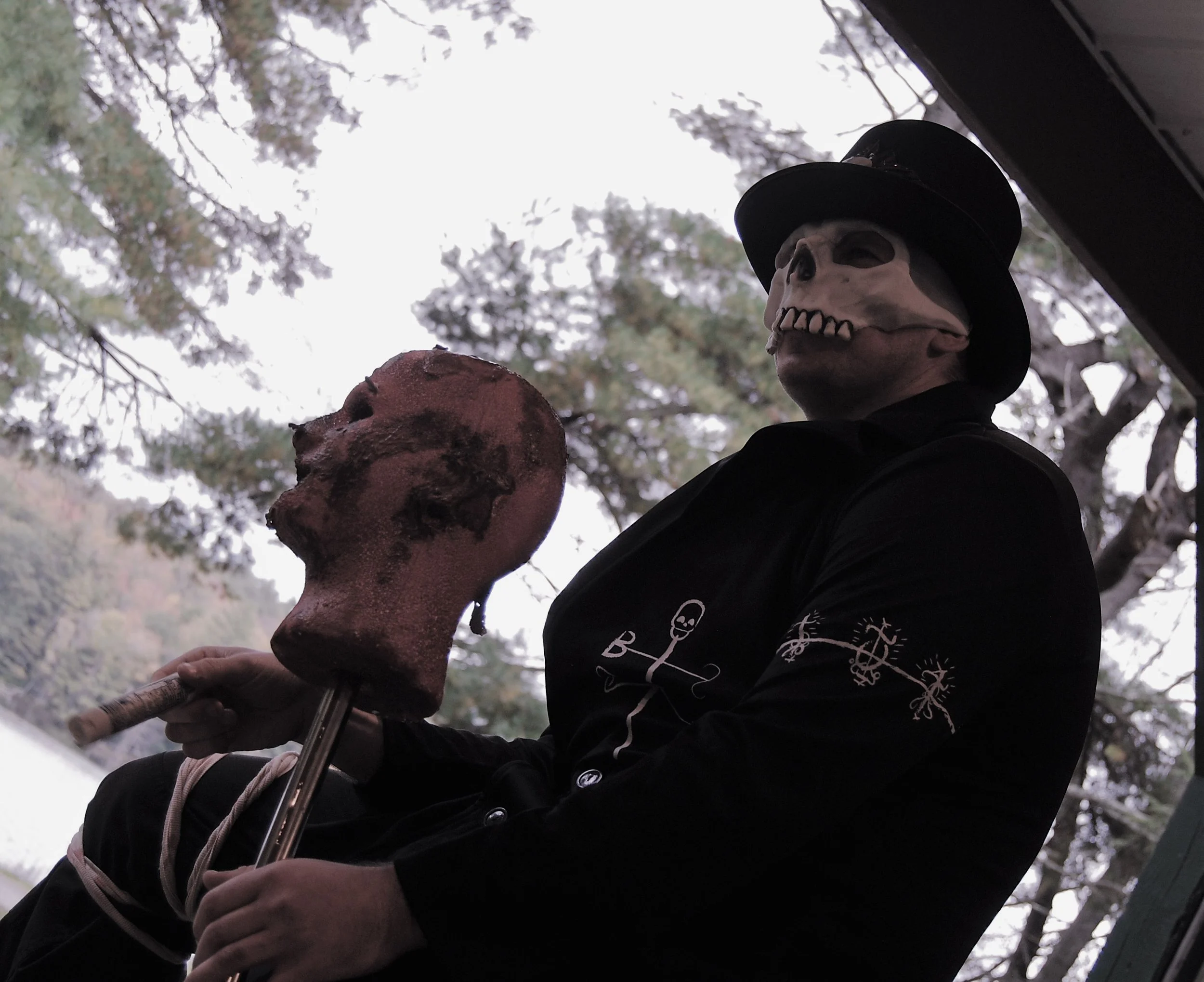
Photo by London Belli.

Are you a Requiem regular? A visitor who’s coming for their first time? Dystopia Rising always offers zombies to fight and friends to meet, but Dystopia Rising New York also offers a chance to delve into our setting. But setting only matters if players can use it to role-play - you need something to do.  So here’s three ways to get involved in the social and political play of Requiem next game.

Break a Law

There’s not many laws in Requiem, but the ones we have matter. Most laws come from either the Treaty of the Fold or the proclamation of Anton Anastasia, the High Lord Executioner. While the Treaty usually deals with large-scale structure, the High Lord Executioner’s laws are… problematic. For example, you can’t talk about defunct families, or lie to Anton. He’s been known to burn books and recently co-opted a player-run broadcast. Realize that Anton’s actions are supposed to push the players into action (and some are already taking action). Breaking a law in Requiem isn’t really being criminal, as most of the people of Requiem already are criminals. Instead, breaking a law is an act of civil disobedience, and let you respond to proclamations that deserve a response.

Make a Deal

Each family in Requiem has a unique trade list; these items can only be obtained by members of the Patron Families of Requiem. Not only do these items offer you the chance to do things beyond the basic rules of Dystopia Rising, you can also use them at other chapters that allow them (specifically, Dystopia Rising Texas). Working out trade routes between settlements can earn you a significant profit, as well as clout both in Requiem and abroad. However, the families aren’t just there to provide trade items. Each Family in Requiem serves a purpose, and interacting with members of that family can bring you specific benefits. For example, the Volkov are information brokers - do you want to learn a secret? Look for their distinctive costuming: masks and blue robes. 

Preach Your Religion

There’s a law against preaching in Requiem, but this one goes one step further. Religion and the current state of politics in Requiem don’t mix. However, faith is an integral part of Dystopia Rising, and it’s not our intent to forbid faith-based role-play… it’s to make it dangerous. If you want to push against the current regime and change the status quo, pushing your faith is an excellent way to provoke a reaction. For those who want less risk, secret meetings or rituals in the deep woods are extremely appropriate means of resistance. Even lesser acts, such as having a party Saturday night run by Hedons, is a good way to promote role-play, as it’s sure to make some of the NPCs very uneasy. 

The important thing to remember is that the political situation of Requiem is designed around consequences: if there’s a law saying “don’t do that” in-character, it really means “if your character does this, you get to be the focus of attention as everyone finds out what happens.” Maybe your character makes a mistake, maybe they’re brave enough to fight the powers that be, or maybe they’re trying to manipulate the laws to their advantage. But the important things is that you feel encouraged to “fuck around and find out.”

Read More
Setting Info DR NY Setting Info DR NY

REQUIEM 101 - REQUIEM AND THE FAMILIES

Newcomers to Dystopia Rising New York may hear a number of new words - “Family,” “Fold,” “High Lord Executioner.” Requiem features a host of persistent non-player characters and unique customs that let players immerse themselves in the setting. To help you with these features, we’ve put together this primer: Requiem 101.

Newcomers to Dystopia Rising New York may hear a number of new words - “Family,” “Fold,” “High Lord Executioner.” Requiem features a host of persistent non-player characters and unique customs that let players immerse themselves in the setting. To help you with these features, we’ve put together this primer: Requiem 101.

Sir Isaac surveys Requiem. Photo: Allana Marie. Pictured: Kc Lofold

What Is Requiem?

Requiem is the trade town in the heart of the Fold - a territory that corresponds to what was once upstate New York. The Fold was a place for people to go when they’d been run out of other places, usually for criminal activities. These expats formed small groups that controlled small territories in the Fold; because they were (mostly) a bunch of criminals, they called these groups Families.

To coexist, these Families created the town of Requiem and signed the Treaty of the Fold. This set of laws governs them, and binds them to the will of the High Lord Executioner, who has the final say on matters of life and death. Over the years, Requiem has changed locations, but its purpose remains the same: this is where the Families come to do business and settle scores.

Who Are The Families?

The Treaty of Fold recognizes two kinds of families: Patron and Ward. According to the Treaty of the Fold, there can be up to 13 Patron Families, who control territory in Requiem. In addition, Ward Families - smaller families who don’t yet qualify as Patron Families - can align themselves under the protection of Patron Families. As of October 2021, there are eight Patron Families:

  • The Anastasia Dynasty - Led by Anton Anastasia, the High Lord Executioner, this openly criminal family dominates the politics of Requiem.

  • The Boon-Helm Collective - A collection of masked maniacs, cannibals, and torture artists led by Polaris, a pure blood with advanced bad brain. 

  • The Brokentooth Clan - The Brokentooth Clan generally dwells in Requiem proper, and thrives upon the trade driven by the town. Their family head is Salt (note: this is a PC Patron Family).

  • The Jones “Secular” Congregation - The laws of Requiem ban the open practice of religion, hence the “secular” nature of this family, named for their cult leader, Jones.”

  • The Molon Collective - Outsiders, loners, and recluses led by Keres Molon, the Collective possesses a psionic connection to the Gravemind and a drive to “protect” it.

  • The Volkov - Information brokers (or less charitably, spies), the Volkovs never appear in public unless fully masked, following the example of their founder, Seraphis Volkov.

  • The Warren Collective - “Let’s make a deal.” The fixers, brokers and smugglers of Requiem, founded and led by Jack Warren, this Family focuses on profit above all else.

  • The Zodiac Order - Named for its founder, Zodiac, this family’s mission is its “research.” Unfortunately, their research focuses on the creation and control of the undead.

What Are the Laws of Requiem?

The Treaty of the Fold gives the High Lord Executioner the powers of a dictator in Requiem, and so the laws are subject to change at any time. You can find a full list of the laws here, however, there’s a few well-known laws you should remember. 

  • Preaching is outlawed in Requiem, except for a few exceptions, and then only in private.

  • If a citizen of Requiem is murdered, the killer shall be killed. If a Family Member is murdered, the killer and one of their closest associates will be killed.

  • Once a year, the laws of Requiem are suspended during a time called Honor’s Fall.

What is Honor’s Fall?

The last thing in our Requiem 101 primer is an introduction to Honor’s Fall. During the last full month of summer, there will be one night when all laws and protections of the Treaty of the Fold will be suspended. This annual bloodbath prevents vendettas and other feuds from destroying the alliance for the rest of the year. During Honor’s Fall, some Families disappear, others rise, and the social order of Requiem resets.

In the coming months, we’ll expand on the Families, Honor’s Fall, and the Treaty of the Fold in this blog. For latest updates, follow us on Facebook at Dystopia Rising New York.

Read More

Search Posts