REQ-uired Reading

Advice DR NY Advice DR NY

How To Travel

The weather’s getting warmer, and all across the network we have premiere games and national events springing up. This means a lot of us will be traveling over the next few months, visiting other chapters all across the country. Travel can be one of the most rewarding things about Dystopia Rising - you have dozens of games to visit and thousands of friends to see. But it can also be stressful, challenging, and even disappointing. So how do you make sure you have an awesome experience, worth the time you put into it?
Photo by Allana Marie

The weather’s getting warmer, and all across the network we have premiere games and national events springing up. This means a lot of us will be traveling over the next few months, visiting other chapters all across the country. Travel can be one of the most rewarding things about Dystopia Rising - you have dozens of games to visit and thousands of friends to see. But it can also be stressful, challenging, and even disappointing. So how do you make sure you have an awesome experience, worth the time you put into it?

The Challenges of Travel - Change & the Unknown

After a few Dystopia Rising games at your home chapter, you know what to expect. You have a routine. You’ve figured out how to store your gear, load it into your car, and when you have to leave for site. You know who you’re getting a ride with and where you’re sleeping. You know what to do for food and where Afters will be. And when you head to a different chapter, a lot of that goes out the window. Maybe you have to fly and figure out how to get your gear through the TSA. Maybe you have no idea about the bunk situation at the new camp. This means changes to your routine, and further, a lot of unknown variables. And people generally don’t like changes to routine.

So what do you do about these challenges? Here are some suggestions:

  • Be Early. Everything gets easier if you have time. Getting to site early means you don’t have to worry about a bunk, can head to the store to buy groceries, and have time to explore the site. If you can plan to be early when traveling, it’ll give you a lot of options when you encounter an unfamiliar situation.

  • Pack Light. Your character is traveling too… you probably don’t need all your gear. Figure out what you, the player, need to be comfortable and focus on that. The pad you have to sleep on at night? Bring that. The awesome trunk that’s very genre but is a pain in the ass to find space for in a crowded bunk room? Leave it behind. Take what you need to be comfortable, and don’t worry as much about aesthetics and other extras.

  • Be Flexible. Maybe at your home chapter, you and your six friends always grab a cabin and bunk together. You’ve done this every game, and now you’re all traveling to a different chapter… and there’s no space for the six of you to stay together. That’s cool. Split up, meet new people… it’ll be fine. Sometimes, you have out-of-character needs that you have to meet but if it’s an in-character preference, be prepared to let it go.

Don’t forget: if you do have an out-of-character need, contact the staff before you arrive. Let them know if you need med sleep or have specific needs: that gives them time to accommodate (remember, “be early.”)

Being Part of the Game

The biggest challenge of travel might not be the obstacles to getting on site and finding a bunk, but your own expectations. A travel game is special… you might only have a couple a year… and you arrive hoping to have an extraordinary game. And when you get there, you don’t know the local plots, you don’t know the local setting, and all the local players are busy doing their own thing. Sometimes, it feels like you’re a supporting character in someone else’s story.

The trick to countering that is to get involved. Just like you might advise a new player to “try everything,” you have to actively seek out plots and stories. Here’s a good travel challenge: say “yes” to everything. Say yes to every NPC who asks you to help them, say yes to every local who wants to show something, and keep saying yes until you find your niche in this new game. Remember: you are the one responsible for your own good time, and so it’s important that you take charge of your own experience at travel games.

Remember, the difficulties getting involved aren't always a bad thing, particularly if there are other players from your local game there. Often, at our own games, players have a lot to do: multiple meetings, businesses to run, and all sorts of responsibilities to regular players. At a travel game, you might have more time to relax, and might even find yourself spending more time with people you see regularly than you would at your local game.

Helping Travelers

While the onus is on travelers to take care of themselves, they are guests in your chapter… and valued guests at that. They didn’t come here to hear negative things about their home, or how awesome you are. They didn’t travel all this way to sit on a bench and miss out on the plot. They came because they heard your game was a lot of fun and wanted to try it, and probably need your help. It’s important to identify travelers and get to know them: pull them into your role-play and schemes and give them things to do. A good way to do this is to find a feature unique to your game and share it. For example, no one who visits Requiem is disappointed with a trip to the waterfall, so you can invite travelers out to see it. Making the effort to share the game with them could be what makes the trip worthwhile for them.

Travel is what separates a networked game from a bunch of individual local games: we gain something by having a wider world out there, and travel is how we realize that value. The better prepared you are when you travel, and the better you treat travelers, the better all games will be across the network.

Read More
Rules Deep Dive DR NY Rules Deep Dive DR NY

Thank You! Using Your CAPs

Dystopia Rising New York relies on you, the players, to make our events happen. Without your help, we wouldn’t be able to bring a hundred larpers to Forestburg nine times a year and make these amazing games. We often want to thank you for what you do, not just with words, but with something to enhance your play experience. Luckily, we have a way to do this… Community Action Points, or CAPs. You can spend these CAPs on a number of cool rewards, from Mind refreshes to extra resource production. But there’s a problem:

Photo by Shawn Smith

Dystopia Rising New York relies on you, the players, to make our events happen. Without your help, we wouldn’t be able to bring a hundred larpers to Forestburg nine times a year and make these amazing games. We often want to thank you for what you do, not just with words, but with something to enhance your play experience. Luckily, we have a way to do this… Community Action Points, or CAPs. You can spend these CAPs on a number of cool rewards, from Mind refreshes to extra resource production. But there’s a problem:

You never use them.

Every game we give out thousands of CAPs, and they just sit there accumulating in the database. For the #readytoreq campaign alone, a dozen people get enough CAPs to buy a “Blue Plate Special” (a meal that will refresh you to full Mind), only to see players never cash them in. So to fix that, we’re going to explain what you can buy with CAPs, how to know how many CAPs you have, and finally, make using them easier.

Bottom line up-front - You can now spend CAPs without ever going to the Post Office, just by writing on your character sheet that you used them for certain effects. 

What Can CAPs Do For You?

The Dystopia Rising main website describes Community Action Points, including how you earn them, and what you can do with them. Basically, they’re awarded by Guides and other staff members as a “thank you” for helping us. You can use CAPs for story rewards, to find teachers (or unlearn skills), and to establish play spaces such as Culinary or Agricultural zones throughout the site. However, there are three things you can do for your character at game, all for 50 CAPs or less:

  • You can spend 40 CAPs on a Blue Plate Special. This is a meal that takes 10 minutes to eat and works as a full Mind refresh. You can only use this twice per event, they are non-transferable, and they expire at the end of the event.

  • You can spend 25 CAPs on a G.O.G.O Gatherer: <skill name> for any gathering skills (Agriculture, Foraging, Hunting, Salvaging, or Trailblazing). You can use this when you perform the skill for one more of any single item you gathered (i.e. a one-time buy one, get one free). These expire at the end of the event, and you can purchase two G.O.G.O Gatherers per skill, and they are non-transferable.

  • You can spend 50 CAPs for 3 Local Currency. There’s no limit on how many times you can do this.

These are cool, but we really want you to enjoy your CAPs. So here are some Requiem-Specific Uses for Community Action Points

  • If you’re using a crafting or gathering skill, and are interrupted, you can spend 100 CAPs to call “Not Today.” You can ignore the interruption, and take up to a 5-minute break from the task. As long as you return to using the skill within 5 minutes, you may continue where you left off. You can use this ability once per event. 

  • If you use a combat skill and that skill is countered (i.e. your attack is Avoided) you can spend 100 CAPs and call “Nothing Ventured.” You regain the mind you spent to use the skill. You can use this ability once per event. 

  • If you’re an Aberrant, and you’re in an Area of Effect or By My Voice call that targets Aberrants or does Aberrant Bane damage, you can spend 100 CAPs and call “Just Say No.” For the sake of that one effect or call, you do not count as an Aberrant. You can use this ability once per event. 

You might notice these uses of CAPs are calls you would make in the middle of a fight, and not items you get from the Post Office. This is because we’re now letting you use CAPs and log it on your sheet, to make it easier for you (read on for more details).

How Many CAPs Do You Have?

All Community Action Points are associated with individual chapters, or with National (which can be used at any chapter). You can find your CAPs for all chapters (and National) on the Database. However, you don’t need to worry about that at an event, because your local CAPs will be on your sheet. Right below the boxes that record your Lores and Fractures, it should list the CAPs for the chapter that printed your sheet (picture in the next section). 

How Can I Use My CAPs?

Normally, you have to go to the Post Office, stand in line, and ask them to spend your CAPs. They’ll then give you an item card with the item you requested. Some uses require you to contact the Directors and take more time. However, we’ve realized that this is a barrier to use, so we have a local rule about using CAPs, to make it easier:

If you’re using NY CAPs, you can spend CAPs on Blue Plate Specials, G.O.G.O Gatherers, and any local CAPs calls simply by recording them on your sheet.

All other rules still apply: you have to spend 10 minutes eating a Blue Plate Special, for example, and you still have to go to the Post Office to use your G.O.G.O Gatherer. However, for any of the Requiem-specific Calls (Last Ditch Effort, Not Today, Nothing Ventured, and Just Say No), you can simply use them and record them on your sheet.

To record CAPs usage, write them on the front of your sheet, under your skills (the red circle shows you where you can find your local CAPs). 

We have one caveat: you can’t spend National CAPs this way, as National CAPs don’t show up on the character sheets. If you like, you can contact the staff or visit the Post Office, and they’ll convert your National CAPs to local. 

Why Are We Doing This?

Community Action Points are supposed to be our way of saying thank you to you… if you can’t use them, they don’t mean anything. We’re hoping by giving you more ways of using them (and seeing others use them as well), they’ll become more desirable and make our gratitude more meaningful to you.

We will be adding excerpts from this blog to the website under Local Mechanics.

Read More
Advice DR NY Advice DR NY

Making the Most of...

At Dystopia Rising, we spend a lot of time on our costumes, and they look great. We distress our jackets, sew all sorts of patches and accessories, and craft realistic boffer weapons. However, then we often pack those costumes into suitcases, cover our bunks in sleeping bags and spread out all sorts of non-genre items across our sleeping space.
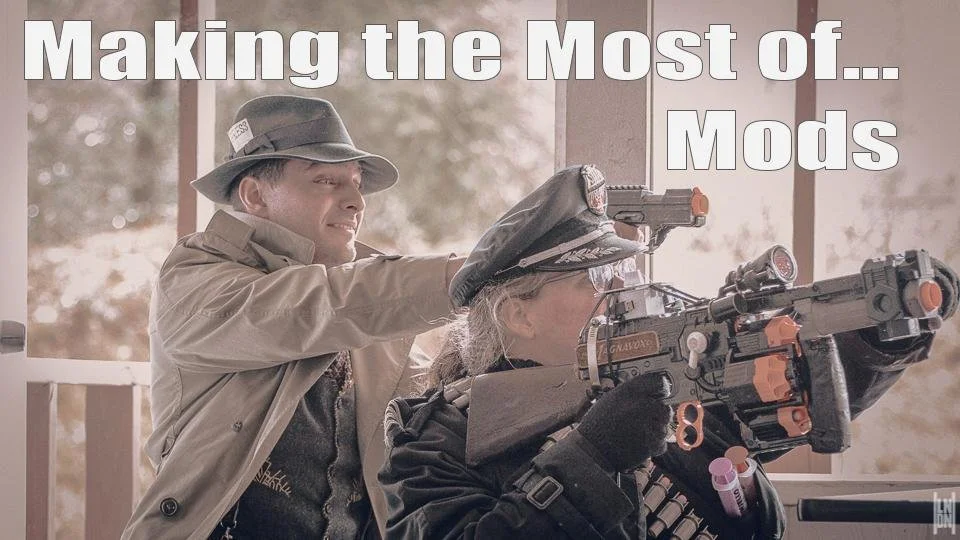
Photo by London Belli

At Dystopia Rising, we spend a lot of time on our costumes, and they look great. We distress our jackets, sew all sorts of patches and accessories, and craft realistic boffer weapons. However, then we often pack those costumes into suitcases, cover our bunks in sleeping bags and spread out all sorts of non-genre items across our sleeping space. 

Remember: there’s nothing wrong with this. The most important thing about your sleeping space is that you’re comfortable sleeping in it, and genrefying your sleeping space costs both time and money that not everyone has. But we do spend a significant amount of time in our bunks, and if you want to make it an immersive space, consider the following tips for making the most of your sleeping space.

Start with bedding

Remember the number one rule: you have to be comfortable sleeping in your bunk, so if the sleeping bag works for you, go with the sleeping bag. However, having actual bedding… sheets, blankets and pillows… is the first step to making your sleeping space look post-apocalyptic. It’s also a role-play opportunity. Does your character make the bed? Do they have an elaborate set-up of pillows and quilts or just a spartan blanket over white sheets? Do they make militaristic hospital corners? And even if you have a sleeping bag, consider bringing an old sheet or blanket to throw over it when you’re not using it.

Find the best bags

Particularly for Dystopia Rising New York, your storage and travel space may be limited. People who ride share might not be able to take extra equipment to phys rep their space.  In this case, consider what you’re using to carry your stuff to game. A military duffle can probably carry all your gear, and it’s completely in genre for Dystopia Rising. If you have space in a car, a trunk can store a tremendous amount of storage, and double as furniture. Often these solutions are less expensive than buying a modern roller bag, and can often be found at military surplus stores (if you’re in New York City, consider Army Navy Bags… a store that just sells military bags at low prices.)

Organize your space

Bunks at Dystopia Rising often are in tight, cramped areas that become even tighter and more cramped when you add a dozen larpers. Work to keep your stuff in bags, boxes and out of piles on the floor. This isn’t just consideration for other larpers, but an actual survival tactic: when you’re in SERE (Survival, Evasion, Resistance, and Escape) you’re taught to keep your stuff off the ground as much as possible to keep it clean. Even if you can’t keep it out of piles, consider throwing up a privacy sheet around your bed, and then piling it on top, at least until you go to sleep. 

A little goes along way

A string of christmas lights, a couple of tea lights, and a few pieces of paper or clippings to hang on the wall go a long way from transforming your space from a temporary bunk to a living space for your character. Is there a drawing you particularly like? An in-game newspaper article or picture? A piece of canvas with your faith’s holy symbol? These items will fit in a backpack without taking up too much space, and help make your sleeping space more immersive.

Remember, a sleeping space is a place for sleep, first and foremost, and genrefying it is a nice “extra.” Using these tips can help make your character feel like a more persistent presence in the world in an affordable and easy manner.

Read More
Advice DR NY Advice DR NY

Making the Most of... Mods

A Dystopia Rising game has many parts: the economy, roaming threats of zed and raiders, and persistent NPCs (or “Casted Characters”) to name a few. One staple of the Dystopia Rising experience are mods; short stories that typically last an hour or so, using the players on NPC shift.
Photo by London Belli

A Dystopia Rising game has many parts: the economy, roaming threats of zed and raiders, and persistent NPCs (or “Casted Characters”) to name a few. One staple of the Dystopia Rising experience are mods; short stories that typically last an hour or so, using the players on NPC shift. At their best, mods are creative and original, creating a memorable experience. At their worst, they’re formulaic and forgettable. The staff of every game commits to creating the highest quality of mods that they can, but even experienced designers don’t hit their marks every time.  So how does a player make sure they have a good time on mods?

Remember that mods are just an opportunity for role-play

Mods aren’t stories in and of themselves, they’re opportunities to tell a story. Designers spend a lot of time making their hooks original and their encounters challenging, but all that really matters is “did the players engage and have fun?” When a mod goes out, it’s going to wander the area of play, offering players the chance to engage.  Remember this: if you choose to engage in a mod, commit to the bit. If a merchant mod comes out with NPCs selling items and equipment, put down what you’re doing and talk to that NPC. Play “yes, and…” or “no, but…” with the NPC, building a rapport more than “how much money for those item cards.” You don’t have to engage with a mod, but when you do, fully engage with it. A mod is just an opportunity, don’t half-commit to that opportunity.

Understand the structure

While designers strive for creativity, predictable structures aren’t bad: they let the players know how to engage in the mod. Mods often have a set structure: a hook goes out to let players know “hey, this thing is happening,” (i.e. zed are coming out of the morgue), then the challenge occurs after the players gather at the location, and finally, there’s some resolution at the end. The heart of the mod is usually the challenge: that’s the reason the mod goes out, so players have something to do. Gathering for the mod is an important response to committing to the opportunity (see below), but players also have a hand in resolution. Remember, the NPCs are going to go back to ops, drink water, put their clothes back on racks, and then get ready to go again. There’s not much opportunity to have resolution beyond the point where the NPCs head back, so realize you have leave everything on the table before the end of the mod. Say what you want to say to the NPCs as if you’ll never see them again, make sure you get any rewards you think are due, because once the mod ends, there might not be any follow-up. And, of course, leaving nothing unsaid makes the mod more memorable, which actually increases the chance of follow-up.

Gather your forces

Mods are usually timed (i.e. “4 pm on Saturday”), so you never know who’s around when the mod goes out. Instead of looking for your friends, try a new version of the 10-foot rule… ask everyone within 10 feet of you if they’ll help. Having a motley crew of strangers out on a mod is often more interesting than going out with the people you hang with all the time. If someone you rarely role-play with asks for your help, and you’re not doing anything, consider going with them and committing to the bit.

You can’t control the mods that go out, but you can control how you engage. These three tips… commit to the bit, leave everything on the table, and the 10-foot rule… will help maximize your enjoyment on mods, regardless of the situation.

Read More
Advice DR NY Advice DR NY

Your Character As A Tool

Previously, we talked about your character not as a person in a story, but as a tool you use for storytelling. As larpers, our characters are precious to us, and often we identify with them strongly. However, we create them, and they aren’t real people but rather tools we use to role-play. As such, we should make sure they’re an effective tool, designed to help us have fun and perform the way we want. So how do we do that?
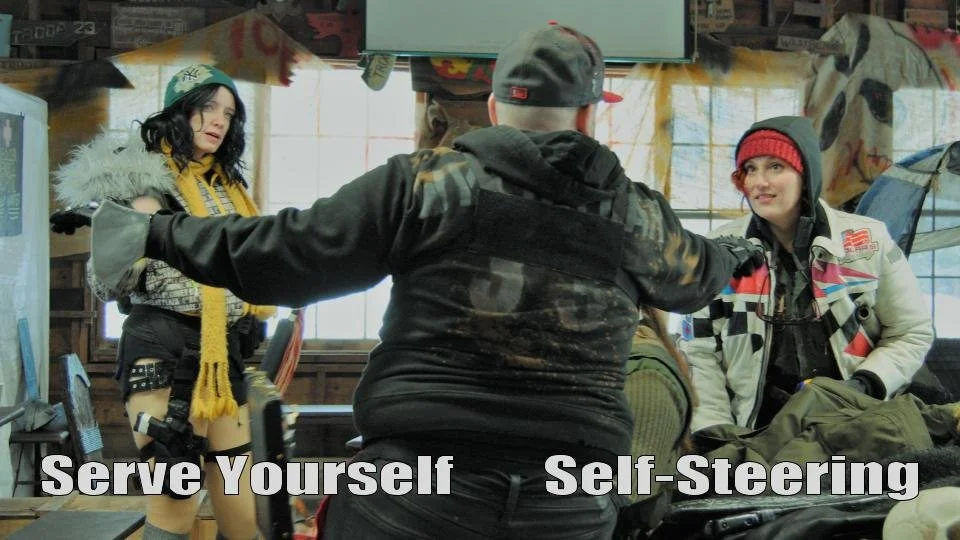
Photo by London Belli

Previously, we talked about your character, not as a person in a story, but as a tool you use for storytelling. As larpers, our characters are precious to us, and often we identify with them strongly. However, and they aren’t real people but rather tools we use to role-play. As such, we should make sure they’re an effective tool, designed to help us have fun and perform the way we want. So how do we do that?

Know yourself

What do you enjoy at larp? When someone talks about how they’re not having a good time with their character, we often start making suggestions about how to change their role-play, but this is rarely an informed decision. Instead, we should look at the times that they had a blast and ask “what were they doing during that larp?” They should play a character that lets them do those things.  Sometimes, characters change over time; it might be useful to replace or revise characters that have changed so much that the player no longer enjoys their larp.

An excellent self-knowledge tool is social media. Have you made posts after a larp describing the awesome time you had?  Those memories are your best tools for designing a character, because they give examples of previous successes. Don’t ask “what should I do to have fun?” Ask “what was I doing when I was having fun?”

Ask “What do I want to do?”

After you know what you enjoyed in previous larps, ask yourself, “what do I want to do in this larp?” Your character should be designed to do those things. If your favorite memories in larp all involve hanging out and talking with your friends, don’t design a silent loner, no matter how cool it sounds. You won’t be doing what makes you happy. 

In Dystopia Rising, crafting is a good example of something people often do (or avoid) for the wrong reasons. “Getting stuff” is something people do, and something people often enjoy. People have collections, people “keep score” with money - getting your “new toys” is a legit activity. But if you don’t really enjoy getting stuff, chances are you won’t enjoy pretending to farm for an hour of your larp. “Farming” isn’t a good thing to want to do in Dystopia Rising, because you’re not actually farming. However, if you know you really enjoy doing the “rectangle game,” farming in Dystopia Rising is a great activity for you. 

Avoid lots of details, but focus on specifics

It’s cool to write a detailed backstory and come up with dozens of characters - it makes your character feel real. But once you’re at a larp, backstory and connections take a lot of effort to include in role-play. No one can include 20 years of backstory in every in-character interaction. Further, it limits growth: the more details you start out with, the harder it is to add more later. So lots of details don’t always help, and they can even hinder role-play.

However, specifics are great tools for role-play. Being able to answer questions very specifically usually gives you something to talk about, or at least something to do. Here’s a good question to ask your Dystopia Rising character: what’s their favorite food? You’re going to be eating at least a half-dozen times over the course of a weekend. Knowing specifically what your character wants to eat gives you something concrete to do as your character, particularly if their favorite food is different than yours (just make sure it’s something you like!)

Make them big

There is joy to be found in playing a subtle, nuanced character. However, Dystopia Rising is not a British film with reserved dialogue… it’s a melodrama with large personalities, death, weird science and lots of other things that keep us running around until the early hours of the morning. Subtle is great, but having something “big” about your character is a necessity in this game. Maybe it’s their personality, maybe it’s their devotion to a faith, maybe they just run headlong into every single combat they see. In any case, figure out what’s big about your character. You want the right tool for the right job, but it’s easier to hammer a small nail with a big hammer than vice versa.

Read More
Advice DR NY Advice DR NY

Serve Yourself - Self Steering

There’s no wrong way to larp… as long as you’re having fun and respectful to those around you. For the latter part - respect - we have many tools and techniques to make sure we treat other players properly. This includes the concept of “steering,” making out-of-character decisions for the sake of other players. Examples of steering include making sure you have consent, avoiding problematic or triggering role-play and purposely including other players in activities. But what about having fun? Sometimes, players should steer themselves with out-of-character decisions to make sure they have a good time.
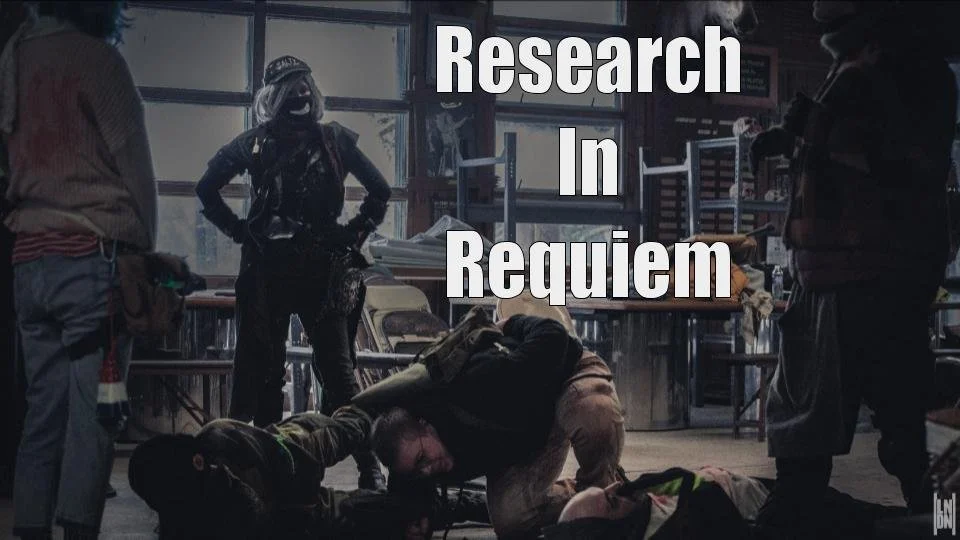
Photo by Allana Marie

There’s no wrong way to larp… as long as you’re having fun and respectful to those around you. For the latter part - respect - we have many tools and techniques to make sure we treat other players properly. This includes the concept of “steering,” making out-of-character decisions for the sake of other players. Examples of steering include making sure you have consent, avoiding problematic or triggering role-play and purposely including other players in activities. But what about having fun? Sometimes, players should steer themselves with out-of-character decisions to make sure they have a good time.

The Agency Problem

In business, the “agency problem” is the set of differences in self-interest between a corporation’s managers (who are trying to keep their jobs and get promoted) and the corporation’s stockholders (who want to make as much profit as possible). While they should be of the same mind, these two goals often misalign. Capitalistic metaphors aside, there’s an agency problem in larp: the interests of the player conflict with the interests of the character. The easiest example is probably fatigue: your character’s best friend has an important meeting at 2 am, but you’re exhausted, so you go to bed rather than stay up. In this case, you choose your own self-interest over your character’s. 

This isn’t the same as making bad decisions in-character: your character can make a decision that you, the player, perceive as wrong without a conflict of interest (particularly if you enjoy experiencing your characters suffer and fail). The conflict arises when you feel the need to do something because “the character” wants to do, when you don’t want to. Alternatively, you could really want to do something but “can’t” because it’s “out of character.” This negative version is more insidious… most people realize “I should go to sleep if I, the player, need to sleep,” even if they miss out on accomplishing a character goal.  However, fewer people realize that they can still do a fun activity, even if their character wouldn’t.

Self-Steering

It’s not wrong to avoid activities simply because “my character wouldn’t do them.” After all, this is live action role-play, and there is a particular pleasure in playing characters different than ourselves. Staying true to the character’s objectives might be more fun in the long-run than partaking in an activity that doesn’t make sense, in-character. But often, the needs of the character work against a player’s enjoyment. A character might be a brooding loner (not fun for an extrovert), a dedicated crafter (not fun for someone who doesn’t like sitting in one place for a while) or deceptive con-artist (not fun for someone who is anxious about conflict). You should be able to (and even encouraged) to play off-type and accept challenges, but if you’re not having fun, the character… and their interests… aren’t working for you.

Many larpers come to role-play through writing or acting or other forms of narrative, and they want a story. Their characters are built to be characters in a particular story. However, larp isn’t a story… it’s story-telling; it’s an activity you do as opposed to media you consume. Your character isn’t a character in a novel or a television show; it’s a tool you use to perform an activity. Making sure that tool aligns with your interests and your playstyle means that your character will be effective as a tool. 

So consider steering your character’s actions towards what works for you, as a player. Remember, you created the character, and their interests. If there’s a conflict, you made it, and you can fix it. If you’re not enjoying that conflict, it could be you’ve picked up a hammer to drive a screw, or a wrench to saw a plank.

Read More
Rules Deep Dive DR NY Rules Deep Dive DR NY

Research in Requiem

Research! The word attracts the attention of some players, and inspires dread in others, but since the beginning, research has been part of Dystopia Rising. However, we don’t have many rules describing how characters can perform research during an event, and each chapter develops its own techniques to introduce new information to players. So how do you, as a player, perform research in Requiem?
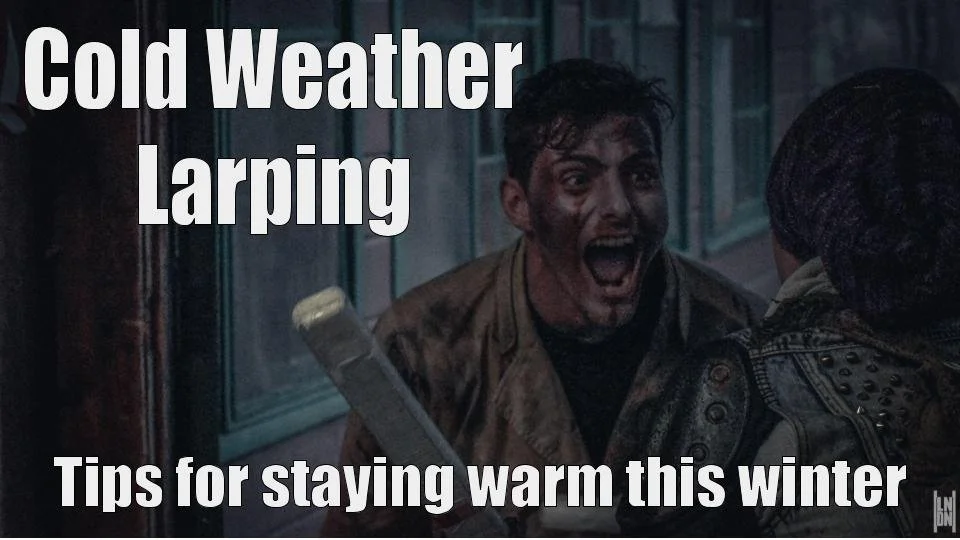
Photo by London Belli.

Research! The word attracts the attention of some players, and inspires dread in others, but since the beginning, research has been part of Dystopia Rising. However, we don’t have many rules describing how characters can perform research during an event, and each chapter develops its own techniques to introduce new information to players. So how do you, as a player, perform research in Requiem?

Method 1: By The Book

There are three methods of performing research according to the rulebook:

  • Enhanced Information (pages 100 - 101): The storytellers prepare some sort of “marker” with the words “RESEARCH (SKILL)” indicating what skill can provide additional information. Note: players can’t just call out a Skill (i.e. “Lore: Undead”) to gain additional information - it has to be prepared prior to the module entering play.

  • Unlocking Lore Cards (page 136): By having the appropriate Lore on your character sheet, you can open “Lore Cards,” placed in modules by the staff, in a similar manner to gaining Enhanced Information.

  • Researching a Disease (pages 187 - 188): By spending 20 minutes and using Lore: Medical, a player can spend 5 Mind points and learn about a particular aspect of a disease (including transmission, stages, and treatment). By spending enough Mind, they can develop a treatment plan.

As you can see, all three methods depend on the staff already knowing the information they want to release to the players; these can’t immediately react to player actions. So what happens when a player has a question, and wants to research an answer?

Method 2: Requiem Research

So you want to research something in Requiem… it can be anything from “why are raiders moving into the area?” to “what are the favorite meals of every Family head?” How do you get your answer?

At Dystopia Rising New York, you have two choices. First, you can use the Library (described fully under Local Mechanics) to spend 20 minutes of role-play, and then go to Ops to ask one yes-or-no question per level of Education you possess, at the cost of 5 Mind per question. Further, if you have the Sage PFA, you can gain insight into further research - basically asking to be hit by the “Clue-by-Four” if you’re trying to figure out the next steps to tackle a plot. This mechanic gives you plenty of options if you have an open-ended question, but that question still has to relate to existing lore or mechanics in play at DRNY.

A second option, also described under Local Mechanics, is Requiem Research. This lets players investigate any topic they wish, through role-play and engagement with the setting. There are three steps:

  1. Go to Ops and ask an open-ended question, and tell them you want to do Requiem Research.

  2. Go role-play doing the “research.” If you want to learn more about the gravemind, spend time role-playing taking samples at the morgue. If you want to learn more about the history of the site, role-play an archeological dig. Two things to remember: 

    1. The more people you involve, and the more in depth the role-play, the more information you’ll receive.

    2. Skills and items matter! For example, if you use a bunch of psionic crystals and have people with aberrant skills when researching psionics, you learn more. 

  3. Come back to Ops and tell us what you did. If we have information available for you right away, we’ll provide you with it. If not, we will ask you to submit an action request so we can get you your answers next time.

Requiem Research is an option for people who want a more freeform experience, and work with the staff to get answers to advance a narrative. If you work with us, we’ll work with you, but we need time to answer your questions.  It’s possible to do the first step as an action request, so that we have something prepared for you! Also, remember to have reasonable expectations. One gathering worth of research isn’t enough to discover a unique new print, and some mysteries may take many months to unravel.

Research is an important part of Dystopia Rising, and we want to make it enjoyable for you. We think an impromptu, player driven mod with your friends might be more fun than sitting around a table for 20 minutes, especially when we can’t predict every question you might ask us and prepare. Using the tools we provide, both through the rulebook and local mechanics, gives you lots of different options to learn new information in Requiem.

Read More
Advice DR NY Advice DR NY

Cold Weather Larping

Cold-weather larping requires more work than just carrying extra socks: while larping in the heat can be rough, the cold offers unique problems that can wear you down. Huddling together in the dark can make for great role-play, but not if the player is uncomfortable or unhappy. Here’s some tips for staying warm enough to enjoy a cold-weather larp.

Cold-weather larping requires more work than just carrying extra socks: while larping in the heat can be rough, the cold offers unique problems that can wear you down. Huddling together in the dark can make for great role-play, but not if the player is uncomfortable or unhappy. Here’s some tips for staying warm enough to enjoy a cold-weather larp.

Stay Dry

Unlike hot weather, you’re unlikely to get a serious injury in the cold… unless you get wet. Your body can produce heat much more efficiently than it can cool you down, but if you’re wet, it can’t keep up. Not only will you be more comfortable if you stay dry, you’ll also avoid hypothermia and frostbite. 

While you hear the advice, “change your socks” often, what you’re actually doing is removing sweaty clothing and replacing it with dry clothing. Sweat is your biggest enemy in the cold; if you’re warm walking around, you’re probably sweating as soon as you start fighting. You need a base layer of clothing that wicks sweat away from the skin, and it’s essential to stay hydrated. Be hyper aware of any damp clothing, and change it immediately.

If You’re Cold, You’re Thirsty; If You’re Tired, You’re Hungry

Your body regulates temperature with fluids: your blood warms your extremities, and your sweat cools you off. If you’re not well-hydrated, this system doesn’t work as efficiently. You need to drink as much water when the temperature is below freezing as you do when it’s hot… only it’s harder to do so because you’re probably not as thirsty. Similarly, it’s a lot of work to keep you warm, and your body needs fuel to do it. If you feel tired or rundown, it’s probably because you didn’t eat enough.

A common scenario in cold-weather larp: early in the evening (about 8 pm), people start going to bed early, exhausted. Usually, it’s because they didn’t eat enough throughout the day. Without food, no amount of rest is going to refresh you. Make sure that if you’re tired, you get some calories in you.

More Layers Does Not Equal More Comfort

You only need your clothes to do three things in the cold: keep the moisture away from your skin, trap the heat around your body, and protect you from the elements. Generally, this means three layers of clothing: a base layer to wick sweat away from the skin, an insulating layer to create pockets of warm air around your body, and an outer layer to keep the wind and precipitation from stripping that warm air away. A good pair of thermal underwear is designed to do the first two, but generally, you want to add a loose layer of warm clothes around your arms, leg, and torso as well. Then protect that layer with a waterproof (and windproof) outer garment, and ensure you have as little exposed skin as possible. 

Adding additional layers doesn’t really help, especially if there is no air between layers. For example, two pairs of socks aren’t really warmer than one pair of socks (there’s no space between them). Further, constricting your blood flow will make your hands and feet cold, and might make you vulnerable to frostbite. You should look “puffy” when you go out in the cold, as you surround yourself with air pockets your body will warm up. Don’t add layers that don’t have space between them; they’re just more likely to make you sweat when you come inside.

Also: when you come inside, take the outer layer off, and open up your insulating layer. You don’t want to overheat. Remember, sweat is your number one enemy.

Why You Wear Your Hat & Gloves

You don’t lose most of your body heat through your head (that’s a myth). Instead, your head and hands are the most likely parts to be left uncovered, and exposure is the second easiest way to lose body heat (the first is moisture). Your wool hat probably isn’t that much warmer than your baseball cap: it just covers more of your head. 

You do lose a lot of heat by breathing, which is why a face covering is a good idea for more than just the pandemic. Also, be careful what you touch with your bare skin. You can probably put your hands in your pockets and be fine (they’re close to your body and pockets trap heat), but when you take them out, they’re going to get cold quick when you touch something. 

Think Systemically

Your clothes, your hydration and nutrition, and your location… these all work together. Limit your time outside, and when you are, make sure you have as little exposed skin as possible, and all your layers are zipped up. Once you go inside, realize your location has changed. Now you want the heat to get to your body, and you don’t want to overheat and start sweating. Drink water before you go outside to hydrate, and eat when you come back in to refuel.

Sleeping

Last, but most important: the time you’re most vulnerable to the cold is when you’re sleeping. Your body temperature naturally drops, and you produce less warm air around you to regulate your temperature. It’s imperative that your bedding is warm enough for the weather. Luckily, the cabins at our site are heated, but make sure you can cover your arms and neck, and consider an extra blanket for your feet.

What do you wear? Just your base layer. Your sleeping bag is your insulating layer; your cabin is your protection from the elements. You don’t want to wear much more or you’ll cut off circulation, or worse, start sweating.

Read More
Advice DR NY Advice DR NY

The Wrong (and Right) Things To Ask a New Player

We were all new once… and many of us have been new several times. Each time you try a different larp, you’re a new player, walking into a community of people who have established connections, jargon, and traditions. As we remember how tough it can be to take those first steps, most of us do all we can to welcome new players. But how can we help? Here’s three things we shouldn’t say (and three we should) to new players.
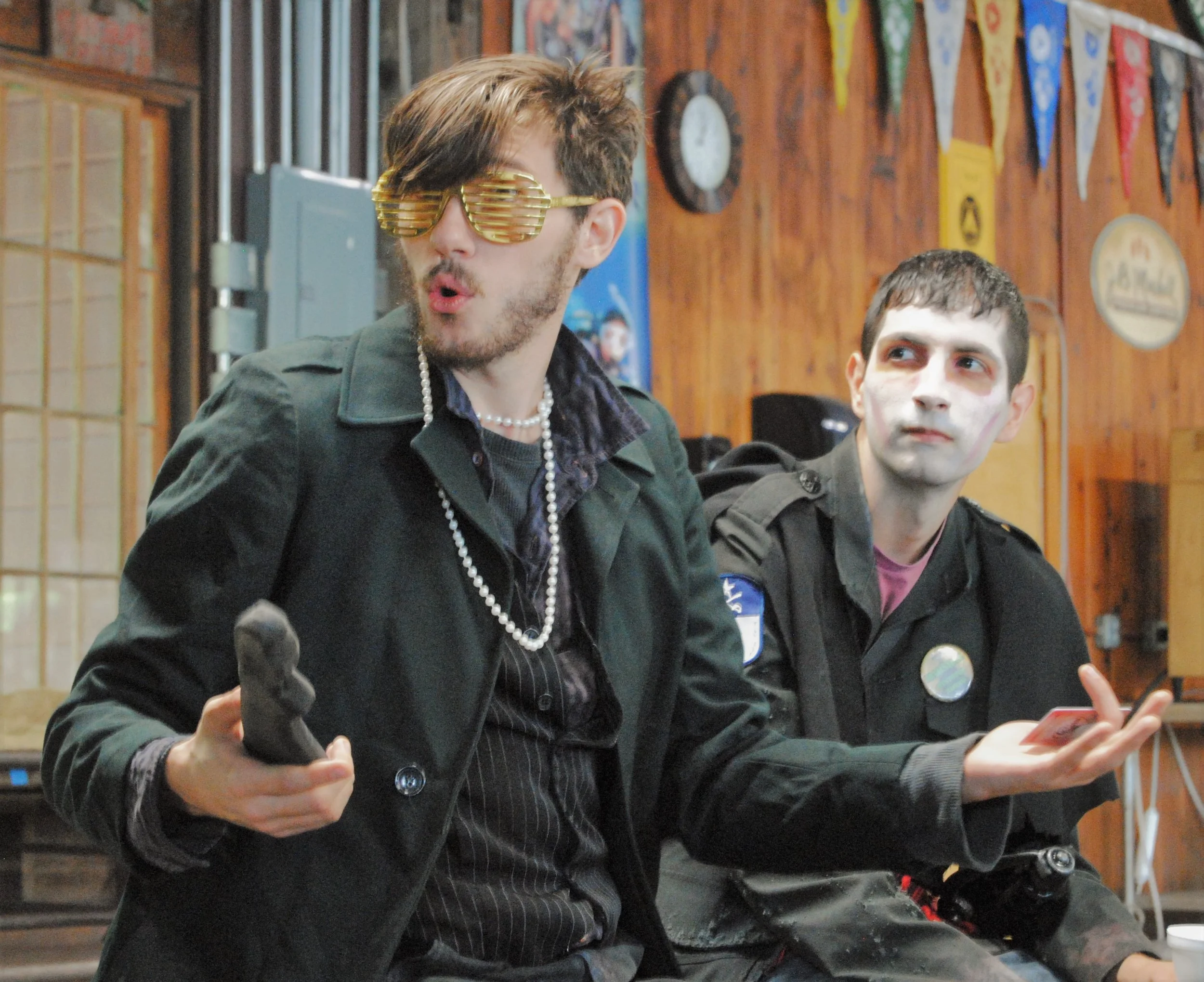
Photo by Brittany Zweir. Pictured: Daniel Carrione

We were all new once… and many of us have been new several times. Each time you try a different larp, you’re a new player, walking into a community of people who have established connections, jargon, and traditions. As we remember how tough it can be to take those first steps, most of us do all we can to welcome new players. But how can we help? Here’s three things we shouldn’t say (and three we should) to new players.

Don’t ask, “Tell me about your character?”

Ask, “What does your character do?”

Larp is something you do, it’s a verb. A lot of larpers are also writers, and writers want to tell a story. There’s nothing wrong with that… but stories have a lot of elements, and when you first enter a long-running larp, there’s a lot to pick up: history, non-player characters, lore. For a person unfamiliar with the setting it’s difficult to even answer, “Where are you from?” But larps have activities and those activities are likely to be familiar. A person who has never seen Star Wars might still know that the characters fly spaceships and fight with laser swords, even if they have no idea where Tatooine is. More importantly, focusing on what they’ll actually do during the larp prepares them for the activity and helps them start playing faster than if they have to learn a bunch of lore up front.

Don’t ask, “Do you want a character tie?”

Ask, “How are you getting to the game?”

When you hear an acquaintance is coming to your larp for the first time, your first response might be to make a connection… after all, you want to play with them! But remember, this isn’t about you: it’s about them. The best way to connect with them is to make sure they make it to the event, and are safe and comfortable while they’re there. So check to make sure they have a ride, or on their sleeping arrangements, or their meal planning. Helping someone get there, as well as making sure they’re comfortable and well fed, will support them immediately and also help you get to know them better as well. 

Don’t ask, “Can I help you make your character?”

Ask, “Have you talked to the New Player Guide?

Onboarding new players is a key part of larp design, and your organizers probably have a plan for how to introduce them to the world. While you want to be helpful, a good larp will have a curated portal to the world run by a staff member. The best thing you can do is get them in touch with that staff member, who will help them make a character that’s best for the larp.

Lastly, remember… just because a player is new to your larp, doesn’t mean they’re new to larp in general. Even if they are, they’re still people who have a lifetime of experience to bring to your game. Don’t lecture them or tell them “how things are,” but rather focus on being helpful, and sharing stuff you personally learned during your first event.

Read More
Advice DR NY Advice DR NY

3 Things To Do With an NPC (and 2 to Avoid)

In a boffer larp, monsters are easy to handle as a player - hit them until they stop moving. But when your storytellers send out NPCs… sometimes things go a little sideways. Maybe an NPC meant to promote roleplay turns into a joke, or an NPC provided as a “hook” doesn’t spark interest, or the players just can’t figure out how to engage with that political NPC. While it’s the responsibility of the storytellers and the people playing the NPCs to make them compelling, larp is collaborative, and we all work together to make the game fun and interesting. So how can you help NPCs show you a good time? Here’s a few specific tips (and a couple warnings) to help you make the most of the NPCs you meet.

A survivor meets Jack Warren. Photo: Allana Marie. Pictured: Dylan Agan, Earl Pomeroy

In a boffer larp, monsters are easy to handle as a player - hit them until they stop moving. But when your storytellers send out NPCs… sometimes things go a little sideways. Maybe an NPC meant to promote roleplay turns into a joke, or an NPC provided as a “hook” doesn’t spark interest, or the players just can’t figure out how to engage with that political NPC. While it’s the responsibility of the storytellers and the people playing the NPCs to make them compelling, larp is collaborative, and we all work together to make the game fun and interesting. So how can you help NPCs show you a good time? Here’s a few specific tips (and a couple warnings) to help you make the most of the NPCs you meet.

Do - Try to “get” something from the NPC

Conflict creates drama, and drama is good for role-play. When you talk to an NPC, ask yourself “what do I want from this person?” This isn’t necessarily nefarious - maybe you want to take care of them, or trade with them, or maybe you just want company. Figure out a reason to engage that involves a personal motive. “What do I want?” is the answer to “why should I talk to this NPC?

Don’t - Quiz the NPC on lore

The person playing the NPC might be new to the larp, or maybe they just got a brief talk to prepare them for play. Don’t assume they’ll know a bunch of details about history, religion, or economics. Asking them detailed questions about the world might be immersive when it works, but it puts the portrayer on the spot and can often fail. Keep your questions relevant to the here and now… what’s currently happening in the larp.

Do - Ask the NPCs about how they feel

Instead of quizzing an NPC on their personal history, forcing them to make up stuff on the spot, ask them about their personal feelings. This could be questions about their personal opinions, or something as simple as “are you hungry?” Asking them open-ended questions that don’t have a “correct” answer lets the portrayer “yes, and…” much more easily, and allows them to flesh out the NPC as they talk to you.

Don’t - Treat the NPC like a plot device

The NPC may very well be a quest-giving plot device… but that’s not terribly interesting for you or for them. If a portrayer was told to provide players a hook, don’t worry, it’ll come out. Instead, try to treat the NPC as another character with whom you want to have a conversation. Let them guide you to a point; the more casual conversation before you get to the point, the more satisfying it will be for both of you. 

Do - Talk about yourself

When an NPC enters the world, they’re there for you: this is your chance to shine. This is your chance to make an impression on a character who’s there to pay attention to you. Introduce yourself to the NPC, and talk about what’s important to your character. If the NPC has something specific to do, they’ll get it done, but if they have the time, this interaction could help define your character.

Read More

Search Posts