REQ-uired Reading

Setting Info DR NY Setting Info DR NY

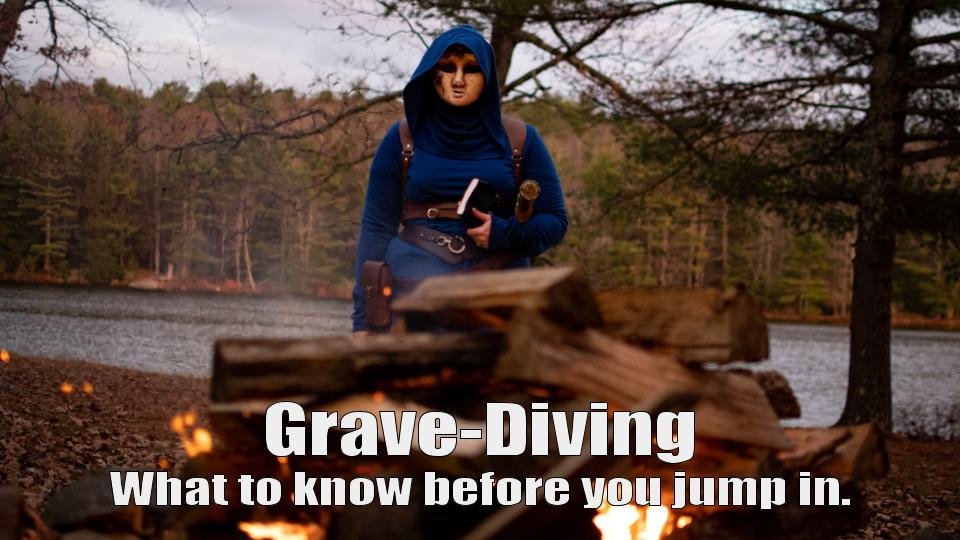
Grave-Diving

The Grave Mind is the weirdest part about Dystopia Rising, and players love weird stuff. It’s where our world becomes unique and unpredictable.
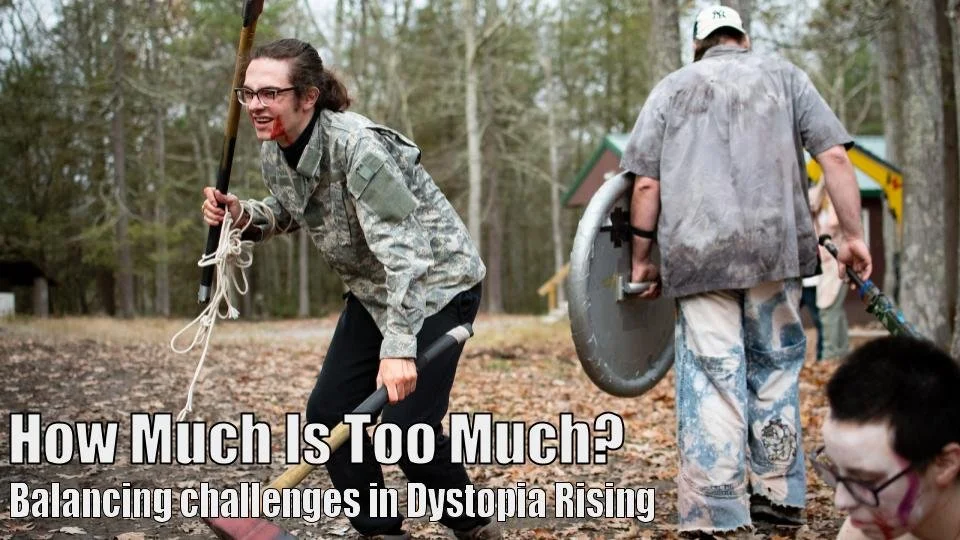
Photo by Shawn Smith

The Grave Mind is the weirdest part about Dystopia Rising, and players love weird stuff. It’s where our world becomes unique and unpredictable. Picture this conversation between a New Player Guide and newcomer:

Guide: So, this is a zombie larp.

New Player: Got it.

Guide: It takes place years after the fall of humanity, so no one remembers exactly what happens. Also, we’ve all evolved into slightly different strains of humanity.

New Player: Got it. Different strains of humanity. Got it.

Guide: Also, inside everyone and everything is a fungal strain we call Infection, and it’s why when you die you get resurrected; but it’s also why there’s a psychotropic hell you have to go through each time, and it makes weird stuff appear every now and then.

New Player: ???

Can it be confusing? Yes. Does everyone have a different opinion on how the Grave Mind should work? Seems like it. But if you’re new to Dystopia Rising and someone mentions there’s a fungal strain that creates a psychotropic hell, how many of you would make a beeline to any plot that had to do with it?  

Now you get our player’s obsession with “grave-diving.”

What Is Grave-Diving?

“Grave-diving” is a slang term we use for when players purposely seek to interact with the Grave Mind. This includes everything from using Death Brews to the Necrokinetics skill to being a full-on Graverobber, using the PFA with the Pallor Mortis procedure. Basically, if you’re having a Grave Mind scene and you didn’t just die, you’re Grave-diving. 

Let’s be clear: grave-diving is a fun and encouraged activity. We want you to engage in this part of the setting. So, before we talk about some of the problems with grave-diving, we’re going to give you a some of the more common ways to do it:

  • The easiest way to grave-dive is with Basic Necrokinetics. Using this skill, you can (with permission) listen to another character’s Grave Mind scene. 

  • More resource intensive, but still affordable, are Death Brews. Depending on the quality of the brew, you can be an unseen observer, be seen but not heard, or even fully interact with another character’s Grave Mind scene.

  • When we’re talking about grave-diving, we’re usually referring to the Pallor Mortis procedure, particularly the master level procedure, the Infectus Mortis. This is where you venture into a Grave Mind scene with the intent of regaining lost Infection.

If you want to be a really proficient grave-diver, we’ve got two PFAs to recommend to you, and associated equipment:

  • Grave Attuned (Necrokinetics) - With this PFA, you can “rescue” people who came into a Pallor Mortis scene with you: it’s essentially a ripcord that says “we’re getting out of here.”

  • Graverobber (Medical) - There are two pieces of equipment that every Graverobber covets. First, a Superior Helscape Deathmask not only lets the user spend 10 Mind to avoid Resolve lost in a Pallor Mortis scene, but it also allows a Graverobber to remain in the scene 10 minutes longer with one additional target. Even better is the Forged Helscape Suit, which allows a Graverobber to give another character a Resolve during a Pallor Mortis scene.

These last two advantages speak to the problem with grave-diving, however: it takes a lot of build and in-character resources to be very good at it. Which means it’s supposed to be hard.

The Two-Fold Paradox of Grave-Diving

Grave-diving has two problems, from a design standpoint. First, because it takes a lot of effort to be good at it, it stands to reason that it’s supposed to be hard. Expert Graverobbers have invested in the ability to spend Resolve for other characters (see below for more on that) and to safely escape in case of emergency. They should be able to assist and save their patients in a Pallor Mortis scene. But… that means the scene has to be difficult enough that their patients need their help. Herein lies the first paradox of grave-diving: for an adept grave-diver, the difficulty of the scene relies on the people you’re escorting being challenged, so that you can help them. The grave-diver themself actually has very little control over the success of the scene… their abilities only prevent (or delay) failure.

However, success or failure in a Pallor Mortis is completely different from any other experience in Dystopia Rising. Most of our challenges either use an accepted set of mechanics (i.e. you get hit with “Takedown” and call “Balance”) or are “what you see is what you get,” where you physically encounter a challenge (i.e. you have to find a box in the woods). A Grave Mind scene, however, is always somewhat freeform, requires some sort of narration, and is extremely subjective in terms of success or failure (you succeed when the storyteller decides you succeed). So this is the second paradox: you have something that’s supposed to be very challenging, and no accepted way to represent that challenge. 

How do we overcome these paradoxes? We need to set expectations.

What To Expect When Grave-Diving

When you go grave-diving, particularly when you perform a Pallor Mortis, the staff at Dystopia Rising New York wants you to have some expectations. This will help you make your decision to engage with this aspect of plot at our events, and also make these engagements more enjoyable. Here’s what we want you to remember:

1.Less Is More

We have a large and growing game, and a lot of people who want grave-dive. At our January event, we’re expecting 14 Graverobbers, not including unplayed alts. If every one of them wanted to do a Pallor Mortis every six months, we’d have more than two scenes to run each event. Running a Pallor Mortis should probably be a once a year event for most Graverobbers, so we can make it special and memorable each time.

2. It’s Supposed To Be Hard, But Not Impossible

The Grave Mind is more powerful than you: you’re not mugging the Grave Mind and taking its Infection; you can’t overpower the Grave Mind and there should be a lot of risk. The trait we’re looking for in a Grave Mind scene is grit: we want you to try a tactic, fail, then try again, and fail, and maybe at some point you succeed. But you’re not going to get what you want from the Grave Mind by being clever or strong. That’s why the Pallor Mortis saps your Resolve as you encounter difficulties: it’s a matter of will.

3. Someone’s Going To Fail

If it’s hard, someone is going to fail. If you’re in a Pallor Mortis scene with five people plus the Graverobber, someone is probably going to fail to get their Infection back, maybe more. If you’re a patient, be prepared that “this might not work.” If you’re a Graverobber, assume that this dangerous procedure probably ends with you spending a ton of Resolve for your patients or yanking them out of the scene. That’s why you have the PFAs you do, after all… it’s not to help them succeed, but save them from the consequences of failure.

4. It’s Going To Cost You (Resolve)

The cost of going grave-diving is Resolve. How much Resolve? That’s up to you. If you’re in an Infectus Mortis with five people, assume one person is going to succeed pretty quickly, and one person just might not get it. Everyone else is in a fight, a contest of wills. If you’re willing to spend everything you have, including taking fractures, you’re more likely to get what you want. But realize that going in: when you come out, you’re going to be tired, possibly fractured, and definitely have less resolve than you went in with. 

5. The More You Give Us, the More We Can Prep

Grave-diving scenes are hard to run. The more time… and the more we know about your character… the better we can run it. At the very least a two month head’s up is preferred. If you want a personalized scene and the storytellers don’t know your character extremely well, the best thing you can do is offer a reference: another player who knows your character well enough to know what elements might make for a memorable scene. The more we have to work with, the more personal and memorable your grave-diving scene will be.

Read More
Larp Thoughts DR NY Larp Thoughts DR NY

How Much Is Too Much?

When you design a boffer larp, you’re not really making a competitive game: the players are going to win. Like a video game, there’s an illusion that you’re struggling against an opponent, but in the end, the NPCs are going to lose, and the storytellers aren’t really trying to defeat you. Instead, there has to be an “illusion of failure,” mixed with actual setbacks, minor defeats, and “reach goals,” to create the sense that you have agency, when actually, it’s really hard to lose. So the biggest challenge for designers is how much adversity should players encounter before they win… or “how much is too much?”
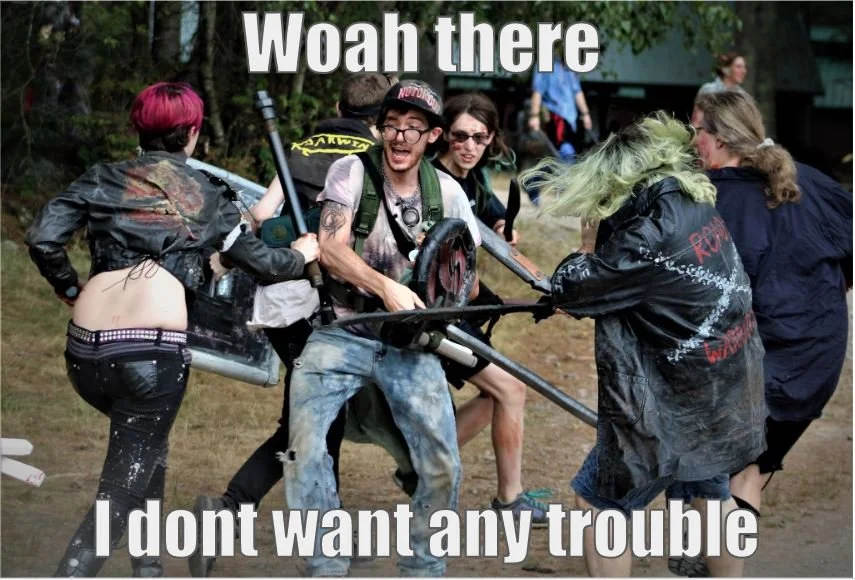
Photo by Shawn Smith

When you design a boffer larp, you’re not really making a competitive game: the players are going to win. Like a video game, there’s an illusion that you’re struggling against an opponent, but in the end, the NPCs are going to lose, and the storytellers aren’t really trying to defeat you. Instead, there has to be an “illusion of failure,” mixed with actual setbacks, minor defeats, and “reach goals,” to create the sense that you have agency, when actually, it’s really hard to lose. So the biggest challenge for designers is how much adversity should players encounter before they win… or “how much is too much?”

The Adept Survivor Problem

In Dystopia Rising, as in other larps with quantifiable mechanics, we have a particular problem. The wastes are full of zed, raiders, and critters who want to kill and eat your character, and they know that… so they struggle to prepare for the worst. Not only do they spend Build to gain skills, Body, and Mind, but they also craft gear such as weapons and brews. It’s a feature of the system that the more games you attend, and the more crafting you do, the better prepared you are for threats. However, the better prepared for threats you are, the easier they are to overcome, and the “illusion of failure” disappears: you’re running roughshod over your enemies. But if the designer ups the threat, then your work is for naught; the perceived challenge remains the same no matter how bad ass your character gets. We can call this the “Adept Survivor Problem:” the more adept your character is as a survivor, the more they’ll encounter dire threats to their survival.

Compounding this problem is that all characters have a different level of survivability. This is a matter of character longevity (i.e. Build) and wealth, but also player experience (such as knowing what items work the best in a given situation) and interest (not everyone enjoys crafting or economy). When designing for large groups of players, the Adept Survivor Problem becomes a tricky balance. 

Lots of Solutions, But No One Way

There are lots of ways to deal with the Adept Survivor Problem, but really, no one solution will work. Designers have to use a mix of options to challenge players, particularly in large groups. Using one tool too much causes frustration, so it’s important to use a mix of them. Here are some tools we have as Dystopia Rising designers to create that “illusion of failure.”

  • Respawning enemies: having lots of enemies to cut down lets players feel like a bad ass, killing lots of zed or raiders, and challenges them with attrition. 

  • Control Calls: area of effect crowd controls and other similar effects create a moment of inescapable challenge, letting the enemies get a few hits in before they disappear.

  • Weird Shit: in Dystopia Rising New York, we like to throw unique zed and calls at you that can surprise players and create a moment of confusion.

The Effect On Players

Because of the multiple ways to address the problem, players end up on a bit of a roller coaster. This isn’t a bad thing: remember, the designers are trying to create that illusion of failure, and that illusion will create frustration, fear, and anger in the characters. Sometimes, those emotions bleed over to the player… and that’s also okay, as long as it doesn’t disrupt their play. If a player can continue to play, they’ll eventually win or accomplish their goals, and that feeling of accomplishment will also bleed over to the player. But if the negative emotions stop play, then both the designers and the players have to work together to get the game back on track.

So what can you do as a player when you’re too frustrated to continue to play? First, while anger is a valid emotion, it’s often not a constructive one, particularly in a cooperative game like a larp. It might be best to take a break, cool down, and then either continue play (and send feedback afterwards) or talk to a guide. When you talk to the guide, try to focus on what you want to happen; this gives the storytellers an idea of how to move forward. And finally, remember this piece of advice: wait until the smoke clears. Often, your frustration peaks at the most difficult moments of the larp, and there’s a plan for what happens next. Sometimes it’s best to keep playing, and see how things turn out, than to stop a story before you get to the ending.

Read More
Setting Info DR NY Setting Info DR NY

A LARP Conundrum: Skill Calls and You

Hello Readers! We are back with another blog post, and this one serves a couple of purposes; transparency and bringing attention to collaborative play.
Hello Readers! We are back with another blog post, and this one serves a couple of purposes; transparency and bringing attention to collaborative play.

The Ground Work

At DR:NY, we have been lucky enough to enjoy some bigger games over the past few months but as we push into the colder seasons we expect to see some of our warm weather friends take a bit of a break which leads to some more intimate games. As you might imagine, as a game runner, large and small games present their own types of challenges. One of the biggest challenges is smaller NPC groups, because we love to push you to that ‘oh shit’ moment, and that is a lot harder to do when we have 3 people rather than 10.

Here’s the Scene

So, I want you to imagine for a moment - you’re out playing your character. Things have been pretty quiet… and then HARK! Are these the harmonious groans of zed? Or perhaps the grunting rumblings of some raiders!? You can feel your adrenaline start to rush as you reach for your weapons. You can see them now - only 4 of them. They engage with a group of people who had advanced to intercept them. “Mangle, mangle, break weapon, mangle, break weapon, mangle, break weapon…” One by one, the raiders are quickly dispatched. You didn’t get a chance to swing on them. Maybe they’ll respawn?  There! From the treeline- more raiders! “Break weapon, breakmanglebreakweapon mangle…” dead again. They don’t respawn. There weren’t enough of them, you never even got close enough to swing. You watch the NPCs march away into the night, because after all, there are other players that also haven’t seen any action for a while and they need to be entertained as well.

The Dilemma

There are two major points to this blog. The first is really to point out that we (your game runners, your Ops guides) want to send you that threat, we want you to have fun engaging it, it’s literally what we are here for. We all have these skills, all this mind, brews, meals, all this build and time we have spent acquiring the aforementioned skills/items but when it comes to some of those smaller NPC groups, some of those lower threat baddies, the player may want to think about how using those skills could negatively impact the scene. We’re not saying don’t use your stuff - that’s kinda the whole point of playing. That being said, skill spamming can really suck from both sides of the aisle for a multitude of reasons. You’ve all been on the NPC side of things and heard the whole ‘don’t skill spam - it’s no fun for the players who have waited for something to fight and want to get in there and feel cool. You aren’t the hero, they are.’ We don’t think about how it is for the people on NPC shift and the guides when we try to bring a low to moderate threat out and it gets steamrolled in thirty seconds. It unfortunately ends up being not that much fun for most parties involved - the NPCs don’t enjoy being immediately potatoed and not being able to engage their friends, the guide has to try to figure out if there is something they can do that would be fair but more engaging for the players that are there, and the players that are not the ones who immediately engage in the fight don’t get in on any of the action.

What We Don’t Want

“Okay, well, why don’t you just up the stats of the NPCs?” Good question. A lot of the time we do. Being able to adapt on the fly is an important tool out in the field. If I know I am hitting a bunch of veteran players, you better believe those NPCs will be above threshold. But there are also variables ( weather, temperature, how much combat that group of NPCs has already done etc.) that impact us being able to respawn for long periods of time, and just making a threat immune to skills or having ‘yes’ body is something we avoid, or don’t do at all at DR:NY. There are also the cases where the groups of players we see are mixed build levels. If we want to send something out the low to mid build characters can engage with and they happen to be hanging out with a couple players that have high build, it is very difficult if not impossible to balance appropriately. You can see how all of this can be quite a challenge.

What It Boils Down To

So what is the moral of this ramble? I guess it boil down to three things:

  • Spamming skills has a time and place, and that is with a larger or higher threat group of NPCs

  • Be mindful of the people you are around, they want to get in on that combat too. If one or two players engage the threat and beat it down in 30 seconds, that’s not nearly as much fun.

  • The people you are fighting against, the NPCs, those people are your friends too. And sometimes they just wanna play wacky bats and steal your bucket…

Read More
Setting Info DR NY Setting Info DR NY

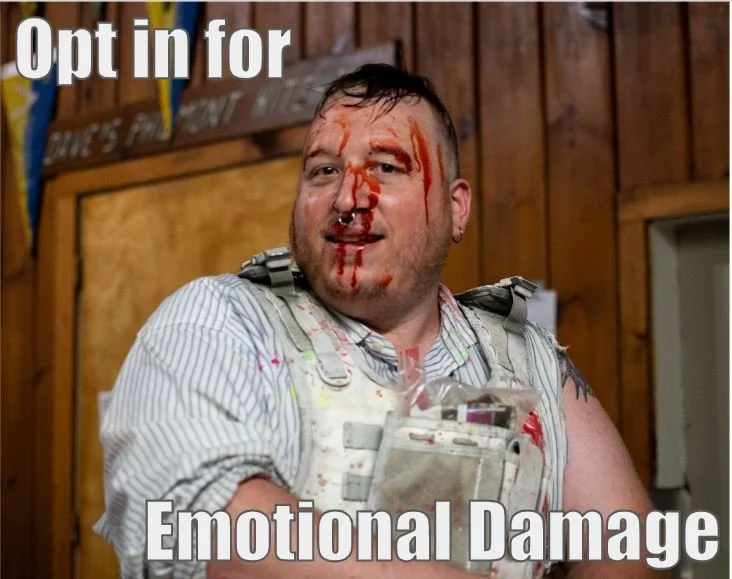
Emotional Damage

It’s clear to us that our players have enjoyed the “Fuck Around And Find Out” mentality and ability to opt in that came with Red Line. While thats still very much on going, we would like to offer another opt in for “Fuck Around And Find Out” that’s a bit more in theme for the spooky season.
It’s clear to us that our players have enjoyed the “Fuck Around And Find Out” mentality and ability to opt in that came with Red Line. While thats still very much on going, we would like to offer another opt in for “Fuck Around And Find Out” that’s a bit more in theme for the spooky season.

How do you get involved?

Once during game a cabin may register with Ops a negative emotion in the form of an “I feel _____.” statement. This could be I feel aggressive, lonely, melancholy, hatred, etc etc. This is done for the entire cabin, so please make sure to discuss with your bunk mates before registering. Once a cabin has registered with Ops, we will (at some point during either night) find a way to represent, create or embody that emotion in the cabin at our discretion. This could be a scene, a threat, some fresh new trauma for your characters to bond over or other various things that come with the season. The sooner a cabin registers the more time we will have to plan a fun encounter for all those who are staying there so feel free to start those conversations before game !

Read More
Setting Info DR NY Setting Info DR NY

Unfinished Business

With a new season of Dystopia Rising New York beginning, there’s a few items that haven’t been taken care of.

Photo by London Belli

Sure was a lot going on during Honor's Fall. Time to wrap up some loose ends as we roll on into SEASON TWO.

False Idol

Tired of seeing all your faithful friends murder each other? Hunt down the False Idol, put an end to it and maybe find out what or who it was in the process.

Red Line

Everybody loves Redline, but has anyone managed to figure out what it all does? Compare notes, get high off your ass, experience insane side effects, but hey where is it coming from anyway?

Meet The Families

Now that the dust has settled check out and rub shoulders with your new family heads and see the faces that will be wielding power in a newly reshaped Requiem.

Read More
Setting Info DR NY Setting Info DR NY

Aim to Misbehave

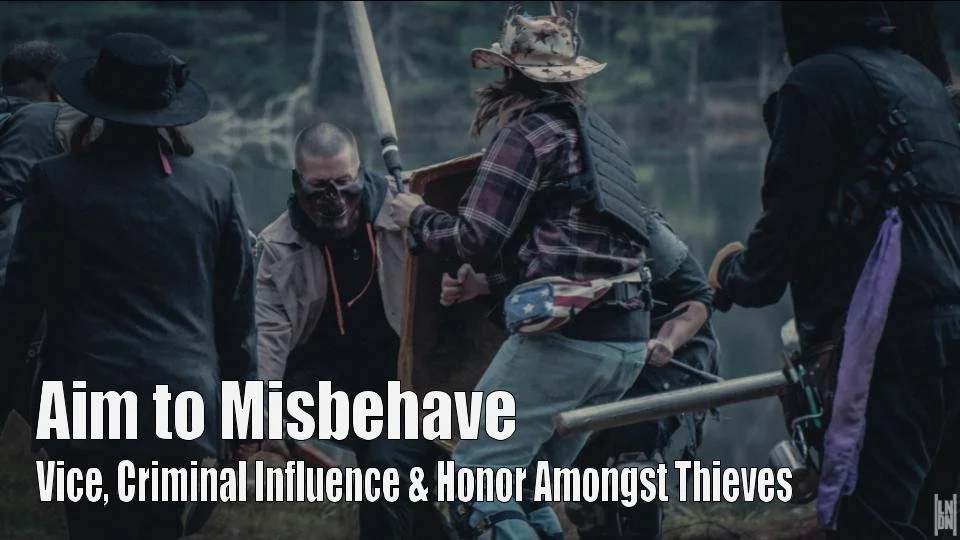
Requiem doesn’t really have laws… it has rules. The Treaty of the Fold binds the Families of Requiem together under the rule of the High Lord Executioner, but historically, people ended up here because they got run out of somewhere else.
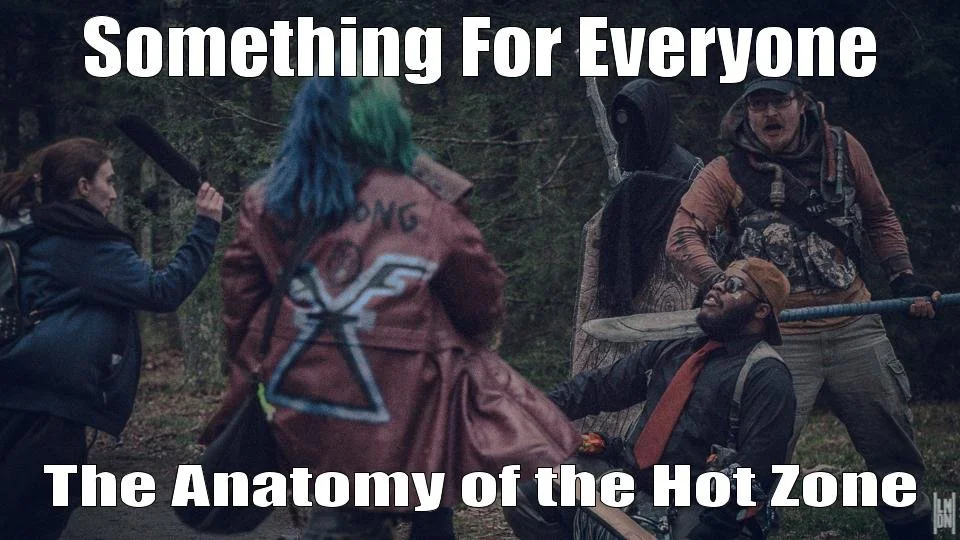
Photo by London Belli

Requiem doesn’t really have laws… it has rules. The Treaty of the Fold binds the Families of Requiem together under the rule of the High Lord Executioner, but historically, people ended up here because they got run out of somewhere else. The Families more resemble a crime syndicate than traditional government, and the setting encourages sketchy activities like drugs, theft and murder (as long as you don’t get caught). While the staff talks a lot about Character versus Character (CvC) conflict quite a bit, there’s actually not much more CvC in Requiem than in other chapters. Most of the conflict remains CvE, which poses a question: if we’re not harming each other, how do we misbehave in a setting appropriate manner? Here are some ideas for both locals and travelers as we approach Honor’s Fall.

Rule 0: Consequences, not laws

Requiem is governed by a treaty, not a constitution or a charter. In most governments, there’s an authority figure who has “legitimate” power over everyone who lives there. In a treaty, various groups agree to abide by the same rule and suffer consequences enforced by their peers. There’s not a whole lot that the High Lord Executioner can do to go after Seraphis Volkov if she kills someone in the streets of Requiem… except that the other Families would back him up, and possibly destroy the Seraphis’ entire family if she didn’t submit to his judgment. The threat of war (as seen during our last plot arc, the Reckoning) keeps the peace.

While all the Families care about the Treaty, it’s out of self-interest, not a sense of justice. If someone disrupts the peace, they’ll be dealt with quickly, but there’s not a police force investigating crimes in Requiem. Therefore, you have an unspoken rule that exists in many places, but is even more true here: don’t get caught. 

Vice Is Part Of the Setting

We’ve just introduced a new drug, Redline. The local bar, the Wilted Rose, is a brothel. We have heavy metal raiders. Sex, drugs and rock-and-roll are integral to the setting, and we encourage players to indulge their character’s vices. While we have to be respectful to real-world addictions and player boundaries, vice is one of the best ways to role-play Requiem’s lawless nature. It’s not that Requiem has vices you can’t find anywhere else, it’s that in Requiem, locals focus on vice as an enterprise. It’s not a Hedon paradise, because in Requiem, vice is a business.

How do you get involved in vice? Buy intoxication brews (and then role-play the effects). Do Redline. Frequent the brothel (just don’t expect actual sexual contact with the players!) Or start your own rackets: maybe you can learn three-card monte (and run it as an actual grift with a partner). Do some gambling and lose some bets. Cheat at cards. Find something that feels good, then charge characters in-game money to indulge.

Criminal Conspiracies

Requiem has a strong emphasis on Criminal Influence, as well as societies such as Murder Inc. We typically have our meetings early in the gathering, to provide guidance to players throughout the event. Our Criminal Influence meeting usually has over half the event in attendance (we currently have 110 players checked in with at least basic Criminal Influence), while our Murder Inc meeting usually meets in a smaller group that requires more effort to attend. These groups have a strong presence in the Families of Requiem, and typically offer an opportunity to get involved with plot in a setting-appropriate manner.

Remember, Criminal Influence is not a rare skill in Requiem. While it still values secrecy, when most of the game has the skill, it’s not an exclusive club. When you go to the Criminal Influence meeting, expect to see high-ranking Family members (both player and NPC) expressing political opinions, a couple of job offerings, and probably people fencing some sketchy items. Murder Inc, however, generally requires more commitment: you’ll be asked to use proficient Stealth to make a disguise, and then meet at ops to be escorted to the meeting location. There are often in-depth discussions of what the organization will do over the course of the gathering, and if there’s to be an assassination, this is where it’ll be decided.

Honor Amongst Thieves

The single best way to engage in Requiem’s setting is to embrace the idea of “honor amongst thieves.” The people of Requiem have various codes they live by. For example, they don’t rat people out (or at least try not to get caught doing it). If they shake on an agreement, they expect it to be honored; this isn’t a “Rover deal” but rather a realization that the other person might do violence if they welch. And they value loyalty… loyalty to their family, in particular… above all else. 

At Honor’s Fall, we’ll bring in a new item to focus on this theme, as we introduce special challenge coins. Extremely rare, these coins were inspired by the gold coins in the John Wick movies: they represent a favor more important than life itself. We’ll explain more about them in an announcement, but realize that they’re only given out to players on rare occasions, and if you have one, you can return it to an NPC to call in just about any favor you can think of from them.  

But I’m Not A Crook

Not everyone plays a criminal, but everyone in Requiem is playing in a town built by crooks, con artists and scoundrels. While, we don’t create plots that focus exclusively on these scoundrels, apart from a couple of Criminal Influence mods, realize that to a majority of players, the criminal aspect of Requiem is an important part of the game. If you’re playing a character who doesn’t have Criminal Influence, who doesn’t indulge in vice, or even plays law enforcement… cool. That’s also part of the setting, but we do expect you to interact with others with the knowledge that all the rackets, grifts and conspiracies that are going on around you, are important to other players. There are ways to get involved indirectly, with many criminal organizations maintaining strong ties to people otherwise on the up-and-up. We’re committed to not gate-keeping our plots and modules behind Criminal Influence or that sort of role-play, but realize that many of our plots are going to have that sort of aesthetic. By engaging with it, even in an antagonistic manner, you can get involved in a uniquely Requiem way - by indulging your vices, acknowledging the sense of honor amongst thieves, or even by refusing to give up your sense of law and order.

Read More
Important Info DR NY Important Info DR NY

Something For Everyone

As we prepare for Honor’s Fall, we spent a lot of time talking about Saturday night, when our players and NPCs all settle a year’s worth of scores between sunset and sunrise. But just as big an event is our Hot Zone, the special event mod we’re running that weekend. While we’re sending out dozens of mods and have a couple of staff shambles planned, the Hot Zone will be central to the event, and we want to make sure everyone gets a chance to enjoy our Nuclear, Biological, and Chemical (NBC) wasteland. So how do we take what we learned with our previous Special Event mods, like our Train Job in April or our Jonestown Run last month, and scale it for a game that might reach 200 people? Read on to learn more…
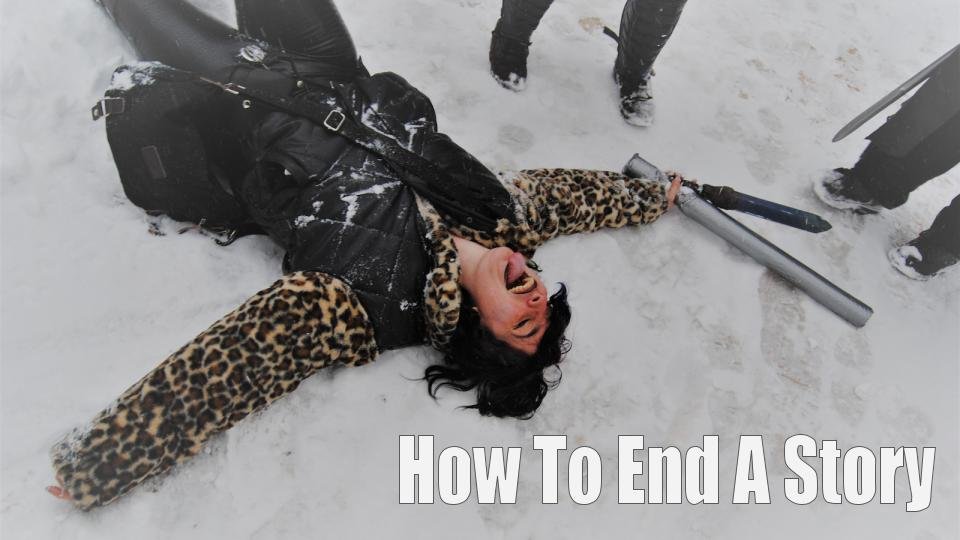
Photo by London Belli

As we prepare for Honor’s Fall, we spent a lot of time talking about Saturday night, when our players and NPCs all settle a year’s worth of scores between sunset and sunrise. But just as big an event is our Hot Zone, the special event mod we’re running that weekend. While we’re sending out dozens of mods and have a couple of staff shambles planned, the Hot Zone will be central to the event, and we want to make sure everyone gets a chance to enjoy our Nuclear, Biological, and Chemical (NBC) wasteland. So how do we take what we learned with our previous Special Event mods, like our Train Job in April or our Jonestown Run last month, and scale it for a game that might reach 200 people? Read on to learn more…

Use Your Resources Well

The reason we love doing special event mods is because they use our most valuable resource well… our people. During a special event mod, our players split into two groups, with one group playing the antagonists and the other playing in the mod, and then they swap. This does a couple of things. First, it means we can engage a large number of players with relatively few staff members… we just need one guide to run the mod, and the NPCs take care of themselves. However, what makes them fun is that you’re fighting your friends. While some people enjoy their NPC shift, others consider it a chore. However, when you get the chance to fight your friends (particularly after those friends just wailed on your character), we’ve found you all enjoy that much more. 

Plus, having a reusable mod space means we can go all out and make it different. For the Train Job, you got to see some of the 3D printed traps we’ve been making. For Jonestown, we used a part of the camp you might not have seen before. For the Hot Zone, we’re building special effects… unique lighting, smoke effects, and new props… to make sure it really feels like you’re walking into an NBC hellscape. We’ll combine this in a new contamination mechanic; that means the environment itself is trying to kill your character (and, of course, give you toys to help you survive it). 

Something For Everyone

As we’ve grown more experienced with our special event mods, we’ve managed to expand it beyond just combat. For the Hot Zone, we’re putting non-combat skills front and center. Not only will you have to use real world skills to avoid contamination, we’re also placing science stations throughout the Hot Zone, where your characters will have to perform tasks to figure out what’s going on and how to end the contamination. If wasteland engineering or research are your character’s focus, you’ll be able to engage in these tasks in a real-time environment, while your friends hold off the irradiated threats that are coming to kill you. Instead of research being something that happens before the big fight, in the Hot Zone it’ll be the main event.

In addition to the science you’ll get to do on your individual runs, we’re planning a couple of big mods that allow large groups to return to the Hot Zone to solve the problem once and for all. During this time, there will be lots of fighting, but plenty of opportunities for those with Civilized skills, including Education and Medicine, to get their chance in the spotlight. We’re working on challenges like you haven’t seen before, so that you’ll be fully immersed in the problem you’re trying to solve. 

High Risk, High Reward

In the Hot Zone, everything is trying to kill you, so there has to be a high reward. Luckily, we’ve gotten 50 festering crystals to give away throughout the event, and all of them can be found in the Hot Zone. We’re actually placing the physreps of the crystals throughout the space, where you can find them and take them back. If you’re an Early-Bird participant, you can then convert these physreps to actual festering crystals at the post office with your crystal harvesting perk that you receive in your packet. In addition, there will be plenty of other resources (and perhaps more) to be found throughout the Hot Zone.

Some of you might be thinking, “we can only harvest one crystal, but can we grab more than one physrep while we’re in the Hot Zone?” The answer: absolutely. But remember, taking more than your fair share of crystals is considered CvC, and remember the punchline of this joke:

If a Yorker and a Baywalker go into a Hot Zone with five crystals, and the Baywalker takes all five crystals, how many crystals does the Yorker have?  Answer: five crystals and a dead body.

Mechanics

Note! We’re still writing this mod, and the mechanics are subject to change. Check back before Honor’s Fall for updates.

  • Containment Level - Players will need to manage their Containment Level to survive. Containment Levels are lost whenever a player goes into Bleed Out, is hit with Break Armor, or is hit by one of the Splash mechanics of the mod. When you reach 0 Containment Levels, you enter Bleed Out immediately and must activate your Emergency Beacon. 

  • Emergency Beacon - Activating your Emergency Beacon allows you to survive at Containment Level 0 for five minutes. The only way to save a person after they activate their Emergency Beacon is to move them to the Decontamination Zone.

  • Decontamination Zone - The only way in or out of the Hot Zone is through the Decontamination Zone. Players who reach the Decontamination Zone may request extraction at any time. If you use Master Stealth or similar skills in the Hot Zone, you’ll reappear elsewhere in the Hot Zone: you must reach the Decontamination Zone to get out. 

  • Recovery - Players will be able to recover crates, canisters and other objects from the Hot Zone. They must place them in the Decontamination Zone, where their contents can be safely revealed.

  • Samples - Samples are recoverable props that can be obtained in the Hot Zone through various interactive puzzles and challenges. They contain materials required to do experiments in the Science Lab. 

  • Science Lab - Hope you like real-world chemistry. Note: for safety reasons, the lab will be in the Decontamination zone, but don’t worry, you’ll be able to collect the samples under attack.

  • Mutants - Mutants may activate their strain advantage to delay the effects of the Hot Zone for 30 seconds, as long as their Emergency Beacon has not been activated.

  • Protective Items - The Hot Zone requires protective items which will be provided by the kind folks at Slaghound Salvage. Equipment not specifically designed for the Hot Zone (i.e. death masks) do not provide adequate protection.

Who are the folks at Slaghound Salvage? Don’t worry, you’ll meet them, and they’re eager to help you. 

The Hot Zone will run between 10 am and 5:30 pm Friday and Saturday, with the last run beginning at 4:50. Can’t wait to see you there!

Read More
Larp Thoughts DR NY Larp Thoughts DR NY

How To End A Story

Our May event, The Reckoning, concludes a plot arc that began in January. We’re very excited about what we have planned, including the final showdown with Jim Jones, and the return of Anton Anastasia. We’re extremely excited to see what our players do when he shows up. But as we prepare for the end of The Reckoning, we have to ask… how do we end a story in a larp?
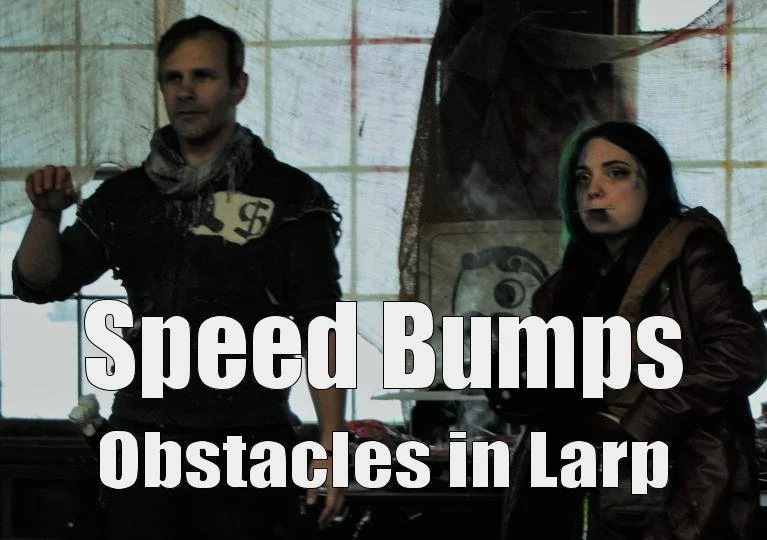
Photo by Allana Marie

Our May event, The Reckoning, concludes a plot arc that began in January. We’re very excited about what we have planned, including the final showdown with Jim Jones, and the return of Anton Anastasia.  We’re extremely excited to see what our players do when he shows up. But as we prepare for the end of The Reckoning, we have to ask… how do we end a story in a larp?

Make It Big

There’s a conventional wisdom in experience design that applies to larp. People remember two things from an experience: the biggest thing that happened, and the ending. If you watch a Broadway show, they often put the most popular song in the middle (the “showstopper”) and then have a really big finale. In larp, players are co-creators, so while their designers can set-up showstoppers, the most memorable experience is typically different for each individual. As such, the single event they’ll all have in common is the ending. So it’s important to make the ending “big.”
From a story-telling side, that involves making a lot of options available. In The Reckoning, that means you should have the opportunity to kill Jones, or change the regime, or get in a huge fight, or complete your research. From a player perspective, we need you to commit to large, dramatic moments that impact those around you. This is the time to yell, to cry, to give a dramatic speech, or finally enact that betrayal you’ve been setting up for months. This is the end of the arc, so it’s time to put all your cards on the table. 

Make It Hurt

An ending should come at some sort of cost. This isn’t a children’s cartoon where the heroes triumph without pain or loss… this is a game of survival horror. As players, we’re not trying to win, we’re trying to tell a story. At the end of the story, if there is victory, it should come with a price and have been hard-fought. If there’s a loss, then all the better in this genre.

As storytellers, our job is to provide you a challenge. We need to give you a chance to use that injectable you made, or spend all your Mind and Resolve, or sit by the morgue waiting for a fallen friend. The challenges we provide aren’t to defeat you, but to make you feel like your character overcame a challenge. For your part, we want to make sure you’re ready to lose, at least a little bit. You’re going to be coming into The Reckoning with full health, full mind, and all the items you can. At the end, we want you to be prepared to have a little less… the cost of victory.

What Comes Next

If this were a movie, or even a one-shot larp, we’d wrap everything up without any concern for a sequel. However, it’s a campaign larp, and we have a game in June (and a really big game in August). After you defeat Jones, after Anton comes back, we have to run a game next month. That game probably won’t have the same stakes as The Reckoning, but it will have to be interesting, and it will have to be recognizably “Requiem.” You probably won’t tie up all the loose plot threads (and if you do, we’ll still have more for you, including the creepy pig-skull thing you met in April). 

Regardless, we have a climax coming up in May, and we’re going to end this plot arc with a bang. We can’t wait to see you there, and you better be ready to play.

Read More
Larp Thoughts DR NY Larp Thoughts DR NY

Speed Bumps

Running a Dystopia Rising game is a balancing act. On one hand, you need to give people something to do - it’s a boffer larp so there has to be some sort of challenge or, at the very least, an enemy to fight. On the other hand, every challenge that you put in the game is an obstacle and that obstacle takes effort to overcome. If the challenge is too little, the players get bored.
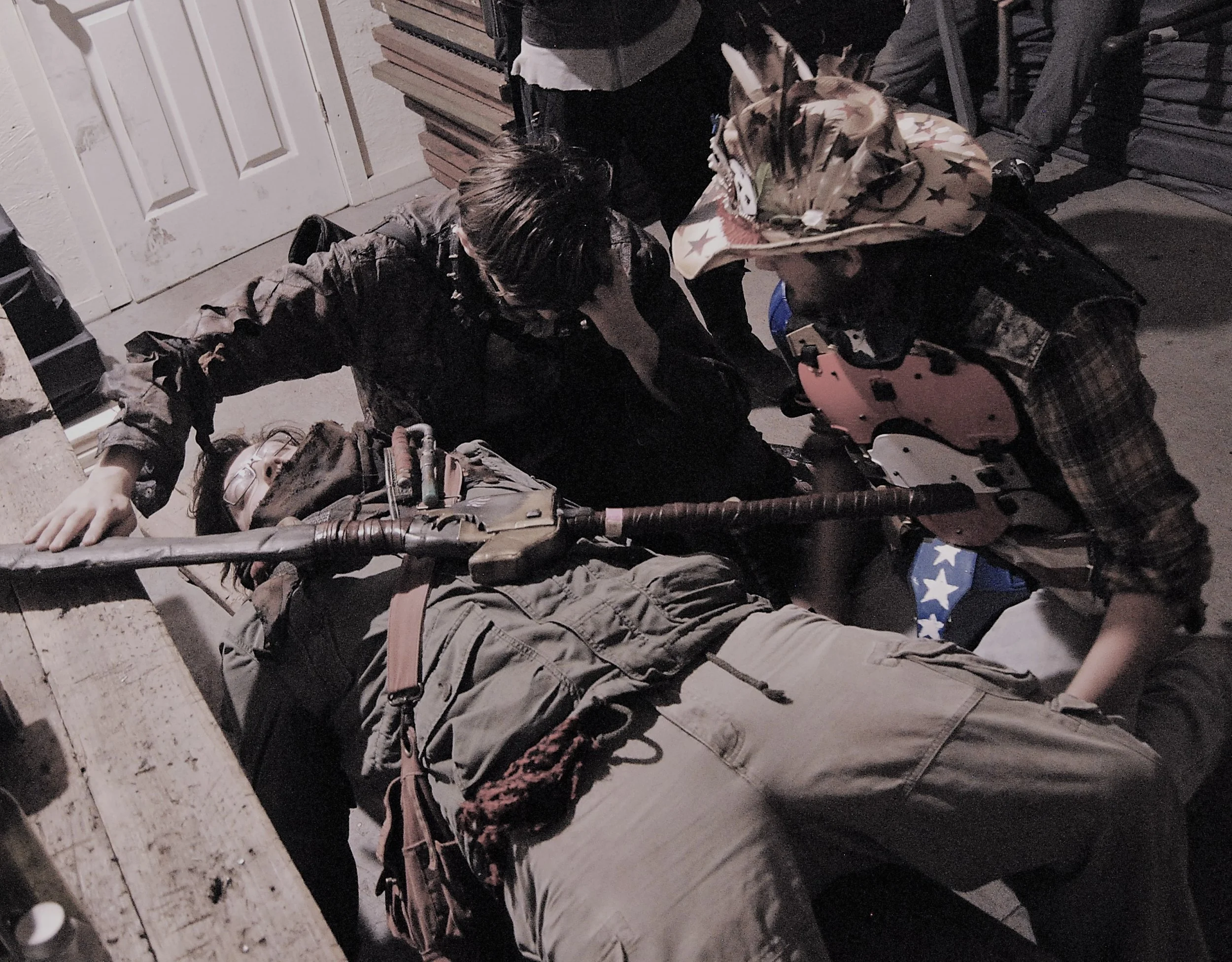
Photo by Allana Marie.

Running a Dystopia Rising game is a balancing act. On one hand, you need to give people something to do - it’s a boffer larp so there has to be some sort of challenge or, at the very least, an enemy to fight. On the other hand, every challenge that you put in the game is an obstacle and that obstacle takes effort to overcome. If the challenge is too little, the players get bored. If the challenge is too great, they don’t engage. This goes beyond combat threats, however, and when you put in role-play challenges, you always make it more difficult to engage with your story.

For example, in Requiem we have Murder Inc factions and, to promote the setting and feel of Dystopia Rising New York, we want Murder Inc meetings to happen in disguise. However, this is hard! First, disguise requires Proficient Stealth, which is a skill that costs build (and has a minimum build requirement on top of that). We make various items available to allow players who haven’t purchased the skill to be able to go to the meeting in disguise, but there’s still other obstacles. Putting on a disguise requires extra clothing, which not all players will have. We’ve told those players to come to ops and we’ll help them out with our NPC stock. But knowing we have items for you to use, and out-of-character clothes for you to wear, requires information you might not have. And even if you get that information, it still takes time to go get your other costume and put it on, and it’s probably not as comfortable as your other costume… and…

Well, you see, there are a lot of obstacles created by setting requirements.  

Sometimes, people use the word “gate-keeping” to describe these obstacles, but that’s not entirely accurate. Gate-keeping involves removing a player’s access to a plot. By themselves, these obstacles don’t do that… although if there’s enough of them, it is de facto gate-keeping. Instead, they simply slow down access to a story element. Because of that, we’ve taken to calling these “speed bumps.”

Why have speed bumps? We’ve got a few reasons:

  • To make a plot element more exclusive. This is the classic “golden ticket” design: there’s only five tickets to Willy Wonka’s chocolate factory. Anyone can find a ticket (although some people have advantages)... but finding a ticket is an obstacle that has to be overcome. 

  • To make a plot element more interesting. For example, having disguises at the Murder Inc meeting makes it distinct from the Criminal Influence meeting. Because the Criminal Influence meeting has no speed bumps, it’s going to take some sort of obstacle to make the Murder Inc meeting different. 

  • To emphasize an unused plot element. Sometimes, an obstacle makes an unused plot element more enticing to players by making it a challenge.

An example of this last one is Requiem’s ban on preaching. While faith-based role-play is vital to Dystopia Rising, outside of the Tribe of Seasons and TeeVee programming, there’s very little ritual and almost no preaching. This isn’t a knock against our players, as much as an observation (the most common group activity we’ve noticed for faiths is “holding a meeting.”) In an effort to make it more interesting, we put a pretty big speed bump there, and it attracts player attention.

Of course, speed bumps are problematic, because they’re often unpopular. They are a way of telling people “no, you can’t do that unless…” and often, they only hear the first word. This is a legit response, particularly when it’s too late to even engage with the speed bump (i.e. all the tickets have already been given out). As such, each speed bump is an important give-and-take between players and staff to make sure the speed bump doesn’t become a stop sign.

Read More
Larp Thoughts DR NY Larp Thoughts DR NY

What is Survival Horror?

Dystopia Rising New York (DRNY) says that we’re a survival horror larp - but what does that mean? A lot of other larps also say that and some of them are pretty different from us. Rather than offer an academic definition, we want to tell you what you can expect from our survival horror game.

Two friends mourn someone who didn’t survive. Photo: Allana Marie. Pictured: Chris Moscato, Dylan Agan, Michael Bruni.

Dystopia Rising New York (DRNY) says that we’re a survival horror larp - but what does that mean? A lot of other larps also say that and some of them are pretty different from us. Rather than offer an academic definition, we want to tell you what you can expect from our survival horror game.

You may be a badass, but they are legion

Heroes in survival horror range from the person in the “wrong place, wrong time” to grizzled zombie killers. As you gain build in Dystopia Rising you will transition inevitably from the former to the latter. However, while all protagonists have the ability to overcome the first zed they encounter, the challenge is never the big, bad enemies who can beat you up… it’s that there are so many of them. Your goal is to survive (hence the name, “survival horror”), not vanquish. 

The choice you make now will bite you later

The most important element of our brand of survival horror is that if you use resources right now, you won’t have them later. We want you to have cool stuff to help you survive. We want you to use it and rely on it… and then we want you to run out. 

Expect constant attrition

We don’t want the first zombie to get you. Or the second. Or the tank. Or the big scary enemy in the woods. This is a game of attrition - we wear your character down throughout the weekend with our legion enemies and your dwindling resources. We don’t want to challenge you with an enemy with huge stats - we want you to win, and win, and win… until you just can’t anymore.

It’s the one you’re not expecting that gets you

DRNY is not a game about big, bad monsters. We have those, but that’s to offer memorable challenges and spectacles. Really, the threat lies in the “normal” monsters we send out late at night, or after large battles, or that you encounter randomly. We want to make the choice to use the last of your resources, a desperate one. You never know when you'll run into unexpected danger.

It’s about what you don’t see, until you see it

We like to send out challenges that hide in the dark, or make noises, or stalk you from afar. Part of survival horror is looking over your shoulder, because you know you’re going to get tired, and something is going to come after you at just the wrong moment. 

How might this work for you, the player? Let’s say you have the Mercenary ability that lets you drop a tank in one hit. In other games, you might expect to use it to kill a powerful undead threat, and end the fight. In DRNY, we want to create situations where you need to use it right now… where you’re surrounded by shamblers and fighting a tank and you need to get rid of one threat to deal with the others. Individually, neither the tank or the shamblers are a threat, but together, something has to give. Of course, now your character is tired, and needs to figure out how to prevent that situation from happening again… and here comes another tank.

Read More

Search Posts