REQ-uired Reading
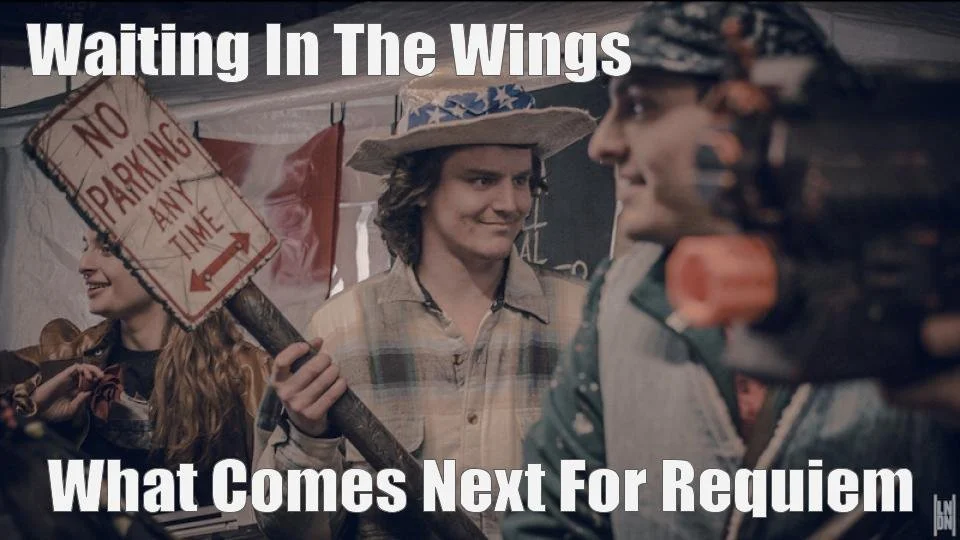
Waiting In the Wings - What Comes Next
During our May event, you’re extremely likely to experience the conclusion of the Jones War and the end of the Anarchy (we say “extremely likely” because you can always throw us for a loop). But what about June? And our premier event in August, Honor’s Fall? Role-play is a collaborative activity, and both the storytellers and players should work together to guide the narrative. To do this, we want to talk about three things: steering, pacing, and agency.
Steering
We have our Future of Requiem discord chat - this is our “steering session” for us and our players. If you’ve ever played a tabletop role-playing game, you might be familiar with the concept of a Session 0, where both the players and storyteller get together and talk about the campaign they’re about to run to get on the same page. During longer campaigns, some storytellers have feedback sessions periodically to learn what the players want to see… what they would like more of, less of, and what new stuff they’d like to encounter. Similarly, during an ongoing larp, storytellers use a variety of feedback tools to learn what their players want. This discord chat is one such tool.
During the chat, we’re going to talk about a couple of specific topics, including our plans for Honor’s Fall and the Treaty of the Fold. But the important thing is that this isn’t us talking to you, or you asking us questions: we want you to tell us what you want and your expectations are. Then, we’re going to take what you tell us and either figure out how to meet those expectations, or explain why we’re going in a certain direction. Remember, steering is a process, not a one-time event, so while our Discord chat is a major opportunity to work together, we’ll continue to solicit feedback and adjust our design based on your inputs.
Pacing
We have two games before Honor’s Fall, our premier event and game of the year in August. We’ve had amazing engagement and buy-in from our players leading up to the end of the current plot arc, the Reckoning, and now we have to manage the pacing of the narrative so that we peak in August without either rushing or having a “down” event. To accomplish this, in May, we’ll focus on ending the Jones War and the violence known as the Anarchy. We want to offer resolution to the crisis phase of events, and give you the opportunity in June to really decide the situation politically.
In June, we want you to have the ability to nail down the politics of Requiem for the next year. We’ll have NPCs facilitating the revision of the Treaty of the Fold, and defining how the Thirteen Families work, the role of the High Lord Executioner, and function of Honor’s Fall. This last part is the most important, as we want a clear understanding of what’s happening in August at the premier event.
Then, of course, comes Honor’s Fall. You should expect a return of our signature event, with Saturday Night filled with violence and tension, running from sunset to sunrise. This year, we’ll reinforce the political consequences of Honor’s Fall, while maintaining a simple structure with which travelers can engage.
Agency
Player agency is vital, but remember, we have a lot of players, and we have to take care of all of them. People show up to Requiem for a certain type of Dystopia Rising game, and we want to make sure we provide for them. Too much agency, or agency without boundaries, can negatively impact other players and frustrate the staff. As such, we encourage players to remember that they play in a sandbox with defined boundaries, as opposed to a desert of unbounded sand.
What does this mean? Expect us to apply some boundaries over the next few games. Most of these are relatively broad, but we have a few we need to share:
First, we need Requiem to be “Requiem.” To us, that means as a minimum: Honor’s Fall, the Treaty of the Fold, the Families, and in particular the presence of the Anastasia Family.
Second, we need Honor’s Fall to remain similar to what it’s always been: a free-for-all night of violence that determines the future of Requiem. We also need it to remain simple, so travelers can pick a side or just engage in the melee, without requiring complicated explanations.
Third, we’re going to push for an NPC High Lord Executioner, so that we don’t have player characters with blanket authority over other player characters.
This last point requires some expansion, as it’s a pretty big boundary. We’ve talked before about the problem of effective leadership in larp leading to less dramatic play. However, we’ve also had mixed feedback about the disappearance of the High Lord Executioner, and the lack of structure that the player character family heads had after that disappearance. We want to work out a structure with players that respects their recently established importance, but also lets us use the position of High Lord Executioner to steer the game from a staff perspective, as opposed to the interest of individual players.
The important thing in all of this is communication, and communication is a process… it’s a loop where one party says something and the other hears it, considers it, and responds. We’re always open to your responses, so that we may consider your ideas. The best way to do so is either fill out our feedback form or email us at info@dystopiarisingny.com.
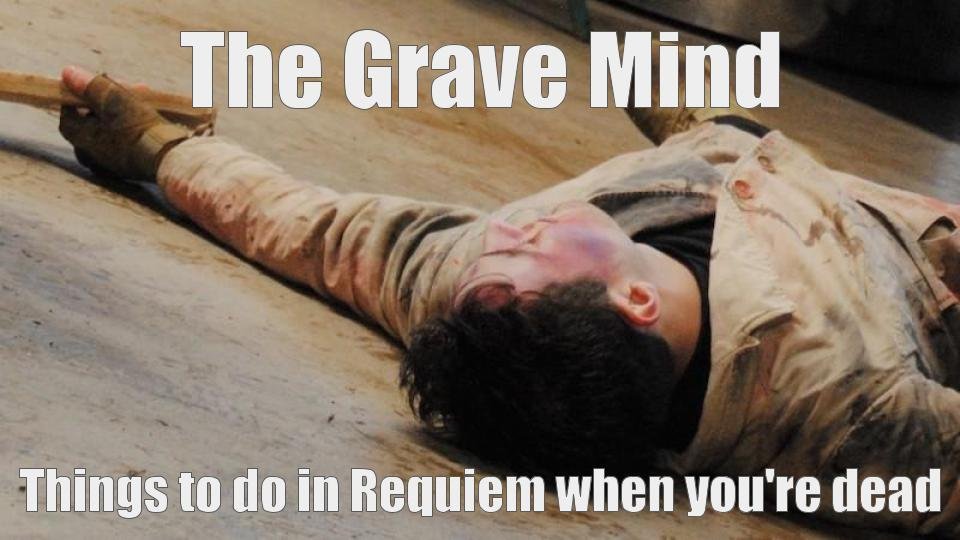
The Gravemind in Requiem
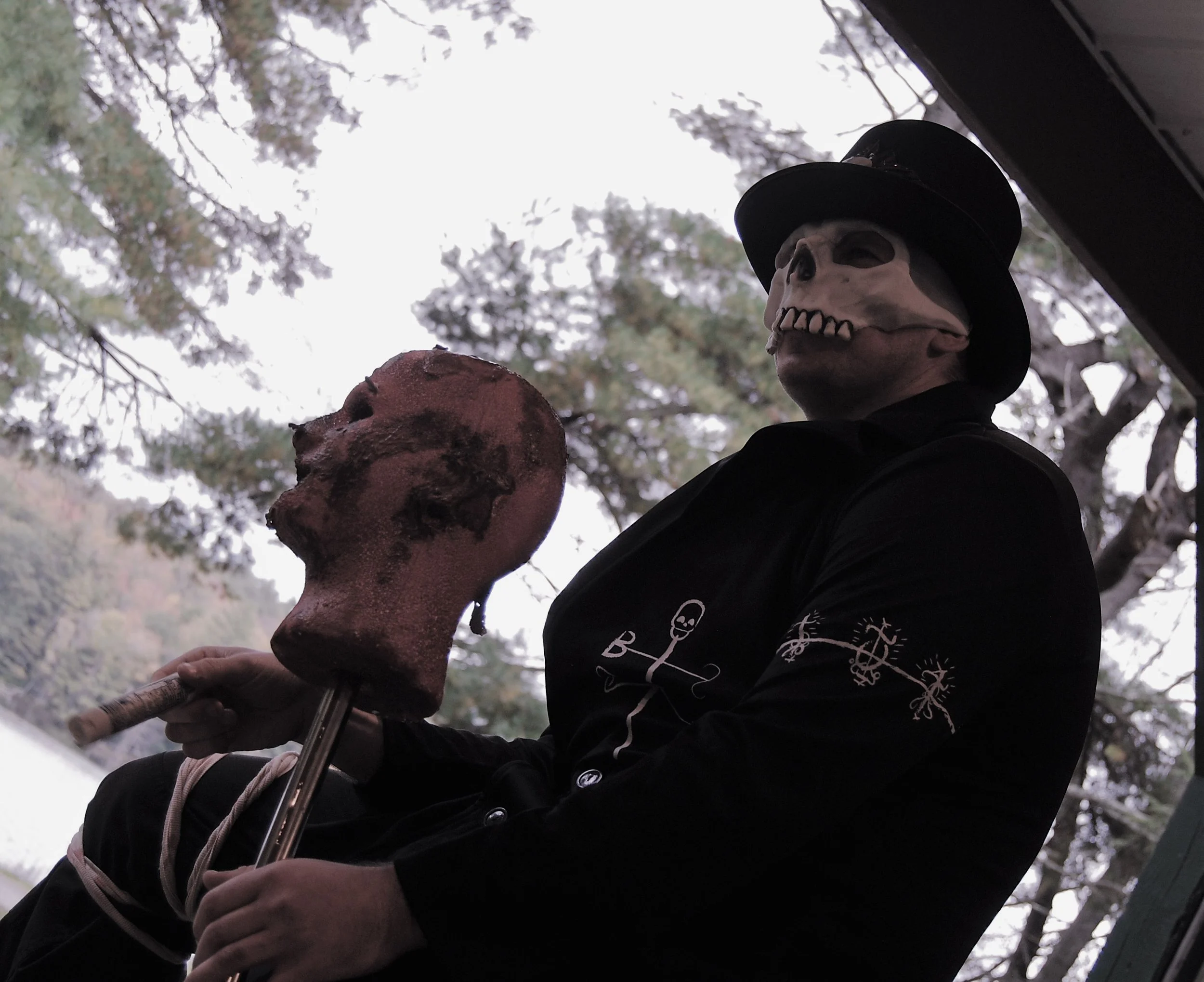
As we prepare for an event that involves a lot of zed, the staff at Dystopia Rising New York (DRNY) wanted to go over our local Grave Mind, and how it works. While we strive to match our Grave Mind lore with the network as a whole, each chapter runs the Mortis Amaranthine (the formal term for the Grave Mind) a bit differently, and we want to make sure everyone has accurate expectations.
The Grave Mind Doesn’t Care About You…
…Or anyone else.
With hundreds of storytellers across dozens of chapters, sometimes Grave Mind lore gets a little muddled. We stick very closely to the concept of the Grave Mind as described in the rule book: it’s a conceptual state of being, not a place or an individual. There’s no ego or intentions involved in scenes that occur “in” the Grave Mind - just your character’s perceptions of the world’s natural processes. That means that when the Grave Mind “does” something, it’s really just a consequence of previous actions, like a chemical reaction.
Weird Shit Happens in the Grave Mind
Things don’t always work “right” in the Gravemind. The skills and items you have work as prescribed in the rules and blueprints, but beyond that, when you enter a Grave Mind scene, be prepared for the storyteller to throw you a curve ball. Sometimes local items interact oddly, or there are additional effects or consequences beyond the rules. But remember, we do this for game play or dramatic effect, and not as part of an ongoing narrative.
What does this mean? If you’re in a Grave Mind scene and another player wants to enter, we’ll find a way to make it happen. If things are going poorly and we want to help you out, we’ll make something up. We might add something to give you a jump scare or a surprise. What we won’t do is justify a plot or event as “Grave Mind bullshit”; for story purposes, we try to play skills and items as close as possible to the rule book.
If you do see something weird, ask the storyteller after the scene. They’ll explain to you what happened, if it’s a deviation, and why. Remember, these are almost always one-off events (i.e. pulling a silent observer into a Grave Mind scene to help out a bunch of players with low Resolve) as opposed to a local mechanic.
Grave-Diving Has Consequences
You all like to go grave-diving. That’s awesome… we have fun when you use skills and abilities to explore the Grave Mind, and we hope you do to. But remember: actions have consequences. The more you go into the Grave Mind (i.e. “fuck around”) the more the metaphorical open wounds you leave behind will fester and spit out strange zed (i.e. “find out”). We do this for two reasons: first, we want to run a horror game, and in a horror game, actions have negative side effects. Second, we want to make sure the Grave Mind remains a strange and alien experience, and not a regular point of interaction.
You’re likely going to experience some consequences at our next event. Remember, the point is not to single out other characters as scapegoats or stop using Grave Mind-related skills and abilities. Instead, remember that the world of Dystopia Rising is a scary place, and get ready to be scared by new and interesting threats.
REQUIEM 101 - REQUIEM AND THE FAMILIES
Newcomers to Dystopia Rising New York may hear a number of new words - “Family,” “Fold,” “High Lord Executioner.” Requiem features a host of persistent non-player characters and unique customs that let players immerse themselves in the setting. To help you with these features, we’ve put together this primer: Requiem 101.
What Is Requiem?
Requiem is the trade town in the heart of the Fold - a territory that corresponds to what was once upstate New York. The Fold was a place for people to go when they’d been run out of other places, usually for criminal activities. These expats formed small groups that controlled small territories in the Fold; because they were (mostly) a bunch of criminals, they called these groups Families.
To coexist, these Families created the town of Requiem and signed the Treaty of the Fold. This set of laws governs them, and binds them to the will of the High Lord Executioner, who has the final say on matters of life and death. Over the years, Requiem has changed locations, but its purpose remains the same: this is where the Families come to do business and settle scores.
Who Are The Families?
The Treaty of Fold recognizes two kinds of families: Patron and Ward. According to the Treaty of the Fold, there can be up to 13 Patron Families, who control territory in Requiem. In addition, Ward Families - smaller families who don’t yet qualify as Patron Families - can align themselves under the protection of Patron Families. As of October 2021, there are eight Patron Families:
The Anastasia Dynasty - Led by Anton Anastasia, the High Lord Executioner, this openly criminal family dominates the politics of Requiem.
The Boon-Helm Collective - A collection of masked maniacs, cannibals, and torture artists led by Polaris, a pure blood with advanced bad brain.
The Brokentooth Clan - The Brokentooth Clan generally dwells in Requiem proper, and thrives upon the trade driven by the town. Their family head is Salt (note: this is a PC Patron Family).
The Jones “Secular” Congregation - The laws of Requiem ban the open practice of religion, hence the “secular” nature of this family, named for their cult leader, Jones.”
The Molon Collective - Outsiders, loners, and recluses led by Keres Molon, the Collective possesses a psionic connection to the Gravemind and a drive to “protect” it.
The Volkov - Information brokers (or less charitably, spies), the Volkovs never appear in public unless fully masked, following the example of their founder, Seraphis Volkov.
The Warren Collective - “Let’s make a deal.” The fixers, brokers and smugglers of Requiem, founded and led by Jack Warren, this Family focuses on profit above all else.
The Zodiac Order - Named for its founder, Zodiac, this family’s mission is its “research.” Unfortunately, their research focuses on the creation and control of the undead.
What Are the Laws of Requiem?
The Treaty of the Fold gives the High Lord Executioner the powers of a dictator in Requiem, and so the laws are subject to change at any time. You can find a full list of the laws here, however, there’s a few well-known laws you should remember.
Preaching is outlawed in Requiem, except for a few exceptions, and then only in private.
If a citizen of Requiem is murdered, the killer shall be killed. If a Family Member is murdered, the killer and one of their closest associates will be killed.
Once a year, the laws of Requiem are suspended during a time called Honor’s Fall.
What is Honor’s Fall?
The last thing in our Requiem 101 primer is an introduction to Honor’s Fall. During the last full month of summer, there will be one night when all laws and protections of the Treaty of the Fold will be suspended. This annual bloodbath prevents vendettas and other feuds from destroying the alliance for the rest of the year. During Honor’s Fall, some Families disappear, others rise, and the social order of Requiem resets.
In the coming months, we’ll expand on the Families, Honor’s Fall, and the Treaty of the Fold in this blog. For latest updates, follow us on Facebook at Dystopia Rising New York.
Search Posts
- CAPs
- Honor's Fall
- PFAs
- Premiere
- appreciation
- crime
- culture
- cvc
- design
- families
- genre
- gravemind
- how to
- immersion
- larp advice
- live
- logistics
- making the most
- narrative
- new players
- npcs
- player tips
- politics
- rectangles
- religion
- requiem
- rules
- safety
- setting
- steering
- storytelling
- survival horror
- travel
- treaty of the fold
- war games