REQ-uired Reading

Larp Thoughts DR NY Larp Thoughts DR NY

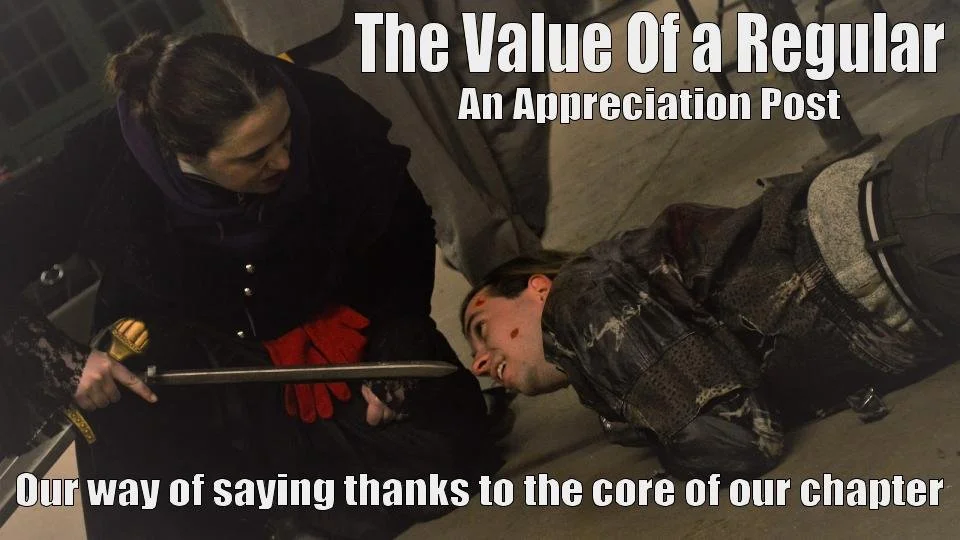
The Value Of A Regular - An Appreciation Post

The urgency of taking care of new players is typical - and admirable - across Dystopia Rising: people want to make sure newcomers have a good time, and this is a good thing. We’ve also talked about taking care of returning players: people who haven’t played Dystopia Rising for some time, and we’ve talked about travelers too! We’ve talked about just about every group of people who could buy a ticket for our game… except one.
Photo by Shawn Smith

A few members of our staff were in the weekly print meeting recently, which is a meeting where national staff discuss upcoming print releases for the network. During the meeting, people talked about new players, and how we “needed to do something for them.” The urgency of taking care of new players is typical - and admirable - across Dystopia Rising: people want to make sure newcomers have a good time, and this is a good thing. We’ve also talked about taking care of returning players: people who haven’t played Dystopia Rising for some time, and how we’ve taken steps to welcome them back with our returning player drive. And we’ve talked about travelers too! We’ve talked about just about every group of people who could buy a ticket for our game… except one.

And so it’s time to show some appreciation for our regulars.

Your Attendance Is a Gift

There’s a very self-serving reason to give attention to new players: we want them to come back. If we’re doing really well with our new player experience, and we get four new players, only two of them will ever play again, and only one will make it to their sixth game (and these numbers are pretty generous). Returning players have an even worse chance of coming for six games, and most travelers who regularly play at their home game will manage only a couple of games a year. Going all out for these players is a matter of respect and courtesy… but it also helps bring them back, so we have more people to play with. 

Compare that to a player who has come to every game for a year or two. They’re likely to buy a ticket to the next game (they’re probably likely to buy an Early Bird ticket or extra XP). For Dystopia Rising New York, we know that there are about 50 players who make every single game, and another 20 players who attend almost as regularly. This is the core of our game: these are our storytellers and guides, these are the characters best known in the town… these players are essentially part of the setting. And it’s easy to simply expect that they’ll always be there.

But this is a mistake for two reasons: first… that player bought a ticket, same as the new person or traveler or returning player, and they deserve the same amount of attention. We’re not entitled to their attendance, and they deserve the same effort and respect as we give to the players we’re not sure we’ll see again. Their presence isn’t a right, it’s a gift.

Second, regulars always show up… until they don’t. One day, due to neglect, changes in game, or even just life events, they stop coming. If a regular stops playing Dystopia Rising because they move, or change jobs, or even just don’t enjoy larping as much as they used to, that’s okay. But if they move on because the game doesn’t demonstrate how they’re valued, then that’s a failure, and probably a bigger failure than if a new player tries out the game and decides they don’t like it.

Why Are Regulars So Important

Even if we could replace every regular player who quits with two new players, we’d still be losing something, and that’s because our players do so much work to support each other. It’s the regular who picks up someone’s tab at afters or drives them to the grocery store for supplies. It’s the regular who chimes in to give a ride to a game or pick someone up at the train station. The regular makes the food you buy at the game and probably has crafted more than a few of those cool boffers you use. Financially, a regular player gives us more than $500 a year in revenue… and with premiere events and advanced memberships, some give well over $1,000. Regulars are our guides, who do extra shifts and staff shambles. They’re our storytellers, who put in dozens of hours each month to produce this game. They’re the players who have been here two, three, or even five years and never get a mod designed for them. While we’re constantly talking about “players under 100 build” for items, what about the 50% of players who are between 100 and 400?

These players must be engaged, respected  and thanked for their support because this is our core group of players. And like any core group, their support becomes expected, and there’s a tendency to forget to give them positive reinforcement.

Thank You

We wanted to do more than just thank our regulars, so we’ve gone one step further. We’ve given every player who has supported (attended or bought non-attending) at least three games in a row heading into March 30 CAPs to show our appreciation. Further, we’ve gone back and given you another 10 CAPs for every game in your streak for the last year (so if March is your fourth game in a row, you get 40 CAPs, if it’s your fifth, you get 50, and so on… up to a total of 90 CAPs).  We wanted to do this to show that while we really want to take care of our new players, our returning players, and our travelers… we do appreciate that our regulars are the most important people to the success of DRNY.  Thank you.

Remember, we recently introduced new rules for CAPs at DRNY, so be sure to check out the announcement so you can use this token of our appreciation.

Read More
Larp Thoughts DR NY Larp Thoughts DR NY

This Is Your Game - Building The Culture You Want

At Dystopia Rising, we often talk about our Community, and we’re proud of the group of people who create and attend our events at Dystopia Rising New York. But a community is more than a group of people with a common pastime: together, we create a culture, a collection of norms and behaviors that drives our events and allows us to come together to play safely and effectively.
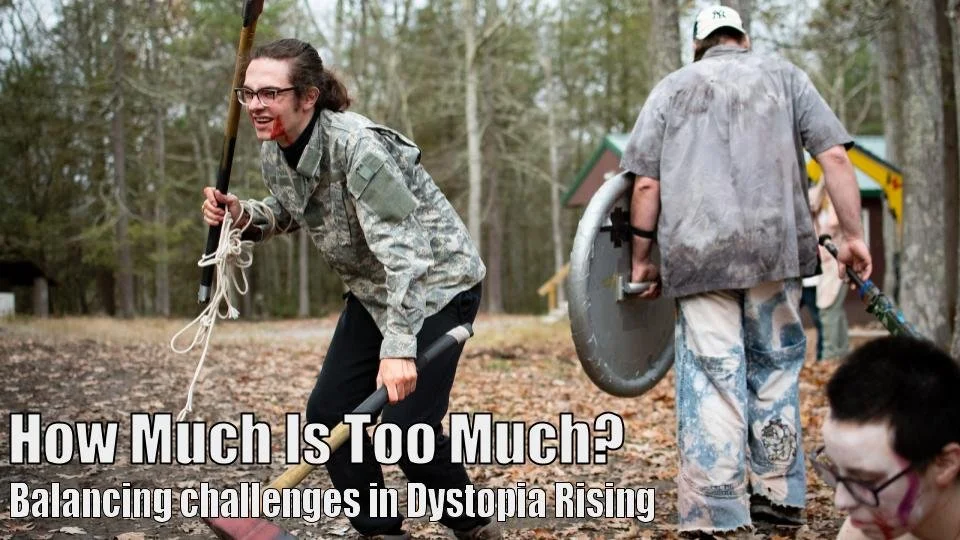
Photo by Shawn Smith

At Dystopia Rising, we often talk about our Community, and we’re proud of the group of people who create and attend our events at Dystopia Rising New York. But a community is more than a group of people with a common pastime: together, we create a culture, a collection of norms and behaviors that drives our events and allows us to come together to play safely and effectively. As we enter the home stretch of our second year of live games, we want to talk about the culture we - both staff and players - are creating together, and how we can continue to excel in 2023 and beyond.

You Are Dystopia Rising New York

Nine times a year, we schedule an event where a couple of directors and a handful of storytellers build a plan, a few dozen guides provide the structure, and a hundred players create a game. We’ve achieved tremendous growth since we reopened eighteen months ago, and that’s not just because of our storytelling, or marketing, or logistics. It’s because of the enthusiasm and effort that the players bring month after month, co-creating with us, and lending their support during set-up, throughout the event, and clean-up. We want to thank you for this - we get a lot of credit for Dystopia Rising New York’s success, and we want to share it with you. Specifically, we want to thank you for what you do, and point out the specific things that make our culture a success.

A Culture of Safety

First and foremost, we, as a community, have to provide each other with a safe and accessible space to play. You’ve been a key part of this in two very important ways. First, you’ve consistently brought your concerns to us in an open and honest way. Our staff between events is relatively small and we can’t see everything. Your emails and conversations serve as our eyes and ears, and let us address everything from inappropriate comments towards other players to logistical concerns at the site. Your inputs have helped us successfully introduce initiatives such as topfree equality, made our site more accessible, and allowed us to manage the risk for events such as The Feast of Flesh. Second, when we respond to your concerns by offering tools to mitigate risk, you use them. We can’t thank you enough for your preparedness during the cold winter and spring of 2022, particularly when we had unique challenges on site. Again and again, when we communicate our problems and our solutions, you work with us as a team to make sure our events are a success.


As we go forward in 2023, we want to formalize this process. As our culture matures and we iron out large problems, we increasingly see individual issues arise that require our attention. When you have a problem, we want to work with you to create a reasonable accommodation that is specific to your needs. This is a flexible and interactive process, and relies on you continuing to bring us your concerns. Remember, when you come to us with an issue, we’re going to assess whether this is a general or specific issue, and likely work with you to establish a solution that allows you to play safely and effectively. Please understand we can’t always implement the specific solutions you ask for; this is a back-and-forth where we work together, and we have to consider the larger picture with all of our solutions. 

A Culture of Accountability

Over the course of 2022, our staff worked very hard to make sure that when we had to make a correction to behavior, we did so to improve everyone’s play in the future, and not to punish past actions. And for having nearly a thousand players, we had very few problems. It’s not that you avoided bad behavior… you actively supported the games. You showed up for early set-up, stayed late to help with other clean-ups, and gave us your all on NPC shifts. Most importantly, you took care of each other, and we knew that if we weren’t there when something happened, our players would step up until we got there.

We can always improve, and as the game grows, we also know we’ll have more instances where people need reminders to do the right thing. These are not call-outs, they’re call-ins; we know people come to our games with the intention of being a positive addition to our community, but sometimes get tired, or distracted, or have problems. Part of our initiative for 2023 is empowering our guides to talk to people on the spot if they’re late for a shift or not engaging in clean-up: we know it’s not because you don’t care, but that we just need to refocus. We’re also going to address underlying issues rather than just telling you to do more: if you’re tired on an NPC shift, expect us to ask you to go to bed and come back, or if we’re worried about an injury, we might ask you to non-com for an event. We understand that sometimes people push themselves too hard, and we’re accountable for your well-being at an event. Accountability isn’t just making sure people do what they’re supposed to, it’s also about taking care of each other.

A Culture of Play

We’re extremely proud of the culture of play at Dystopia Rising New York. You all have handled challenging mechanics such as Compulsion and Unstoppable, long-term plotlines that have taken months to pan out, and altered your playstyle in some cases to buy into the storyteller’s vision. As we prepare for our premiere event in June and Honor’s Fall in August, we’re confident you’ll have a good time, as we all have cultivated a culture of play where we support each other’s choices and come together as a group.

In 2023, you’re going to see more discussions where we talk about how to engage with our plots and mechanics, so you can understand our intent, and engage with them on those terms. We’ve found that if we just roll out a mechanic, you might not understand our vision for how it plays out. Likewise, we often get action requests or emails from players describing what their character does, without telling us the experience they want to pursue. Our goal is more open and direct communication, so that we can continue to build on our current culture of play.

No game is perfect, and we, as a community, have dealt with many problems over the last eighteen months. However, we have, as a community, built a culture where we address problems and continue to communicate about potential solutions. With many of our policies and mechanics now set, we want to work with you to fine-tune our culture, and eagerly await the opportunities to do so in the coming months.

Read More
Larp Thoughts DR NY Larp Thoughts DR NY

How Much Is Too Much?

When you design a boffer larp, you’re not really making a competitive game: the players are going to win. Like a video game, there’s an illusion that you’re struggling against an opponent, but in the end, the NPCs are going to lose, and the storytellers aren’t really trying to defeat you. Instead, there has to be an “illusion of failure,” mixed with actual setbacks, minor defeats, and “reach goals,” to create the sense that you have agency, when actually, it’s really hard to lose. So the biggest challenge for designers is how much adversity should players encounter before they win… or “how much is too much?”
Photo by Shawn Smith

When you design a boffer larp, you’re not really making a competitive game: the players are going to win. Like a video game, there’s an illusion that you’re struggling against an opponent, but in the end, the NPCs are going to lose, and the storytellers aren’t really trying to defeat you. Instead, there has to be an “illusion of failure,” mixed with actual setbacks, minor defeats, and “reach goals,” to create the sense that you have agency, when actually, it’s really hard to lose. So the biggest challenge for designers is how much adversity should players encounter before they win… or “how much is too much?”

The Adept Survivor Problem

In Dystopia Rising, as in other larps with quantifiable mechanics, we have a particular problem. The wastes are full of zed, raiders, and critters who want to kill and eat your character, and they know that… so they struggle to prepare for the worst. Not only do they spend Build to gain skills, Body, and Mind, but they also craft gear such as weapons and brews. It’s a feature of the system that the more games you attend, and the more crafting you do, the better prepared you are for threats. However, the better prepared for threats you are, the easier they are to overcome, and the “illusion of failure” disappears: you’re running roughshod over your enemies. But if the designer ups the threat, then your work is for naught; the perceived challenge remains the same no matter how bad ass your character gets. We can call this the “Adept Survivor Problem:” the more adept your character is as a survivor, the more they’ll encounter dire threats to their survival.

Compounding this problem is that all characters have a different level of survivability. This is a matter of character longevity (i.e. Build) and wealth, but also player experience (such as knowing what items work the best in a given situation) and interest (not everyone enjoys crafting or economy). When designing for large groups of players, the Adept Survivor Problem becomes a tricky balance. 

Lots of Solutions, But No One Way

There are lots of ways to deal with the Adept Survivor Problem, but really, no one solution will work. Designers have to use a mix of options to challenge players, particularly in large groups. Using one tool too much causes frustration, so it’s important to use a mix of them. Here are some tools we have as Dystopia Rising designers to create that “illusion of failure.”

  • Respawning enemies: having lots of enemies to cut down lets players feel like a bad ass, killing lots of zed or raiders, and challenges them with attrition. 

  • Control Calls: area of effect crowd controls and other similar effects create a moment of inescapable challenge, letting the enemies get a few hits in before they disappear.

  • Weird Shit: in Dystopia Rising New York, we like to throw unique zed and calls at you that can surprise players and create a moment of confusion.

The Effect On Players

Because of the multiple ways to address the problem, players end up on a bit of a roller coaster. This isn’t a bad thing: remember, the designers are trying to create that illusion of failure, and that illusion will create frustration, fear, and anger in the characters. Sometimes, those emotions bleed over to the player… and that’s also okay, as long as it doesn’t disrupt their play. If a player can continue to play, they’ll eventually win or accomplish their goals, and that feeling of accomplishment will also bleed over to the player. But if the negative emotions stop play, then both the designers and the players have to work together to get the game back on track.

So what can you do as a player when you’re too frustrated to continue to play? First, while anger is a valid emotion, it’s often not a constructive one, particularly in a cooperative game like a larp. It might be best to take a break, cool down, and then either continue play (and send feedback afterwards) or talk to a guide. When you talk to the guide, try to focus on what you want to happen; this gives the storytellers an idea of how to move forward. And finally, remember this piece of advice: wait until the smoke clears. Often, your frustration peaks at the most difficult moments of the larp, and there’s a plan for what happens next. Sometimes it’s best to keep playing, and see how things turn out, than to stop a story before you get to the ending.

Read More
Larp Thoughts DR NY Larp Thoughts DR NY

What Is Dystopia Rising All About?

A larp isn’t really an experience - it’s a chance to create your own experience with your friends. At Dystopia Rising New York, we offer many things to enhance that experience - antagonists, narratives and a beautiful campsite - and we have a lot of elements unique to Requiem. But what’s the core of the Dystopia Rising experience? When you and your friends get together and play Dystopia Rising, what do you expect? What about the game appeals to you?
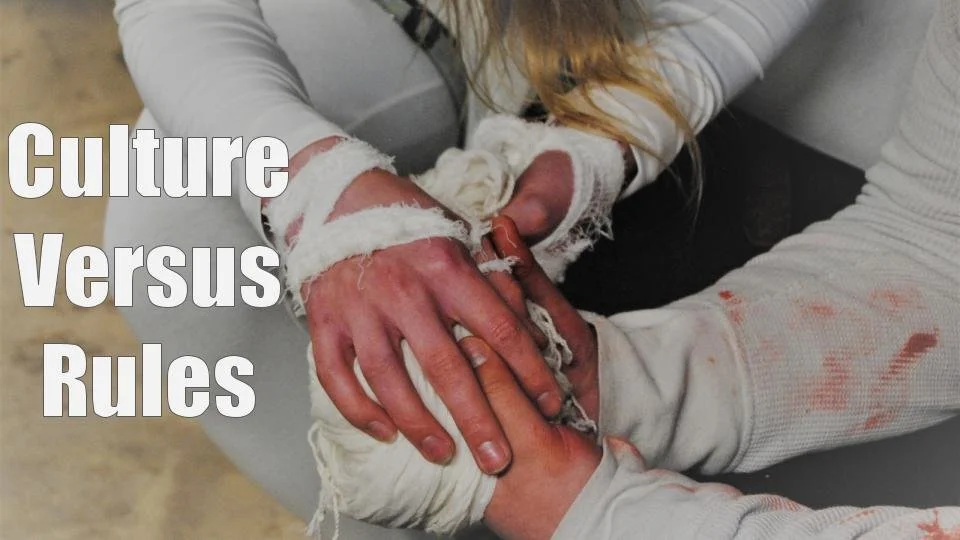
Photo by Shawn Smith

A larp isn’t really an experience - it’s a chance to create your own experience with your friends. At Dystopia Rising New York, we offer many things to enhance that experience - antagonists, narratives and a beautiful campsite - and we have a lot of elements unique to Requiem. But what’s the core of the Dystopia Rising experience? When you and your friends get together and play Dystopia Rising, what do you expect? What about the game appeals to you?

We’ve come up with a few ideas… please let us know your thoughts.

Fighting Zombies (and Raiders and Critters…)

Dystopia Rising is a boffer larp, which means players expect there to be something to fight. It’s probably not the most common activity (if you have 6 to 8 hours of solid combat over a weekend, it’s probably a lot), but it defines the experience. You can hit your friends with foam swords at any boffer larp, but at Dystopia Rising, you get to fight zombies. It’s what makes the larp unique.

It’s also what makes it immersive, because the activity of boffer fighting aligns your body with what your character is doing. We may not be expert sword fighters or marksmen, but the act of swinging a foam sword in real-time in the chaos of a boffer battle feels more real than if we were playing a table-top game with dice. We think this is a major part of the appeal.

Hanging Out With Your Friends In The Woods In Costume

A big appeal of any larp is seeing your friends - larp is a social activity. Sometimes, we get too into it, and it’s our only social activity, but it’s a great way to reliably see a core group of friends every month. And when we do, we play… just like if we were in a bowling league or on a softball team, we play a game. This recharges us, because playing with friends (in this case role-playing) is a vital activity for adults to do.

With Dystopia Rising, we play in a particular aesthetic… and this aesthetic is important. We don’t just play for a couple of hours; we travel to the woods, put on post-apocalyptic costumes, and play for days. We don’t just role-play the exciting parts; we also cook in-character, we play music in-character, we craft in-character. Again, this is immersion, and it’s part of the unique appeal of a Dystopia Rising larp. 

The Weird Stuff

We don’t mean “weird” in a bad way… we mean the stuff particular to Dystopia Rising larps that no one else offers. This could be Gravemind lore. It might be religious roleplay. The economy of the larp is unique and a tremendous draw for some people. There are lots of things that make Dystopia Rising unique, and each one is special to some player.

The important thing with the “weird stuff” is that there’s something for everyone, but not everyone likes the same thing. Some players will jump into a Gravemind scene every chance they get. Others spend hours collecting every blueprint. Having opportunities for both draws players to the game, where they’ll have the chance to hang out with their friends and fight zombies. 

These are just our answers to “what is the appeal of Dystopia Rising?” What parts of Dystopia Rising do you come to game for?

Read More
Larp Thoughts DR NY Larp Thoughts DR NY

Culture Versus Rules

Dystopia Rising has a lot of rules. Most of these rules tell us how to play the game: everything from how to swing your boffer to how to make a Red Mist. But not all rules focus on game play - some rules help us come together as a group and play together. While the rules of the game are all written down (and most of them available for free), the rules of play are a bit more complex.
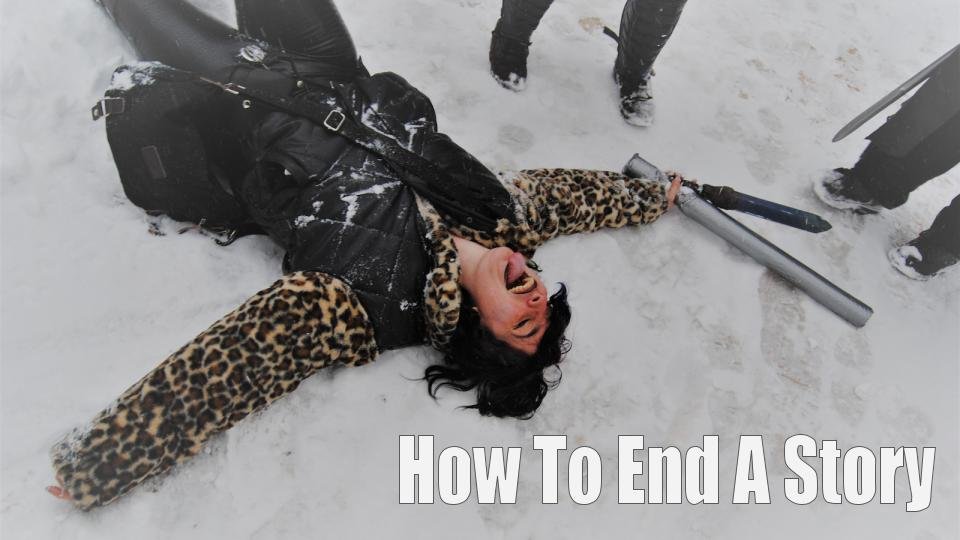
Photo by Allana Marie

Dystopia Rising has a lot of rules. Most of these rules tell us how to play the game: everything from how to swing your boffer to how to make a Red Mist. But not all rules focus on game play - some rules help us come together as a group and play together. While the rules of the game are all written down (and most of them available for free), the rules of play are a bit more complex. In addition to community standards and common rules like the length of NPC shifts, each chapter has to create rules for how we’ll all gather together. 

What Sorts of Rules Do We Have?

When we talk about rules of play, we’re not talking about game mechanics, but rather the rules we follow to make sure everyone has a fair and enjoyable experience at game. For example, most games don’t allow bunk saving, so that people who have to work on Friday still have places to sleep when they arrive. We have rules about when we do clean-ups and how you have to show up to NPC shift prepared to keep the game running smoothly. We’re not talking about safety rules, which are more like regulations we have to follow. Instead, we’re talking about policies, from both the network and our local chapter, designed to make the experience go smoothly.

Rules are important, particularly transparent and well-communicated rules. However, for a rule to be fair, it has to be followed all the time and apply equally to everyone. The difficulty with this is that exceptions exist to every rule. For example, we routinely give early clean-up to people who have to leave early… This is an exception to the normal rules, and a necessary one. Further, we have to enforce the rules. This sounds obvious, until we point out that almost every Dystopia Rising game has people saving bunks (and part of the reason we introduced the Early Bird bunk slip - so there was a way people could do this, without breaking the rules, in an organized manner). However, sometimes, hard-and-fast rules aren’t the answer, particularly if a problem is very specific or rare. Instead, we have to rely on developing a culture of play.

Culture of Play

A culture of play is the set of social norms we use to make our events fair and enjoyable. It serves the same role as a collection of rules, but instead of being regulatory, it provides examples and encouragement for proper behavior. For example, there isn’t actually a rule that says we introduce ourselves with our pronouns, or ask people if we’re not sure, but it has become part of our culture. Culture is an important part of Dystopia Rising, and many of the behaviors that make the game work are learned through our culture.

The problem with culture is that it’s usually not explicit, and people might not pick up on it. They might not realize the expectations of behavior, or might have difficulty picking up on it without instructions. It’s imperative that the staff recognize that they have to verbalize particular aspects of culture from time to time, and for players to listen without becoming defensive or hostile. Remember, doing something that goes against the culture of Dystopia Rising doesn’t make a person bad or even their behavior wrong, it just means that we just have different expectations of behavior. When that happens, the staff (or other players) should say something in a non-judgemental manner, and the player should listen and adjust. 

What Does This Mean to Dystopia Rising New York?

We’re a growing chapter, and as we add people, we also need to adjust our culture. Sometimes, our urge as staff is to make up new rules, but this is sub-optimal. For example, we have a lot of people who sign up for early clean-up these days, relative to the size of the game. When we were smaller, these requests didn’t actually have much of an impact, but now, they can cause us significant problems. We could make new rules about early clean-up, putting limits in place or denying requests to do so. However, these rules would have unintended consequences and might lead to hardships on our players just for the sake of following the rules. Instead, we need to appeal to culture, and explain that clean-up is part of the experience of the game, and that everyone has to deal with traffic and potentially long drives home. One point of emphasis from the last game: if you have an early clean-up, it should involve 30 to 60 minutes of work, just as regular clean-up would take. 

This example isn’t something we want to do in the future, it’s a success story from this past game. Over 25% of our players left early, and we knew we’d be in a bind for clean-up. Instead of denying it to people (and potentially removing their ability to attend the game), we managed to get most of ops and NPC packed up before closing announcements Sunday morning. Verbalizing this expectation helped us at the last game, and we’re sure to find similar situations as we grow. 

Bottom line: our players are good people and adults, and we can treat them as such and find support for doing so. Some rules are good and necessary, but people will often rise to the positive expectations people have for them, if they only know what’s expected.

Read More
Larp Thoughts DR NY Larp Thoughts DR NY

How To End A Story

Our May event, The Reckoning, concludes a plot arc that began in January. We’re very excited about what we have planned, including the final showdown with Jim Jones, and the return of Anton Anastasia. We’re extremely excited to see what our players do when he shows up. But as we prepare for the end of The Reckoning, we have to ask… how do we end a story in a larp?
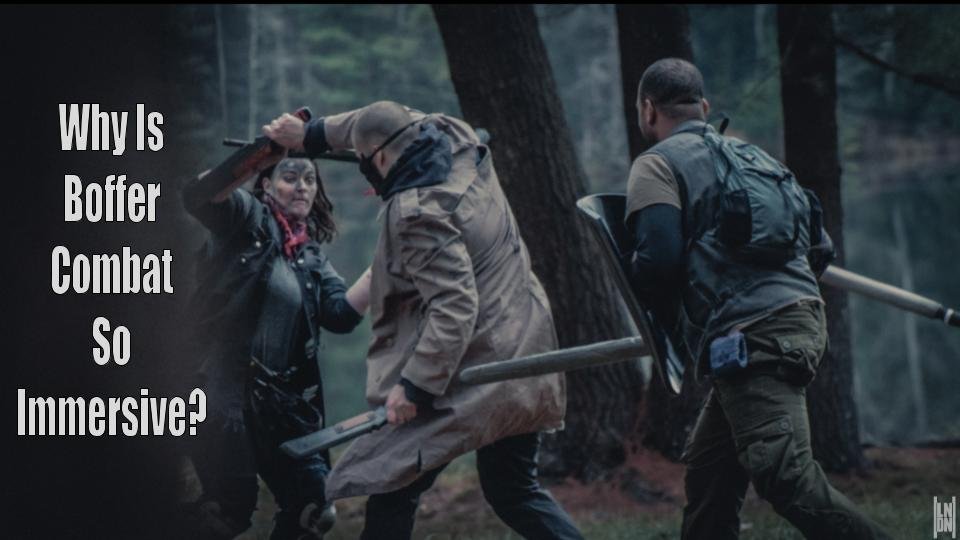
Photo by Allana Marie

Our May event, The Reckoning, concludes a plot arc that began in January. We’re very excited about what we have planned, including the final showdown with Jim Jones, and the return of Anton Anastasia.  We’re extremely excited to see what our players do when he shows up. But as we prepare for the end of The Reckoning, we have to ask… how do we end a story in a larp?

Make It Big

There’s a conventional wisdom in experience design that applies to larp. People remember two things from an experience: the biggest thing that happened, and the ending. If you watch a Broadway show, they often put the most popular song in the middle (the “showstopper”) and then have a really big finale. In larp, players are co-creators, so while their designers can set-up showstoppers, the most memorable experience is typically different for each individual. As such, the single event they’ll all have in common is the ending. So it’s important to make the ending “big.”
From a story-telling side, that involves making a lot of options available. In The Reckoning, that means you should have the opportunity to kill Jones, or change the regime, or get in a huge fight, or complete your research. From a player perspective, we need you to commit to large, dramatic moments that impact those around you. This is the time to yell, to cry, to give a dramatic speech, or finally enact that betrayal you’ve been setting up for months. This is the end of the arc, so it’s time to put all your cards on the table. 

Make It Hurt

An ending should come at some sort of cost. This isn’t a children’s cartoon where the heroes triumph without pain or loss… this is a game of survival horror. As players, we’re not trying to win, we’re trying to tell a story. At the end of the story, if there is victory, it should come with a price and have been hard-fought. If there’s a loss, then all the better in this genre.

As storytellers, our job is to provide you a challenge. We need to give you a chance to use that injectable you made, or spend all your Mind and Resolve, or sit by the morgue waiting for a fallen friend. The challenges we provide aren’t to defeat you, but to make you feel like your character overcame a challenge. For your part, we want to make sure you’re ready to lose, at least a little bit. You’re going to be coming into The Reckoning with full health, full mind, and all the items you can. At the end, we want you to be prepared to have a little less… the cost of victory.

What Comes Next

If this were a movie, or even a one-shot larp, we’d wrap everything up without any concern for a sequel. However, it’s a campaign larp, and we have a game in June (and a really big game in August). After you defeat Jones, after Anton comes back, we have to run a game next month. That game probably won’t have the same stakes as The Reckoning, but it will have to be interesting, and it will have to be recognizably “Requiem.” You probably won’t tie up all the loose plot threads (and if you do, we’ll still have more for you, including the creepy pig-skull thing you met in April). 

Regardless, we have a climax coming up in May, and we’re going to end this plot arc with a bang. We can’t wait to see you there, and you better be ready to play.

Read More
Larp Thoughts DR NY Larp Thoughts DR NY

Why Is Boffer Combat So Immersive?

A big appeal of Dystopia Rising is hitting your friends with foam swords. It’s a fun activity: if you hand non-larpers a bunch of foam swords, they’re probably going to start playing around and swing at each other without worrying about hit points or genre. However, it’s also a tremendous tool for immersion, and one often overlooked by larps with more expensive designs. Because combat is so hard to simulate, but so integral to many of our narratives, boffer larp offers immersion unrivaled by other forms of larp.
Photo by London Belli

A big appeal of Dystopia Rising is hitting your friends with foam swords. It’s a fun activity: if you hand non-larpers a bunch of foam swords, they’re probably going to start playing around and swing at each other without worrying about hit points or genre. However, it’s also a tremendous tool for immersion, and one often overlooked by larps with more expensive designs. Because combat is so hard to simulate, but so integral to many of our narratives, boffer larp offers immersion unrivaled by other forms of role-play.

What Is Immersion?

In larp, “immersion” is one of those words often used and rarely defined, so here’s a description for this conversation: immersion in larp happens when a person can keep playing without actively thinking about the fact they’re in a larp. It’s spectrum, not a binary state, and the degree of immersion changes from moment to moment. To have immersion, you need two things: verisimilitude and acclimation.

  • Verisimilitude is the quality of seeming real. It’s not the same as being realistic, as often our perceptions of reality differ quite a bit from what actually is (particularly with science fiction, where people’s experience with fiction exceeds their experience with science). When something has verisimilitude in larp, it seems real in both appearance and in function.

  • Acclimation: when people see something different or new, they immediately realize it… and then begin to forget about it. An example of this are new smells: people generally only recognize a smell for a couple of minutes, and then forget about it. The smell doesn’t go away - they become acclimated. 

When a designer introduces something that isn’t real into a larp, they try to make it seem real. The degree to which they succeed determines verisimilitude… but then time acclimates the players to the difference between the larp and reality, and they get used to it. They become immersed in the environment, and forget they’re role-playing with something that’s not real.

Why Combat Works

Combat in Dystopia Rising is not like real fighting. People don’t have hit points, the techniques for lightest touch aren’t real, guns don’t work that way (and neither do knives, for that matter). But compared to other other role-playing games, it has a lot of verisimilitude:

  • There’s not a call for initiative or shift in narrative context… combat flows from other activities without a shift. There’s no break in acclimation when it begins or ends.

  • The physical activity resembles actual fighting. While swinging a boffer in a 90 degree arc is not the same as actual knife fighting, they both involve footwork, positioning, hand-eye coordination - the type of skill is similar, even if the skill itself is different. 

  • While boffer combat is a simulation of fighting, the tactics surrounding boffer combat can be extremely similar to real world tactics.

  • Combat is a continuous flow, as opposed to turn-based or negotiated, meaning players experience it in the same timeframe as their characters.

A majority of role-playing games focus on combat mechanics, with good reason: a player can lie to another player, buy an item, and even have a romance without anyone necessarily getting hurt, but combat simulations come with significant risk. Further, the importance of combat to many of our narratives (particularly genre fiction, such as sci-fi or fantasy) make it an important part of a larp. Because boffer larp handles it so seamlessly, it offers immersion one can’t find in other larps. 

However, one of the big strengths of boffer larp might also be a side-effect of the style. Because you need a lot of space to have a boffer larp, they’re often located at campsites for weekend long events. Combined with the episodic nature of boffer larps, players enjoy hundreds of hours playing throughout a year. This acclimation makes things like hit points and rules calls seem less disruptive (and hence more immersive), until the simulation feels just like reality. 

Read More
Larp Thoughts DR NY Larp Thoughts DR NY

Speed Bumps

Running a Dystopia Rising game is a balancing act. On one hand, you need to give people something to do - it’s a boffer larp so there has to be some sort of challenge or, at the very least, an enemy to fight. On the other hand, every challenge that you put in the game is an obstacle and that obstacle takes effort to overcome. If the challenge is too little, the players get bored.
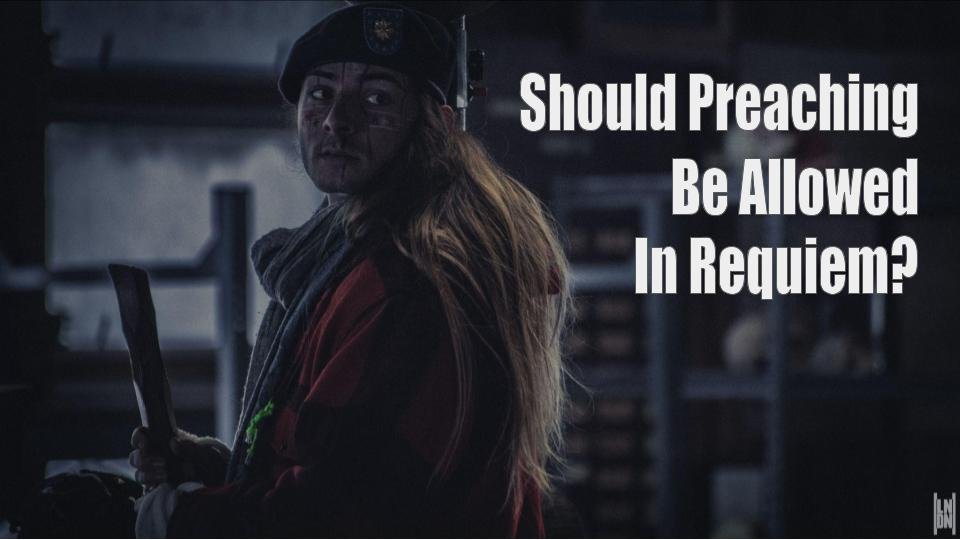
Photo by Allana Marie.

Running a Dystopia Rising game is a balancing act. On one hand, you need to give people something to do - it’s a boffer larp so there has to be some sort of challenge or, at the very least, an enemy to fight. On the other hand, every challenge that you put in the game is an obstacle and that obstacle takes effort to overcome. If the challenge is too little, the players get bored. If the challenge is too great, they don’t engage. This goes beyond combat threats, however, and when you put in role-play challenges, you always make it more difficult to engage with your story.

For example, in Requiem we have Murder Inc factions and, to promote the setting and feel of Dystopia Rising New York, we want Murder Inc meetings to happen in disguise. However, this is hard! First, disguise requires Proficient Stealth, which is a skill that costs build (and has a minimum build requirement on top of that). We make various items available to allow players who haven’t purchased the skill to be able to go to the meeting in disguise, but there’s still other obstacles. Putting on a disguise requires extra clothing, which not all players will have. We’ve told those players to come to ops and we’ll help them out with our NPC stock. But knowing we have items for you to use, and out-of-character clothes for you to wear, requires information you might not have. And even if you get that information, it still takes time to go get your other costume and put it on, and it’s probably not as comfortable as your other costume… and…

Well, you see, there are a lot of obstacles created by setting requirements.  

Sometimes, people use the word “gate-keeping” to describe these obstacles, but that’s not entirely accurate. Gate-keeping involves removing a player’s access to a plot. By themselves, these obstacles don’t do that… although if there’s enough of them, it is de facto gate-keeping. Instead, they simply slow down access to a story element. Because of that, we’ve taken to calling these “speed bumps.”

Why have speed bumps? We’ve got a few reasons:

  • To make a plot element more exclusive. This is the classic “golden ticket” design: there’s only five tickets to Willy Wonka’s chocolate factory. Anyone can find a ticket (although some people have advantages)... but finding a ticket is an obstacle that has to be overcome. 

  • To make a plot element more interesting. For example, having disguises at the Murder Inc meeting makes it distinct from the Criminal Influence meeting. Because the Criminal Influence meeting has no speed bumps, it’s going to take some sort of obstacle to make the Murder Inc meeting different. 

  • To emphasize an unused plot element. Sometimes, an obstacle makes an unused plot element more enticing to players by making it a challenge.

An example of this last one is Requiem’s ban on preaching. While faith-based role-play is vital to Dystopia Rising, outside of the Tribe of Seasons and TeeVee programming, there’s very little ritual and almost no preaching. This isn’t a knock against our players, as much as an observation (the most common group activity we’ve noticed for faiths is “holding a meeting.”) In an effort to make it more interesting, we put a pretty big speed bump there, and it attracts player attention.

Of course, speed bumps are problematic, because they’re often unpopular. They are a way of telling people “no, you can’t do that unless…” and often, they only hear the first word. This is a legit response, particularly when it’s too late to even engage with the speed bump (i.e. all the tickets have already been given out). As such, each speed bump is an important give-and-take between players and staff to make sure the speed bump doesn’t become a stop sign.

Read More
Larp Thoughts DR NY Larp Thoughts DR NY

Should Preaching Be Allowed In Requiem

As we approach The Anarchy, there’s a question about one of Requiem's most controversial decrees: should the faithful be allowed to preach their religion in Requiem and the Fold? Rather than answer that question, we’re presenting arguments for and against.
Photo by London Belli.

As we approach The Anarchy, there’s a question about one of Requiem's most controversialsdecrees: should the faithful be allowed to preach their religion in Requiem and the Fold? Rather than answer that question, we’re presenting arguments for and against.

First, however, background: the High Lord Executioner outlawed the preaching of religion in Requiem and the Fold. Religion isn’t illegal, but it’s illegal to proselytize and publicly gather. Obviously, this is a problematic edict, and unpopular in-character. However, this debate is going to be out-of-character, with a focus on player experience.  Let’s keep it out-of-character when we discuss the question: should preaching be allowed in Requiem?

No, it shouldn’t

Faith is still an important part of Requiem, what's more, being forced “underground” makes it uniquely Requiem. While certain faith motiffs repeat around the network, perhaps to the point of cliche, in Requiem, it allows players a unique opportunity to interact with their faith.

While a character may join the Sainthood at a meeting in another faith, in Requiem, it’s a one-on-one secret baptism. One’s a large scene, potentially with pomp and ceremony, the other is an intimate conversation. We want to steer the role-play in the direction of the latter. Further, the prohibition allows for a form of role-play not found elsewhere in the network. This is a place where priests and other faithful can be heroic, standing up to an unjust law and representing the struggle.

Yes, it should

Faith is a vital part of Dystopia Rising. The in-game religions bring additional character depth and have always been prominent in the setting. While the edict against preaching doesn’t remove faith from the game, or prevent characters from displaying symbols or using faith powers, it does prevent faith from playing a prominent place in the game. 

This prohibition prevents storylines like Nemesis stalking the night at Ween, Kings Court concerts, or open Fallow Hope armies. It also pushes faith into the background, potentially preventing newer players from finding out about a faith to join. As can be seen from other chapters, these role-play elements add a great deal to the Dystopia Rising game.

What’s your take? We want your perspective as a player, not as your character: we know of several people who play priests who prefer Requiem to continue the edict and disallow preaching, so they can continue to role-play the struggle. What do you think?

Read More
Larp Thoughts DR NY Larp Thoughts DR NY

Meaningful Decisions

“Player agency.” These words strike fear in the hearts of larp designers and often show up in the feedback of dissatisfied players. It’s a tricky subject, because it always comes up in the negative: players don’t think about agency when they have it and immediately realize when they’ve lost it. Giving players their agency, however, is a problem that can be easily solved: all an experience designer needs to do is offer players a meaningful decision. This begs the question: what is a “meaningful decision?”

A Yorker contemplates his life choices. Photo by Brittany Zwier. Pictured: Dylan Agan

“Player agency.” These words strike fear in the hearts of larp designers and often show up in the feedback of dissatisfied players. It’s a tricky subject, because it always comes up in the negative: players don’t think about agency when they have it and immediately realize when they’ve lost it. Giving players their agency, however, is a problem that can be easily solved: all an experience designer needs to do is offer players a meaningful decision. This begs the question: what is a “meaningful decision?”

A meaningful decision is an opportunity for a player to make a choice that has a consequence. It can come in a variety of forms, from an open question to a chance to select from a series of options, but there are a few traits that all meaningful decisions share…

There has to be a decision

For there to be a decision the players must have the chance to make a choice. This sounds simple but a lot of opportunities don’t involve choices. For example, a puzzle is not a choice: it’s a clear enough problem but there’s only one solution. If the players were trapped in a strange room and either had to solve a puzzle to escape or fight their captor, now they have a choice. When offering choices remember: if one option is clearly better than the others then it’s no longer a meaningful choice. Having a clear, optimal solution is a sort of puzzle - the players have to figure out the best option, but once they do, the choice is clear. It’s like choosing between “using an umbrella” or “getting wet in the rain.” Unless there’s an unforeseen circumstance the umbrella is probably the better option; there’s no real choice there.

It should be an informed decision

How many times have you heard someone say, “I didn't know I could do that”? Players need the information available to them to realize they have a choice and set expectations for what that choice entails. A Monty-Haul style “what’s behind door number one?” problem doesn’t offer a meaningful choice as the players are just guessing. Give your players expectations of what the consequences of their actions will be and make sure that everything is a trade-off: there are both positive and negative aspects to each choice. Even if there is an “optimal” solution it can be riskier, more expensive, or more difficult than safer, cheaper, or easier options. 

Consequences should be immediate and significant

All things being equal people will naturally try to avoid negative consequences. This occurs frequently in larp, particularly if players have the option of pushing off immediate problems to later. When you offer a decision point, players should immediately realize the consequences of this decision. Further, these consequences should matter to them right now: if the decision doesn’t impact them, how will it help their role-play? Try to make sure the effects of the decision occur before the end of the larp. 

There’s nothing wrong with puzzles, or surprises, or long-term consequences - all of these have a place in your larp! But to offer players agency, remember they need the opportunity to make a choice, and that choice should have multiple options, each of which have trade-offs and immediate consequences.

Read More

Search Posts